Subscribe to Marlin magazine and get a year of highly collectible, keepsake editions – plus access to the digital edition and archives. Sign up for the free Marlin email newsletter.
On the 250th anniversary of the founding of the United States, we celebrate many aspects of American exceptionalism. This beacon on a hill has grown from a dream into something special. There are many remarkable things about the American experience. And while it’s easy to get caught up in minor things like space exploration and democratic experiment, let’s not overlook the immeasurable impact America has had on big-game fishing around the world.
American anglers were blessed with open, accessible waters loaded with massive pelagic fish practically within arm’s reach of the shoreline. They were also fortunate to live in a country that, over the past two and a half centuries, has enjoyed the most prosperous economy in the history of the world. A land in which innovation and economic mobility were possible, home to a free-market economic system that supported investment in the activity of fishing itself and the infrastructures that make it possible.
These advantages weren’t wasted. Rather, they became the spark for what would grow to become decades of innovation, competition and, eventually, a conservation ethic that would define the sport for generations. What emerged wasn’t just a pastime, but a lifestyle. A culture.
It’s a culture with its own language, legends and standards. A culture rooted in advancing technology, hard-won knowledge, intense competition, and a growing sense that these waters and the creatures in them are worth protecting. Through time, the gear improved. The boats transformed, and the records started to matter. And through it all, the people who lived it shaped something larger than any individual catch or tournament win.
This is the story of how American sport fishing developed. It is a breakdown of a handful of the most impactful elements, places and people whose influence helps explain how modern sport fishing grew to what it has become.
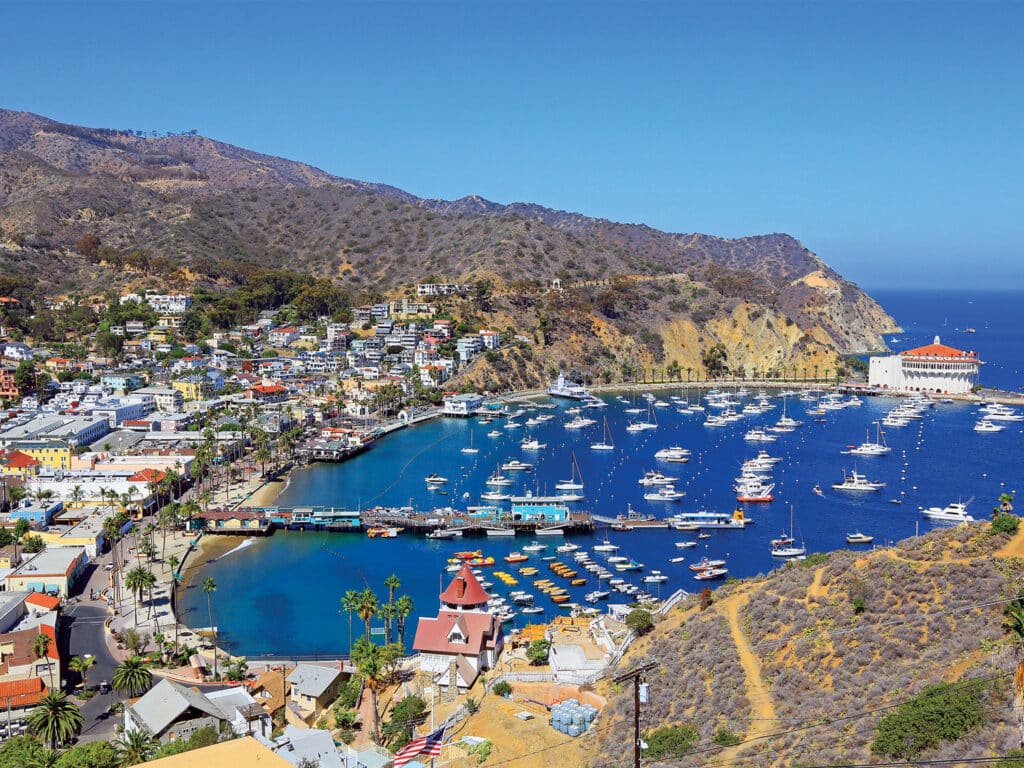
Catalina Island—Where It All Started
The roots of modern big-game fishing run straight back to Catalina Island in the early 1900s. Before that era, large fish like giant bluefin tuna were mostly a commercial proposition—something to be harvested, not hunted with a rod and reel. Targeting a 500-pound tuna for sport was considered eccentric at best, pointless at worst. The tackle to do it simply didn’t exist yet.
Catalina changed all that. The island sat perfectly placed, close to deep water where enormous tuna migrated seasonally, with calm, protected bays that gave fishermen a safe environment to experiment. It didn’t hurt that the island sits just 22 miles from Los Angeles. You didn’t need to run 50 miles offshore to find fish. They were right there, and that proximity made it possible to try things, fail, adjust and try again.
Rod and reel designs improved rapidly. Captains learned how to handle their boats around a hooked fish. Anglers figured out through hard experience what worked and what didn’t—and crucially, they wrote it down. Catches were weighed, measured, photographed and documented. What could have been forgotten became the foundation of something lasting. Catalina Island is home to the Avalon Tuna Club, one of the oldest and most influential institutions in the sport.
Zane Grey, an active member of the Avalon Tuna Club and once served as vice president, was the person who related that foundation to a wider audience. His vivid accounts of bluefin battles reached readers across the country who had never been near salt water, and they made the sport feel worth aspiring to. Grey didn’t just write about catching fish; he captured the physicality of it, the hourslong battles against powerful animals, the exhaustion, the exhilaration. He made anglers look like athletes, which, honestly, they were.
The values that took root at Catalina didn’t stay on that island. They traveled with every angler who went home and told the story.
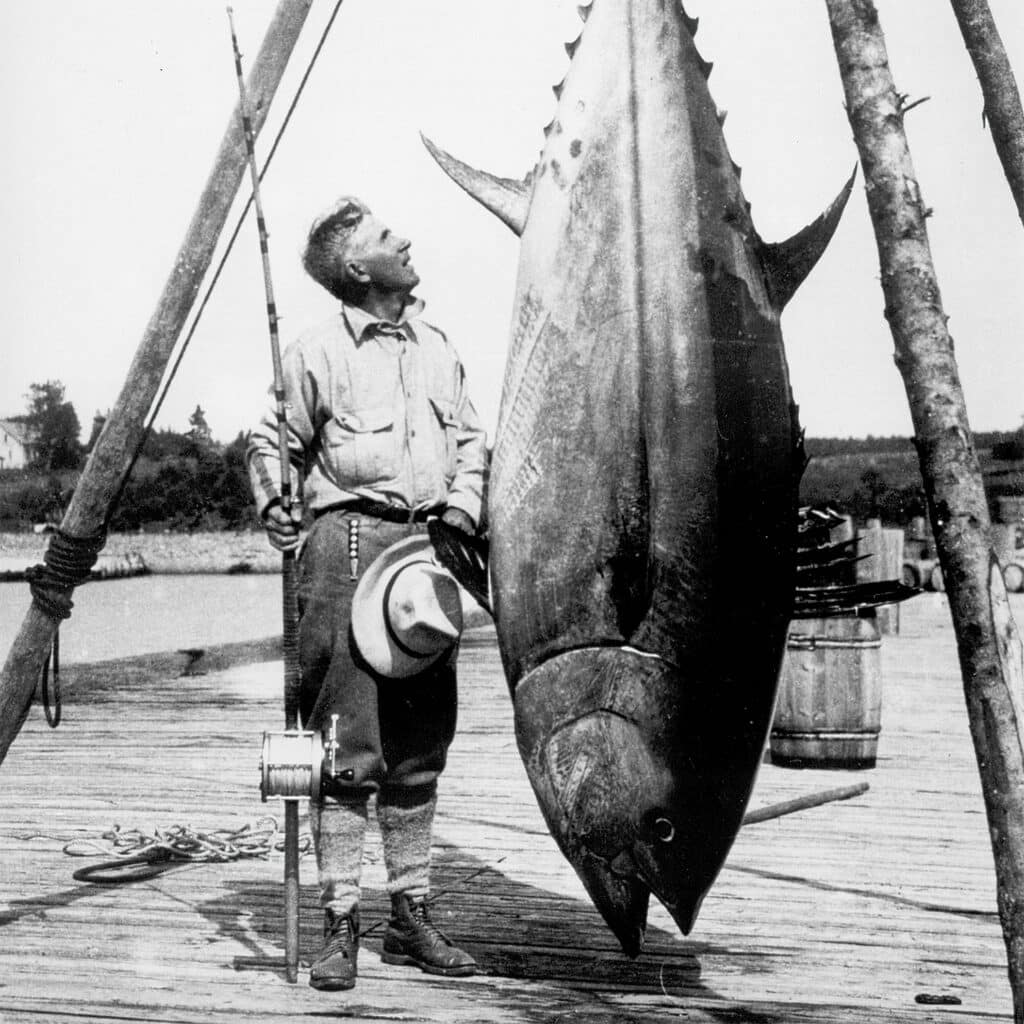
Spreading the Word
If Zane Grey introduced America to big-game fishing as a sport, Ernest Hemingway gave it a philosophy. His time on the water in the Florida Keys, the Bahamas and around Cuba was more than a recreational habit; it was where he developed a way of thinking about what fishing actually meant. In The Old Man and the Sea, he put that thinking into a form the whole world could read—that the struggle and the journey involved in catching fish define not simply the outcome of a fishing trip, but also the person involved. That idea landed hard in the fishing world because anglers already understood it intuitively. The long days with nothing to show for it, the empty hooks after hours of effort, the sudden explosion of chaos when a blue marlin finally appeared behind the bait, and then the very real possibility of losing it anyway. Hemingway made that experience feel meaningful rather than frustrating. He elevated it. And in doing so, he helped shift the focus of big-game fishing away from simple harvest and toward something closer to a test of character.
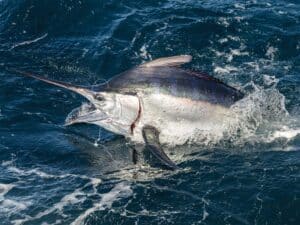
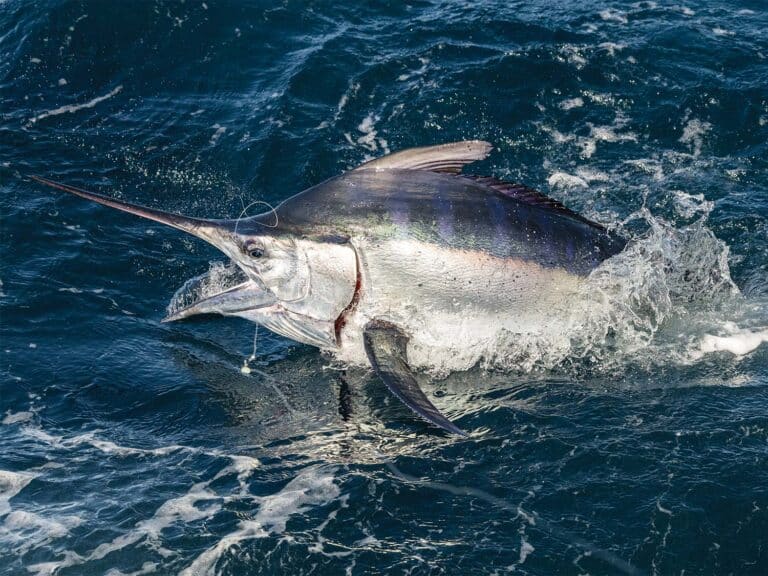
The fish that embodied that test most completely were blue marlin and bluefin tuna. Blue marlin were all speed and aggression—violent, unpredictable, acrobatic. Bluefin tuna were something else—relentless power that could grind a fisherman down over hours of sustained combat. Neither offered any guarantees. That uncertainty was the whole point.
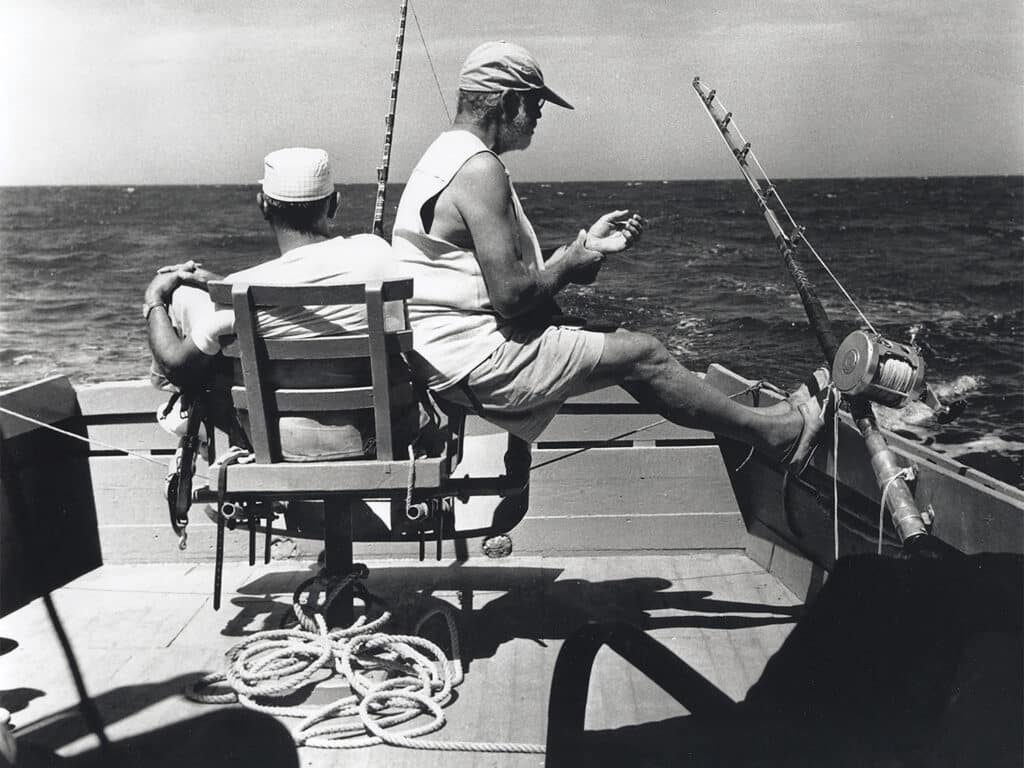
The Florida Keys and the Bahamas
If Catalina was where big-game fishing was invented, the Florida Keys and the Bahamas were where it was refined. The founding of the Long Key Fishing Camp in 1908, which Henry Flagler established as a stop on his Florida East Coast Railroad, made the Florida Keys accessible.
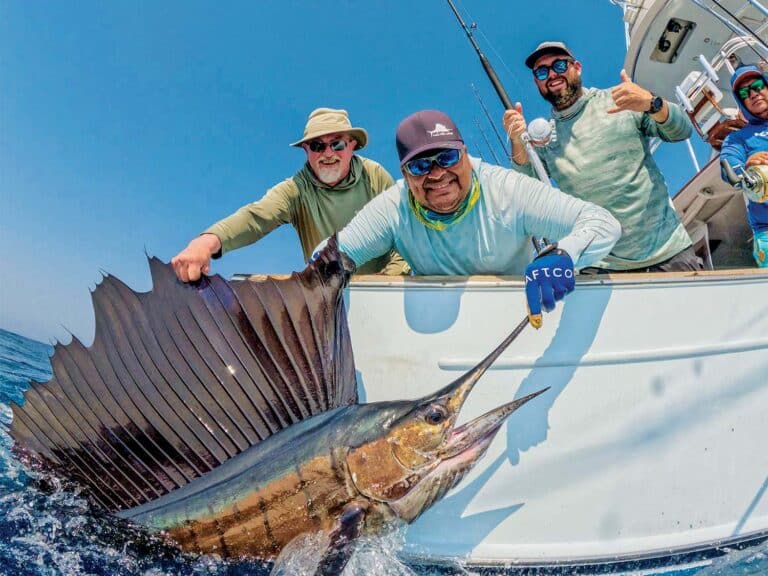
Few places on Earth offer what these waters do: the Gulf Stream running close to the reef, pushing sailfish, marlin, tuna and wahoo within easy reach of relatively small boats. The deep blue water wasn’t a distant destination; it was practically next door. That access meant anglers could go out day after day, testing ideas, making adjustments, and building knowledge through repetition rather than theory.
The result was a kind of ongoing, open-air laboratory. Trolling spreads became more sophisticated year by year. Live-baiting evolved from an informal art into something closer to a science. Bait-and-switch tactics were developed right there on the water by people who noticed what worked and started doing it intentionally. A shared language developed among offshore captains, built from accumulated experience no textbook could have provided.
Tommy Gifford was one of the figures who defined what serious big-game fishing looked like in these waters. He fished the Keys with a tight, disciplined crew and an attention to preparation that set a standard others measured themselves against. His influence wasn’t limited to his own results; it reshaped standards for what a professional captain should look like.
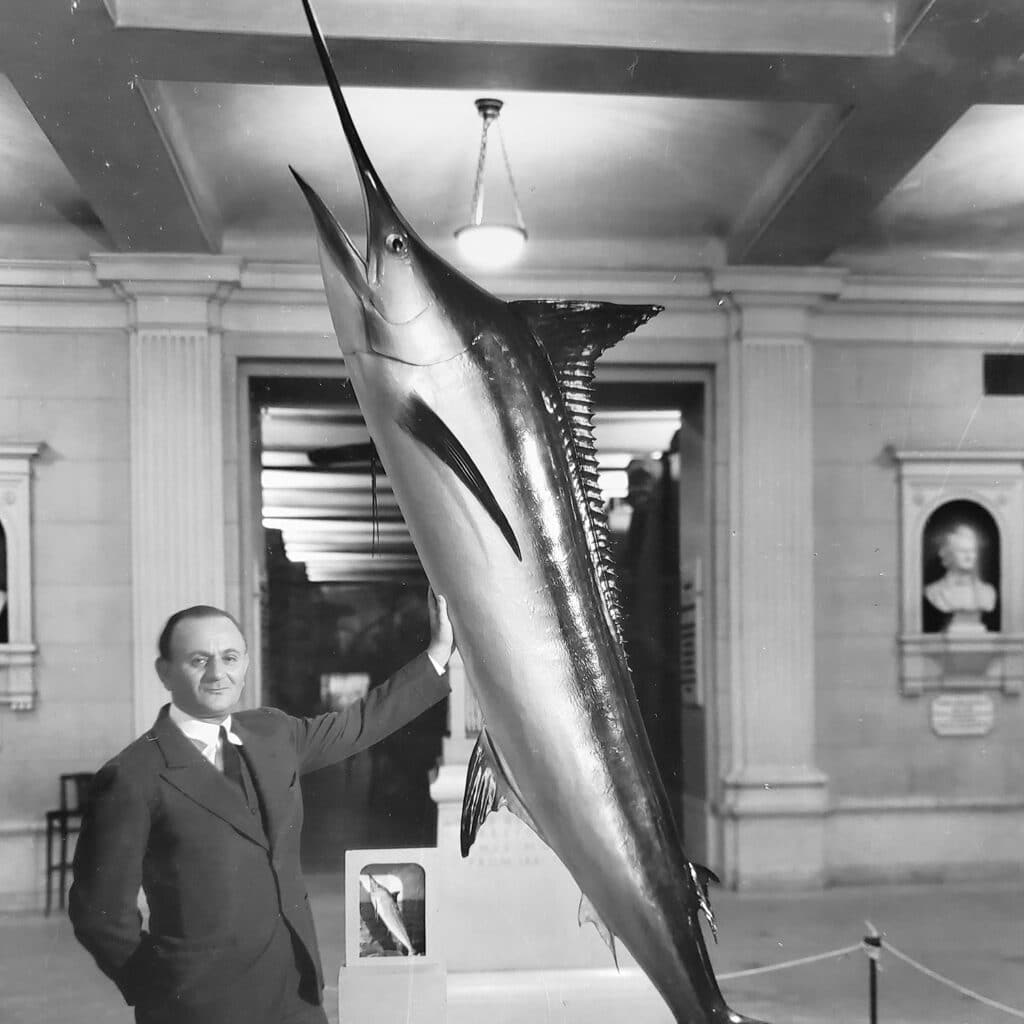
The IGFA—Keepers of the Sport
As the sport grew, so did the ambition—and the chaos. Without standardized rules, the concept of a fishing record became increasingly meaningless. Anglers were using heavier lines and bigger reels, and making claims that couldn’t be verified or fairly compared. The achievements were real, but the framework to validate them didn’t exist yet.
That changed in 1939 when Michael Lerner founded the International Game Fish Association (IGFA). His goal wasn’t to control the sport; it was to protect what achievement in the sport actually meant. The principle was straightforward: A bluefin tuna caught off Nova Scotia should be comparable to one caught in the Mediterranean. A blue marlin from New Zealand should stand alongside one from Cuba. If the rules were the same everywhere, then the only variable that mattered was the skill of the angler.
What the IGFA gave fishermen was something more valuable than a record book. When you held an IGFA record, you knew exactly what it took to earn it, and so did everyone else. Over time, the IGFA evolved far beyond a regulatory body. It became the global conscience of sport fishing, a persistent reminder that how you catch a fish is just as important as having caught it at all. And while the organization remains an international body, its roots in the U.S. were very much intentional.
Boats, Innovation and Game-Changers
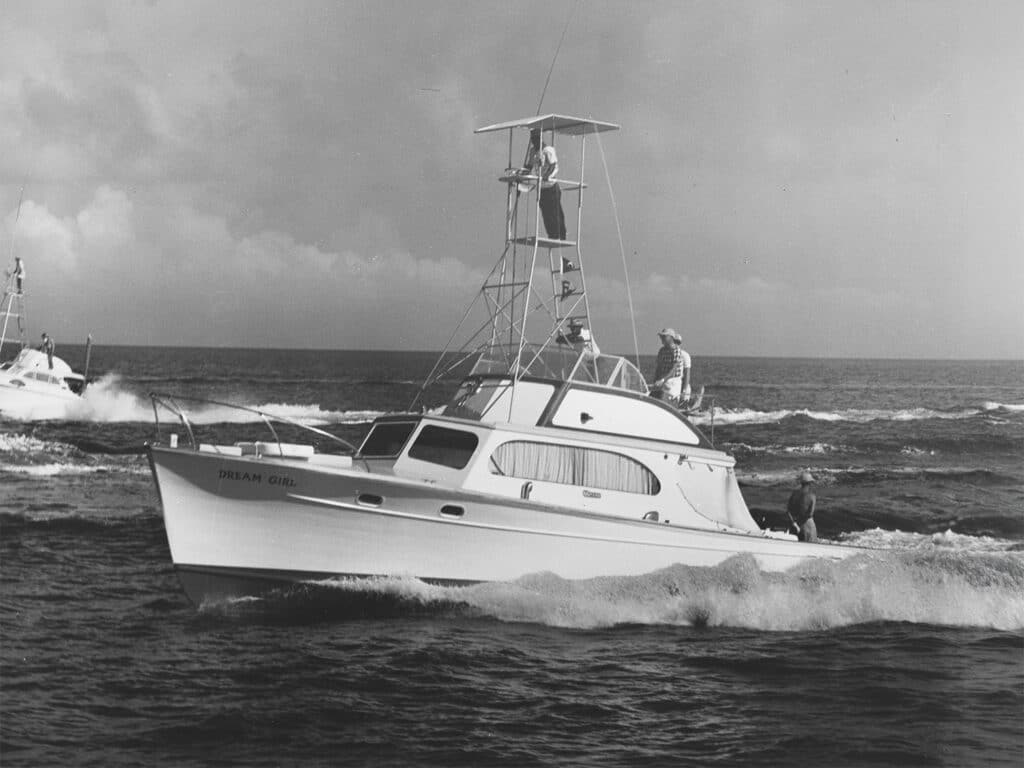
The innovation angle of American big-game fishing is a story echoed in many subsets of U.S. history: driven by people who refused to accept limitations. John Rybovich was perhaps the most consequential of them when it came to boats. His cold-molded sport-fishing designs were lighter, faster, stronger and more responsive than anything that had come before. They changed what was possible when fighting a big-game fish—anglers could now pursue fish on their own terms, maneuvering with a precision that older hulls simply couldn’t deliver.
Rybovich boats also brought a level of craftsmanship and style that raised expectations across the entire industry for the next half-century. Fast-forward to 2026 and the evidence of that pioneering spirit in boatbuilding has reached levels never imagined. Whether it’s a custom-built boat from the storied coasts of North Carolina, or a state-of-the-art production boat churned out with jaw-dropping efficiency from New Gretna, New Jersey, when it comes to the legacy of building high-performance fishing boats, no place compares to the United States.
And the innovation wasn’t limited to boats. The legendary Tommy Gifford is credited for pioneering the use of outriggers in sport fishing. Captains like Jimmy Albright and Omie Tillett brought a new standard of professionalism to the cockpit: preparation, discipline, teamwork, and an ethic that made reputation as important as results. Out west in California, Milt Shedd paired his love of the ocean with the growing demand for quality big-game tackle to create what would become the American Fishing Tackle Company (AFTCO), which continues to innovate and inspire anglers around the globe nearly 70 years later.
The list of American innovators on big-game fishing extends beyond the confines of this piece and into every corner of this sport, from boats and tackle to electronics and apparel. What these innovators share, outside of their specific contributions, is the embodiment of the core American spirit of innovation and advancement. If you can dream it, you can do it. And that ethos continues stronger than ever in today’s marketplace.
Tournaments—Competition Drives Forward
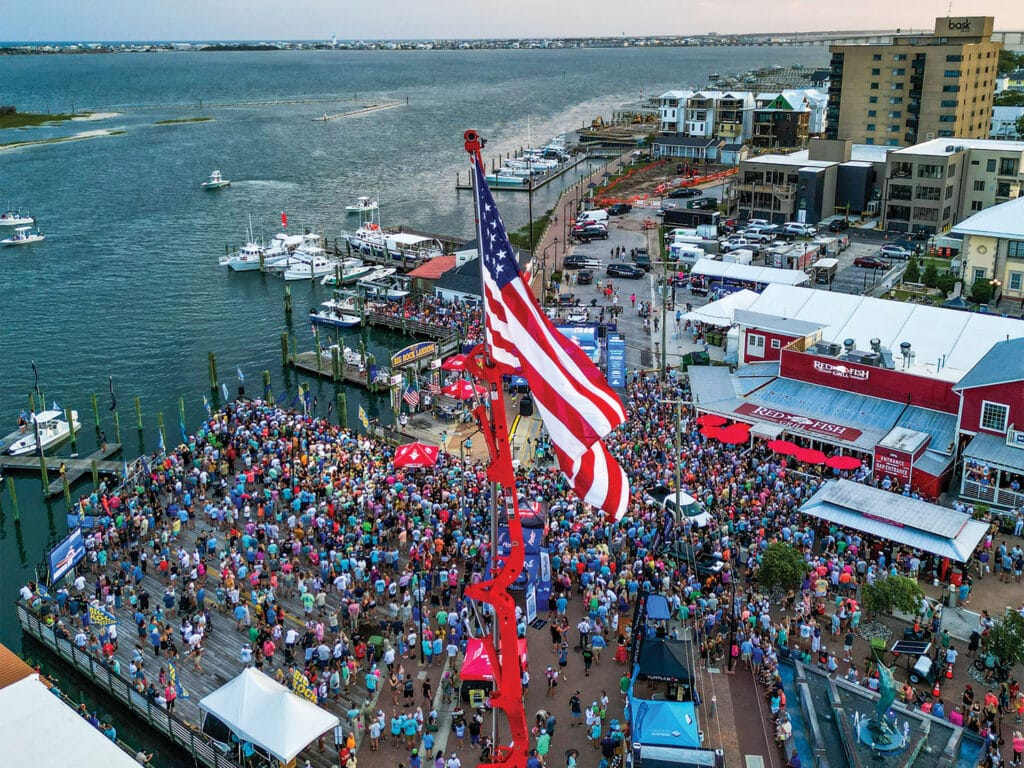
As techniques matured, it was only a matter of time before fishermen started measuring themselves directly against each other. American anglers didn’t invent the fishing tournament, but they embraced it with a particular intensity
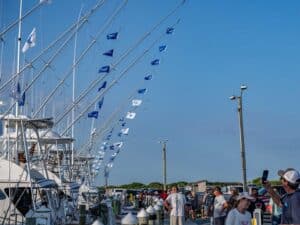
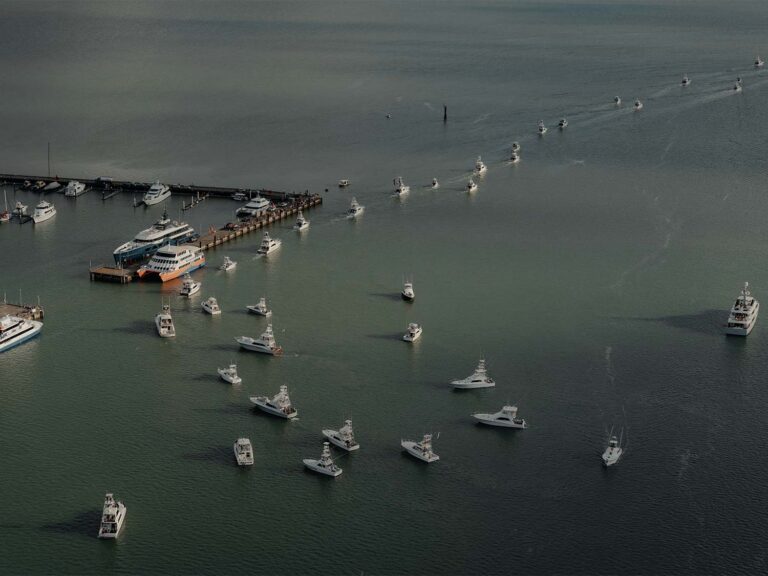
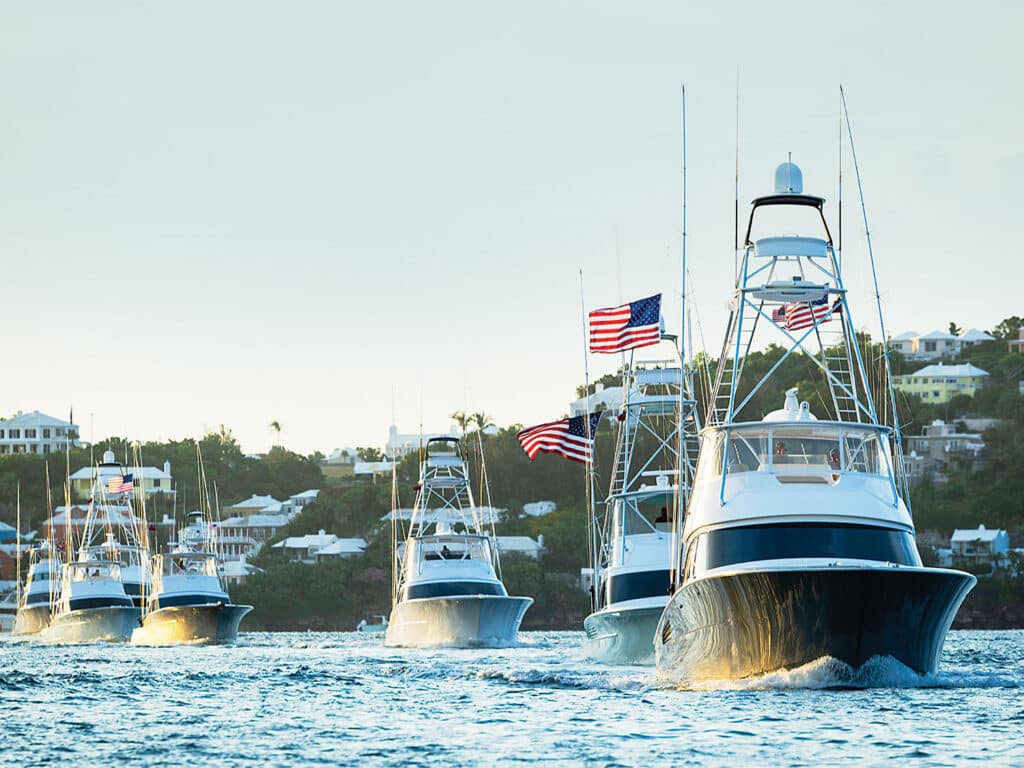
In fact, it was early international events like the Cat Cay Tuna Tournament, the International Tuna Tournaments and the Bimini Big-Game Club Marlin Tournaments that helped pave the way for the modern juggernauts on U.S. soil, such as the Big Rock Blue Marlin Tournament, the White Marlin Open and the Mississippi Gulf Coast Billfish Classic. No longer limited to fun outings, marlin competitions demanded skilled, coordinated crews, and captains who could read conditions and execute under pressure.
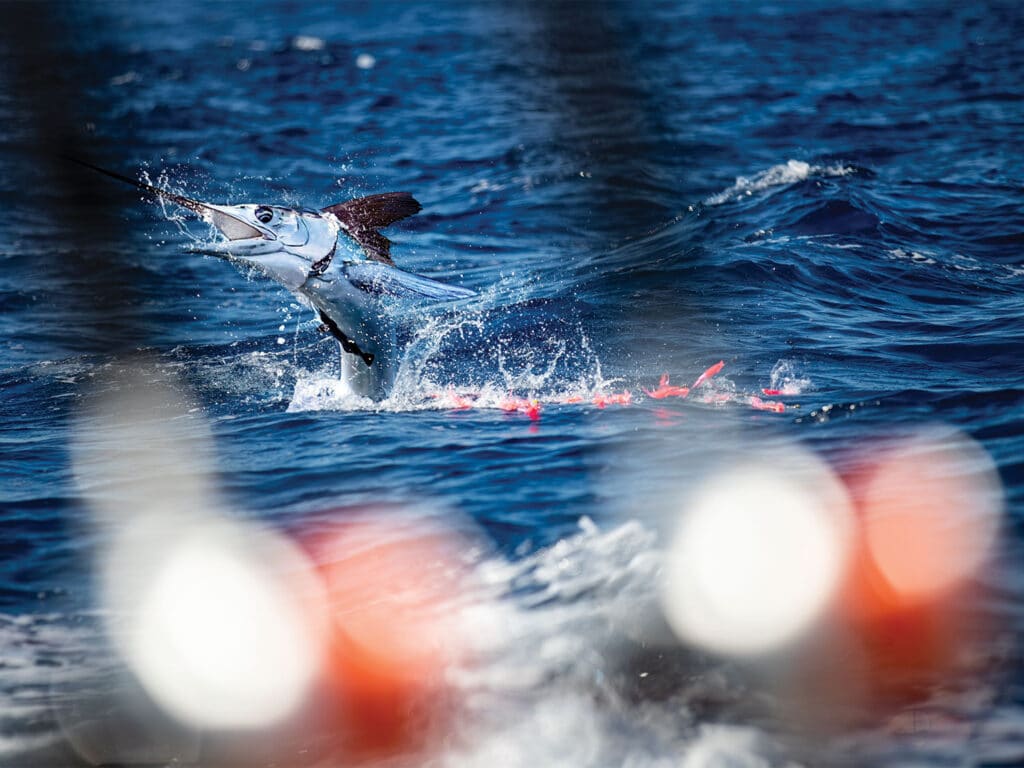
National or club pride were the drivers at first, but betting for real money took the stakes to an entirely new level. When marlin tournament prize pools reached into the millions, the professional stakes became serious enough to attract crews who approached preparation the way elite athletes approach training. Rather than cheapening the tradition, tournament competition sharpened it.
There were byproducts to the competition as the docks where tournament crews gathered became accelerators for new ideas. Competitive pressure drove constant improvement, which lifted the entire sport, not just the people who were winning.
Conservation—Redefining Success
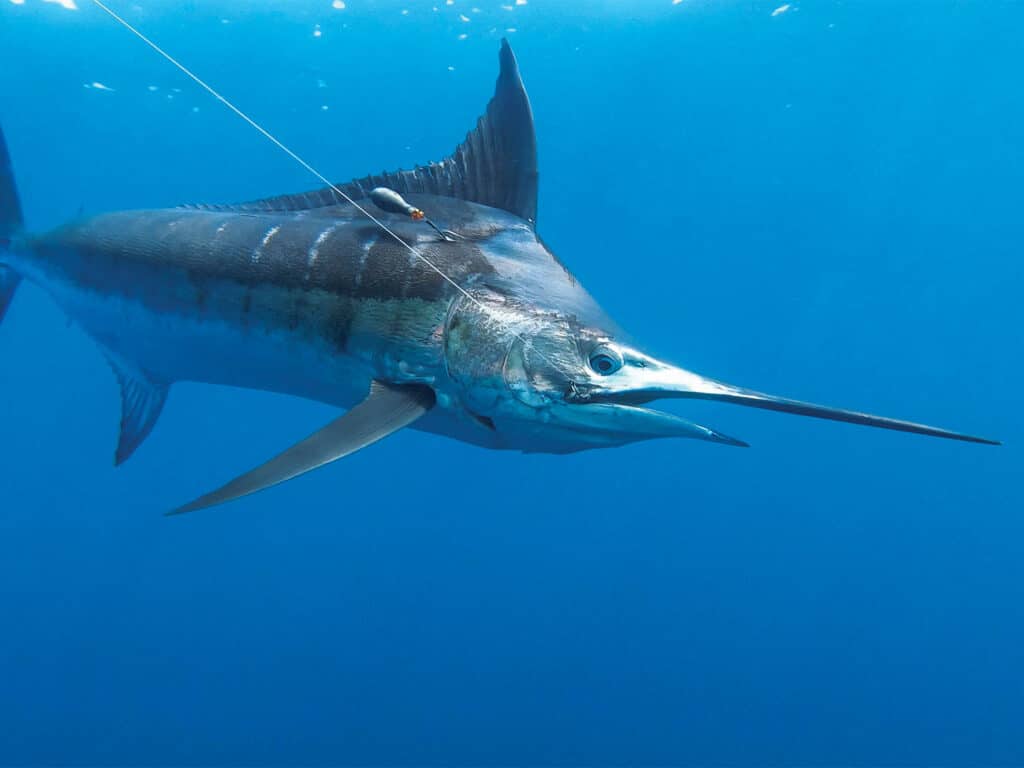
By the late 20th century, the efficiency of American sport fishing faced a reckoning. If left unchecked, industrial fishing pressure and commercial exploitation of the ocean could remove fish faster than the ocean could replenish itself. The sport-fishing community cared more deeply and invested more thoroughly into the resources that provide the foundation for its passion than most other groups in the world. In the face of decreasing catch rates, sport fishing translated passion into action. Anglers understood before the data confirmed it that a released billfish was worth more to the long-term health of the sport than a dead one on the dock. In the same way that early hunters and sportsmen founded the North American Model for Conservation—with voluntary excise taxes and license sales that funded state wildlife agencies and an exemption of wild resources from commercial exploitation—the American angler has been an incredibly powerful force for conservation.
Catch and release. Circle hooks that greatly improved post-release survivability. Incorporating recreational fishing (and its incredible economic investments) into how fisheries are managed. Powerful, unyielding voices on regional, national and international fisheries management councils. The American sport fisherman pioneered it all, and we are all better off for it.
These same American sportsmen were central to the founding of The Billfish Foundation, the IGFA, the Coastal Conservation Association and numerous other organizations focused on preserving the resources and culture we cherish. Tournament rules evolved in the same direction, rewarding proper fish handling and transitioning almost entirely to a release-based format. The competitive framework that had always pushed the sport forward was now being pointed at conservation as well.
An American Legacy
The story of American influence on big-game fishing is ultimately about what happens when curious, driven people are compelled to interact with the extraordinary, incredibly exciting natural resources that inhabit the ocean. It is a spirit that started at Catalina Island. It continued through the early captains of the Florida Keys. It coursed through the innovators who rethought boats, techniques and conservation.
This legacy isn’t abstract. It lives in every marlin that swims away from a boat, in every shotgun start and packed weigh-in, and in every angler who measures success by ensuring the next generation of American anglers can enjoy the same experience, or perhaps even a better one. The story of American big-game fishing is one of passion, innovation and stewardship. And what a story it is.
By the Numbers: Recreational Fishing in America
Fishing may be considered a hobby, but in America, it ends up looking a lot more like an industry. The following numbers, compiled by the American Sportfishing Association, reflect the full sweep of recreational angling in the United States, from pond banks and bass boats to offshore canyons and bluewater cockpits. In other words, this is not just big-game fishing’s footprint. It is the national scoreboard for a pastime that quietly powers jobs, businesses, conservation and coastal communities from coast to coast.
- 57.7 million Americans fish each year, making fishing one of the most popular outdoor activities in the country.
- Recreational fishing generates more than $230.5 billion in annual economic impact across the United States.
- The sport supports 1.1 million American jobs, ranging from boatbuilders and tackle manufacturers to marinas, hotels, restaurants, guides and charter operations.
- Anglers spend nearly $50 billion annually on fishing-related purchases, fueling businesses in every corner of the country.
- Recreational fishing contributes roughly $120 billion to U.S. GDP, demonstrating that fishing is far more than a pastime; it is a major economic engine.
- America’s anglers support local economies through spending on boats, fuel, tackle, lodging, dining, travel and tourism, creating economic benefits that extend well beyond the waterfront.
- Fishing and boating represent the largest economic segment of America’s traditional outdoor recreation economy, contributing more than $50 billion in economic output.
- Recreational anglers contribute approximately $1.8 billion annually toward conservation efforts, helping fund fisheries management, habitat restoration and public access projects nationwide.