Subscribe to Marlin magazine and get a year of highly collectible, keepsake editions – plus access to the digital edition and archives. Sign up for the free Marlin email newsletter.
There is an adage about Texas. Maybe you’ve heard it: “Everything is bigger and better in Texas.” Have you ever wondered why so many people would say such a thing? Well, that’s simple. Because it is true. What’s more, nowhere is that bigger-and-better mindset more evident than in the Texans whose ideas, grit and ambition have helped shape offshore fishing as we know it.
Peruse the roster of the IGFA Fishing Hall of Fame or the list of winners of Gil Keech, Bob Herder and Tommy Gifford awards, and you’ll find Texas well-represented. Light- and heavy-tackle enthusiasts, pioneers in all aspects of sport fishing, world-record holders, and innovators in research and conservation—they’re all here. What follows is a story of Texas’ impact on the sport-fishing landscape, from the Third Coast to the farthest reaches of the world’s great marlin and tuna grounds.
The Origins of Texas Sport Fishing
From as early as the 1930s, the Lone Star State and its fishing made headlines, not only in Texas and the United States but also around the world. The early pioneers of offshore fishing in Texas started with the Tarpon Roundup in Port Aransas in 1932 and the Texas International Fishing Tournament in Port Isabel in 1933. These early tournaments were founded to promote the sport and the economy of those respective ports and to entice anglers from all over the world.
Offshore fishing in the Gulf of Mexico began building momentum in Texas in the 1950s and ’60s. At the time, most of the trolling in the Gulf involved dragging natural baits pulled at slow speeds over bottom structure, where weed lines, current rips and bait naturally occurred and congregated.
After taking a trip to Kona, Hawaii, to fish with Capt. Bart Miller on Black Bart, Texas Saltwater Fishing Hall of Fame inductee Bob Byrd Sr. really started pushing the envelope in the Gulf. Bringing home innovations he saw in Kona, Byrd began pulling plastic lures designed in Hawaii in the late ’60s and early ’70s. This is where it gets interesting.
World Records and Globe-Trotting Operations
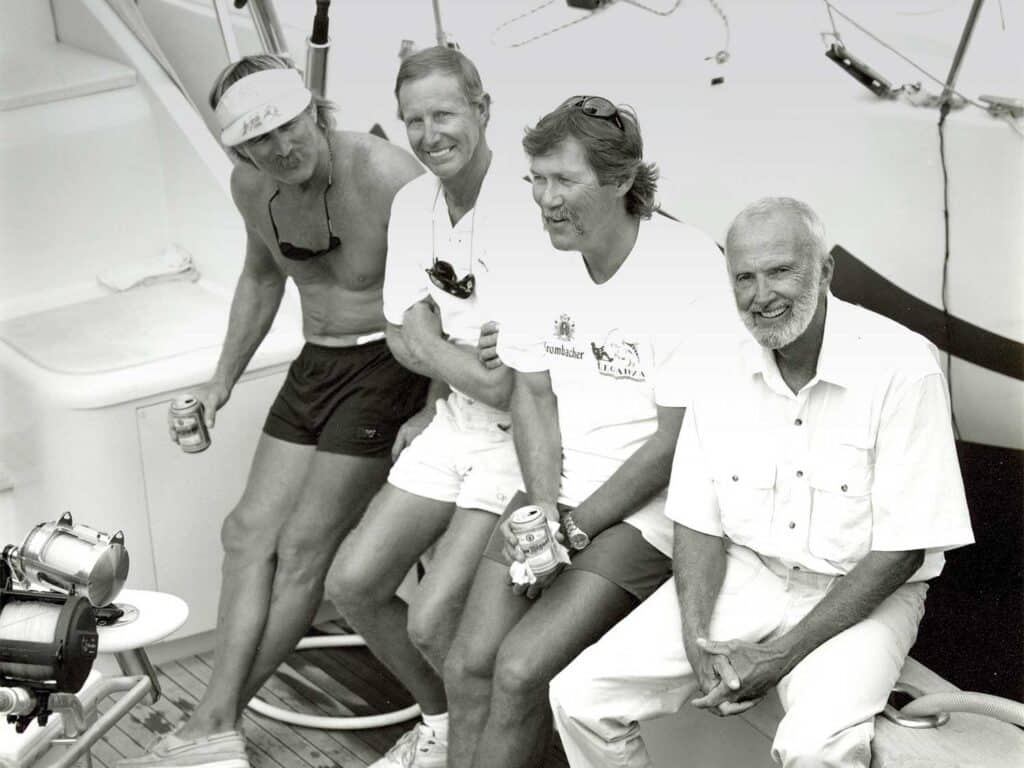
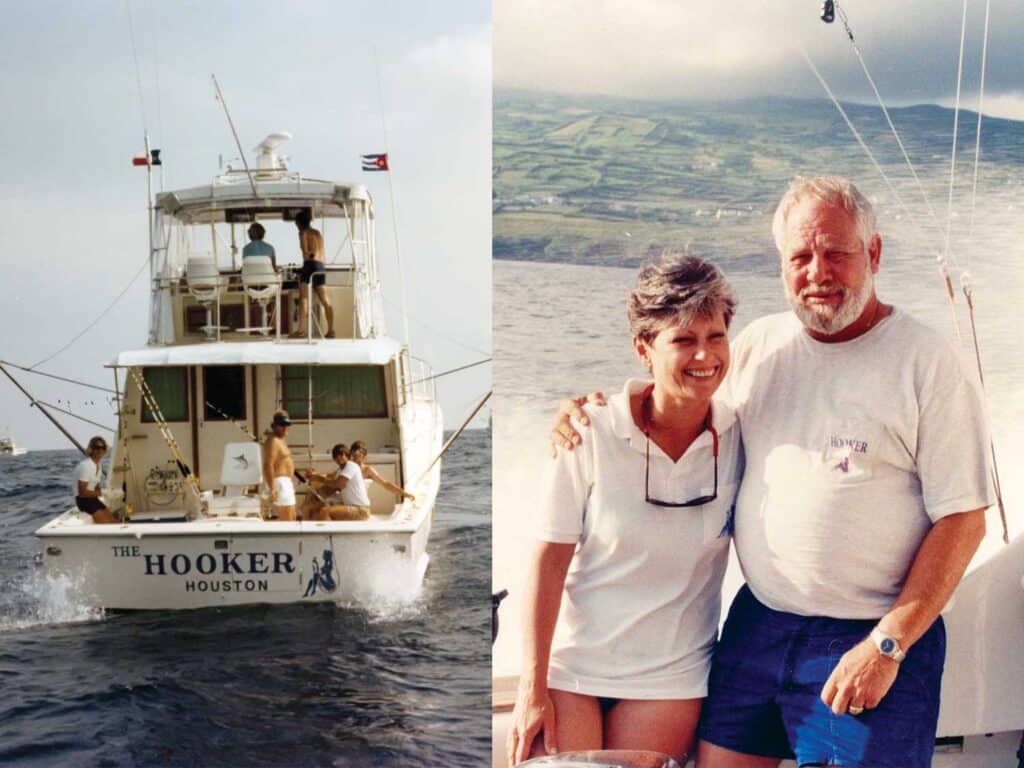
Almost simultaneously, one of the greatest fishing tandems in the history of sport fishing started hitting their stride. Proud Texans Jerry and Deborah Dunaway along with Capt. Skip Smith on the infamous Madam and Hooker operation started refining their techniques with incredible results. Jerry and Smith, working in conjunction with Frank Johnson of Mold Craft Lures, developed the “Hooker” prototype softhead lure that is now synonymous with the Mold Craft brand.
Over a 20-year period from 1979 until 1999, that team accounted for 81 IGFA world records, almost all on light or ultralight tackle. Jerry achieved an amazing 16 world records, and Deborah caught an astounding 23 world records. Deborah is the only angler, male or female, to hold world records for all nine billfish species at the same time, a feat she accomplished in 1993.
Among their many incredible fishing exploits, the Hooker team caught a Pacific quadruple Grand Slam, caught 24 swordfish, four of which were world records, over a 10-night span, and caught 24 blue marlin in a single day in 1997.
The impact and influence of the Madam and Hooker operation, however, extended well beyond simply what they caught. They also hired some of the best mates to ever step into the cockpit of a sport-fishing vessel. The names of the crewmen are like a who’s who of all-stars in a fantasy fishing league, including Ronnie Fields, Trevor Cockle, Scott Levin, Randy Baker, Curt Schloderer, “Kunta” Smith, Jody Bright, John Cochrane, Peter B. Wright, Eric Leech, Mike Deighan and Jeff Fay.
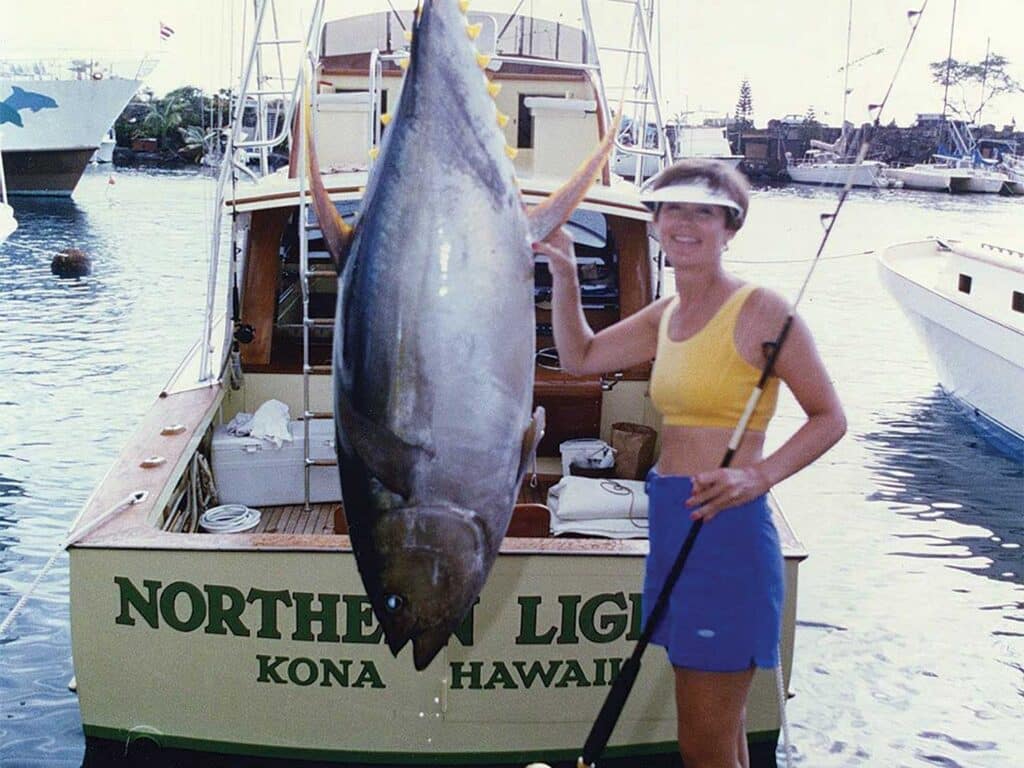
While all of this was happening, another demure Texan started her own world-record binge in Kona. Fishing ultralight tackle and catching most of those records on Northern Lights, IGFA Trustee Emeritus and 14-time world-record holder Pam Basco left quite a legacy in her own right. Basco plied the waters of Ascension Island, Australia, the Bahamas, Costa Rica, Cozumel, Cabo San Lucas, Guatemala, Jamaica, Kenya, Madeira, Panama, Puerto Rico, St. Thomas, Tahiti, Vanuatu, Venezuela and the Gulf of Mexico chasing line-class records.
On November 24, 2006, I was lucky enough to be on board Lady in Kona when Basco set the women’s 6-pound Pacific blue marlin record with a 141.5-pound marlin. Fishing with Capt. Scott Pruner and Rob Ellen along with Havoc, a yellow Labrador, was a day I will never forget. Basco credits the exploits of Deborah Dunaway and her record-shattering career as the impetus of her obsession with ultralight line-class records.
Around the same time, another Texas legend was setting the line-class record world on fire with one of the best crews on the planet. Stewart Campbell and the Chunda crew of Capt. Barkey Garnsey, Spencer Stratton and Charles Perry were catching blue marlin in Madeira at an amazing rate. All told, Campbell and company set 15 billfish and tuna records over a 25-year span.
But it wasn’t just the records that were remarkable. In March 1995 in Hatteras, North Carolina, with Capt. Peter B. Wright, wireman Capt. Gary Stuve, and mates Charlie Hayden, John Rafter and Charles Perry, the Chunda crew released 73 giant bluefins in a single day. That was the day before Campbell’s 65th birthday—one hell of a present.
One of the most infamous incidents occurred in Madeira on June 27, 1996, as Campbell was chasing the 30-pound blue marlin record. With him in the chair, they had a fish on that they called 1,000 pounds. Perry grabbed the leader, and Campbell tried to peek at the fish.
Just as Perry was wiring the fish, Campbell lost his balance just for a fraction of a second. The swivel slid down the rod tip, and wire leader wrapped around the rod three times. The fish surged, and it jerked Campbell off balance and overboard in the blink of an eye. That may be one of the most famous fishing videos of all time.
Fortunately for Campbell, the fish did not sound more than about 50 feet below the surface, and the line broke. Once he popped up, with blood running down his face from a cut caused by the reel when the line broke, he told Perry, “I know what I did wrong.”
These four anglers—Jerry and Deborah Dunaway, Stewart Campbell and Pam Basco—account for an amazing 68 line-class world records between them. And they are all from Texas.
The Old Texan and the Sea
With all due respect to light- and ultralight-tackle fishing for billfish, there is perhaps nothing that compares to a giant black or blue pulling 50 pounds of drag like the reel’s in free-spool. There is one Texas fishing legend whose influence on heavy-tackle fishing is felt perhaps more than any other.
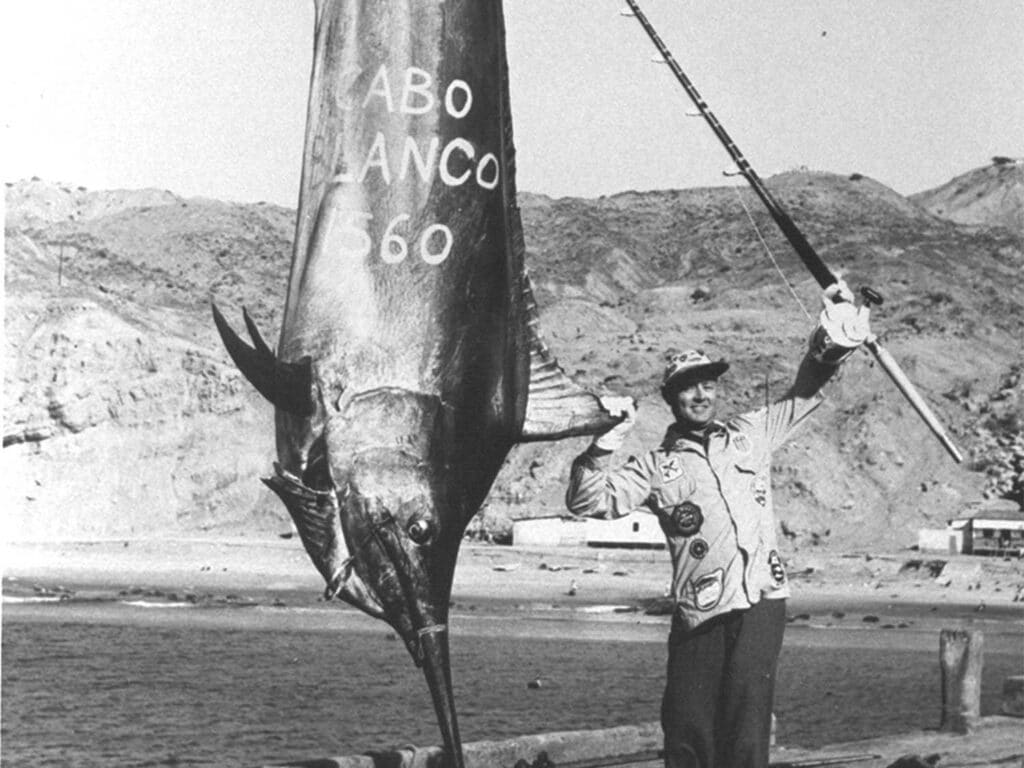
When I first saw the black-and-white photo of “the fish,” I recall being mesmerized. To this day, I still view this man and this achievement to be one of the greatest in the annals of sport-fishing history—and wouldn’t you know it, Alfred Glassell Jr. was from Texas. On August 4, 1953, fishing in Cabo Blanco, Peru, Glassell registered a catch that would forever shape the marlin fishing world. His 1,560-pound black marlin set the 130-pound and all-tackle world records for the species—a mark that still stands more than 70 years later.
Visionary, pioneer, perhaps even icon—all these words exemplify this Texan and his larger-than-life impact on sport-fishing history. More than just a world-record holder, Glassell served as an IGFA Trustee and was inducted into the IGFA Hall of Fame. The legacy of his exploits is felt beyond the sport-fishing community. A full body mount of his record-breaking black marlin hangs in the Smithsonian Institute’s “Hall of Sea Life” in Washington, D.C. The 1958 movie The Old Man and the Sea starring Spencer Tracy used footage of Glassell’s giant black in the film.
The Tournament Landscape and Conservation
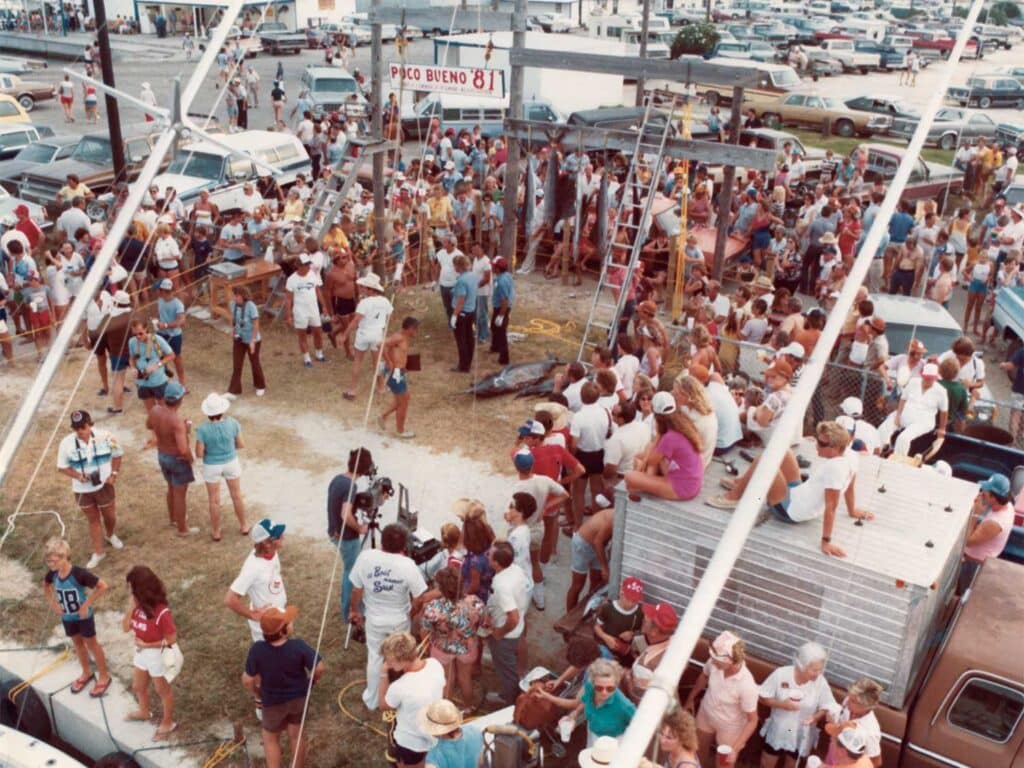
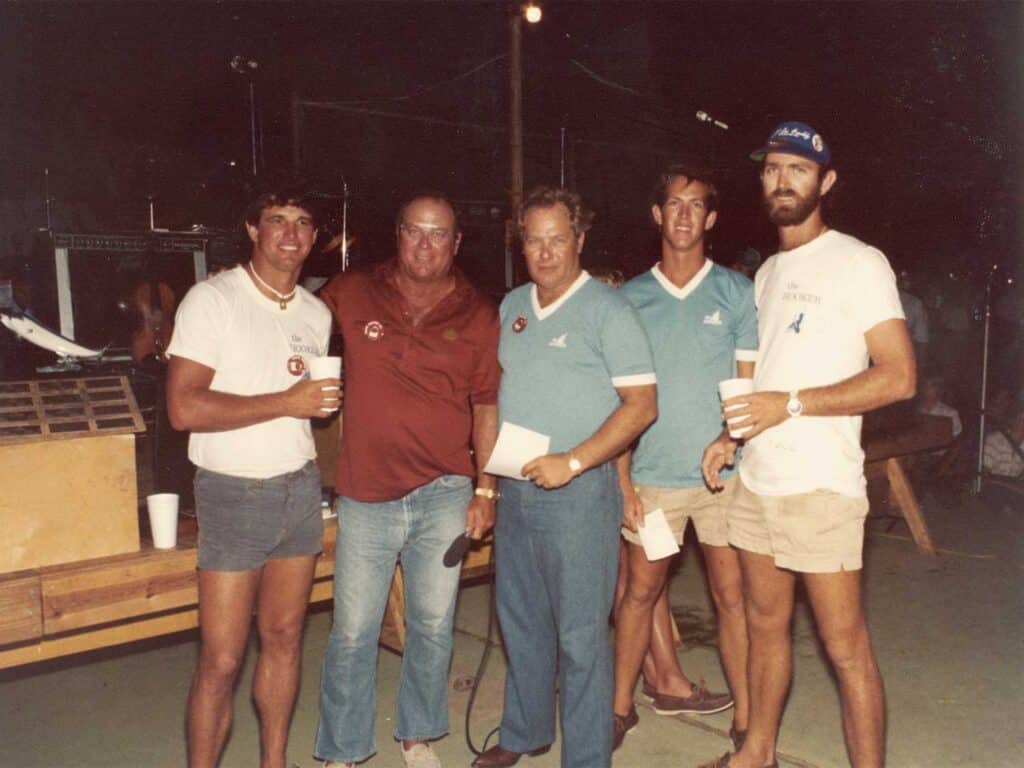
In 1969, Stewart Campbell along with Bob Byrd Sr., Joe Bright and Walter Fondren III founded the prestigious Poco Bueno Tournament in Port O’Connor, Texas. Using a unique calcutta format with a cattle auctioneer to raise prize money (along with an open bar for the participants), the Poco produced prize pools of staggering proportions. Before long, the Poco not only attracted fishermen from all over the world but also grew to become the biggest money tournament on the Gulf Coast.
One of the Poco Bueno’s founders, Walter Fondren III, grandson of Humble Oil founder Walter Fondren Sr., left an incredible impact on Texas’ coastal fisheries. In the early ’70s, Texas’ redfish and speckled trout populations faced heavy pressure from illegal gill-netting. The impact was especially dramatic in the winter, when massive schools of fish were being netted on the flats by the truckloads.
In the “Texas redfish wars” of the ’70s, fueled by political lobbyists and special interest groups, Fondren was the voice that rose to the challenge. In 1977, he became the founding chairman of the Gulf Coast Conservation Association. The turning point came in 1981 with House Bill 1000, commonly known as the Redfish Bill, which finally gave redfish and speckled trout immunity from commercial harvest. Recreational anglers across Texas and the Gulf celebrated knowing that trout and redfish stocks would have a chance to rebound, greatly aided by sportsmen-led conservation.
Texas and The Live-Bait Revolution
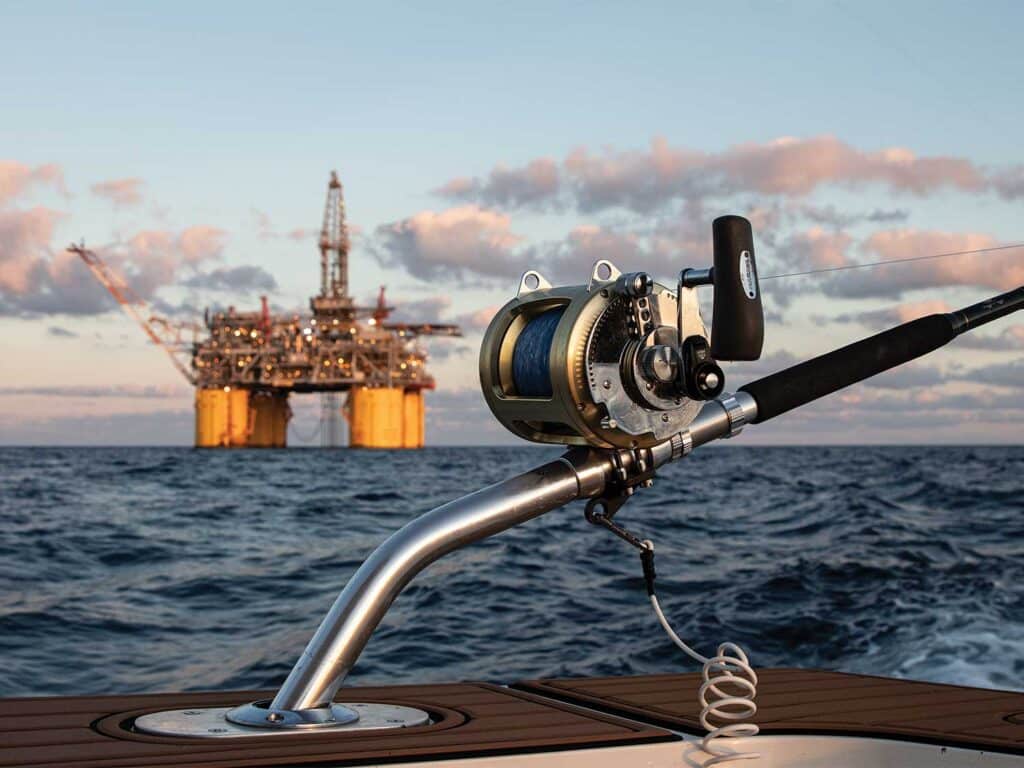
The early 1980s witnessed a proliferation of deepwater platforms off the Texas coast. The twin Cerveza rigs were deployed in 1981 and 1982, Tequila in 1984 and Little Sister in 1985. This network of offshore structure laid the setting for dramatic changes in billfishing technique.
Influential members of the Texas billfishing community, the likes of Bob Byrd Sr., Capt. John Cochrane, Bob Byrd Jr., Capt. Louis Fechner, Skip Smith, Peter B. Wright and the late Capt. John Uhr, all had one thing in common: They were pioneers and experts in live-baiting. I remember fishing with Capt. Mike Canino on his boat, the 46-foot Post Abra-Ca-Dabra, watching Cochrane live-baiting on Billy B with owner Bill Lyons using a kite at East Cerveza, a first for both of us.
Texas deepwater rigs, from Gunnison to Perdido and everywhere in between, have been the setting for many evolutions in live-baiting. There was perhaps no better example of this than the Texas state-record blue marlin, a 972.7-pound beast caught July 11, 2014. With Capt. Kevin Deerman at the helm of the late George Gartner’s Legacy, the state record was caught live-baiting during the John Uhr Memorial Billfish Tournament, an event better known as the Bastante. The record blue, caught at the Hoover/Diana Spar rig, broke the previous state record (which had stood for over 26 years) by more than 100 pounds.
Global Impact
With Texas captains and mates spread out all over the sport-fishing world, I feel confident with my statement: “If you can be a successful marlin fisherman in Texas, you will be good anywhere.” There are plenty of examples to back this up.
Capt. Dave Noling cut his teeth on La Guaira Bank in Venezuela on Courtesan. After a four-year build out of the French Look mothership and gameboat in Normandy, France, the Texan duo of Dee Wallace and James Roberts made their bones in Madeira. In an amazing stretch of 43 days of fishing in 1994, the pair caught five granders. Roberts has recently been awarded the IGFA Tommy Gifford Award and joined Wallace in the Texas Saltwater Fishing Hall of Fame.
The list of Texans who have influenced the sport-fishing landscape goes on and on. The roll call of truly legendary Texas captains who have passed is mind-boggling, with names like John Cochrane, Little John Uhr, Jim Peachy, Bill Hart, Billy Evans, and enough to fill the pages of this magazine. Legends of the past are being replaced by the next generation of hard-charging Texas marlin fishermen. All of this makes me happy to be a marlin fisherman and proud to be a Texan.