Subscribe to Marlin magazine and get a year of highly collectible, keepsake editions – plus access to the digital edition and archives. Sign up for the free Marlin email newsletter.
Few names in the big-game world carry the weight of Bayliss.
Over the past 25 years, Capt. John Bayliss has built more than a boat company; he has built a culture. A former commercial fisherman turned renowned builder, tournament competitor and respected industry voice, Bayliss has helped shape the modern custom sport-fisher through craftsmanship, innovation and true on-the-water experience. With a résumé of elite owners, major tournament wins and remarkable catches, his boats are widely considered to be among the top custom builds in the world.
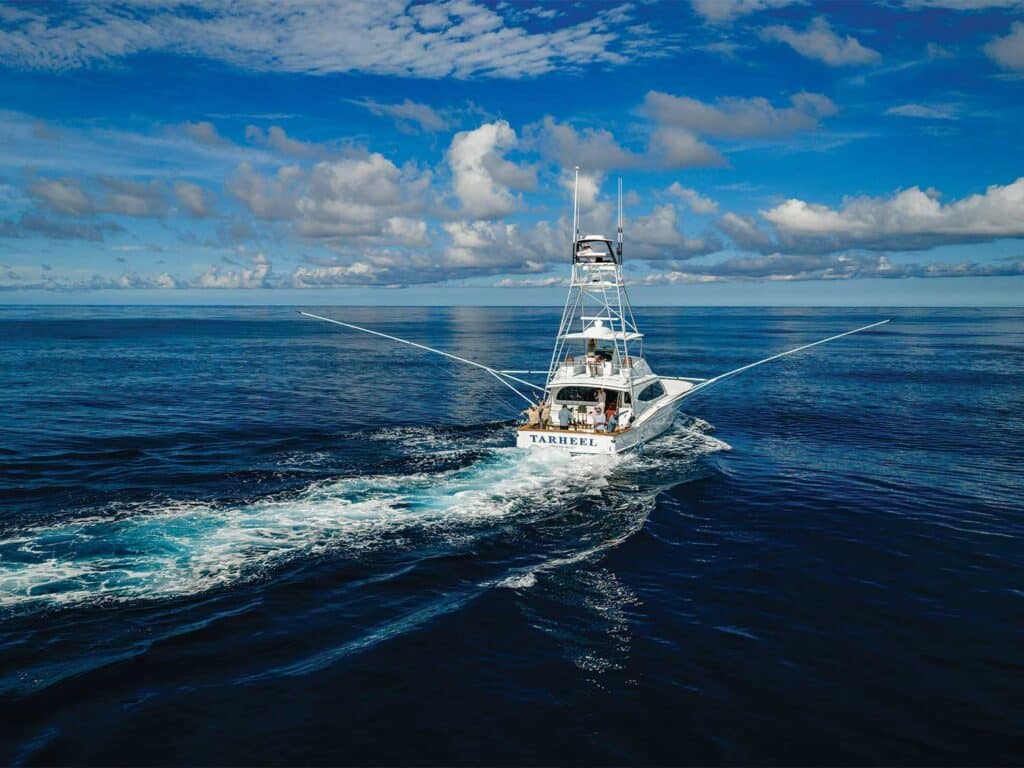
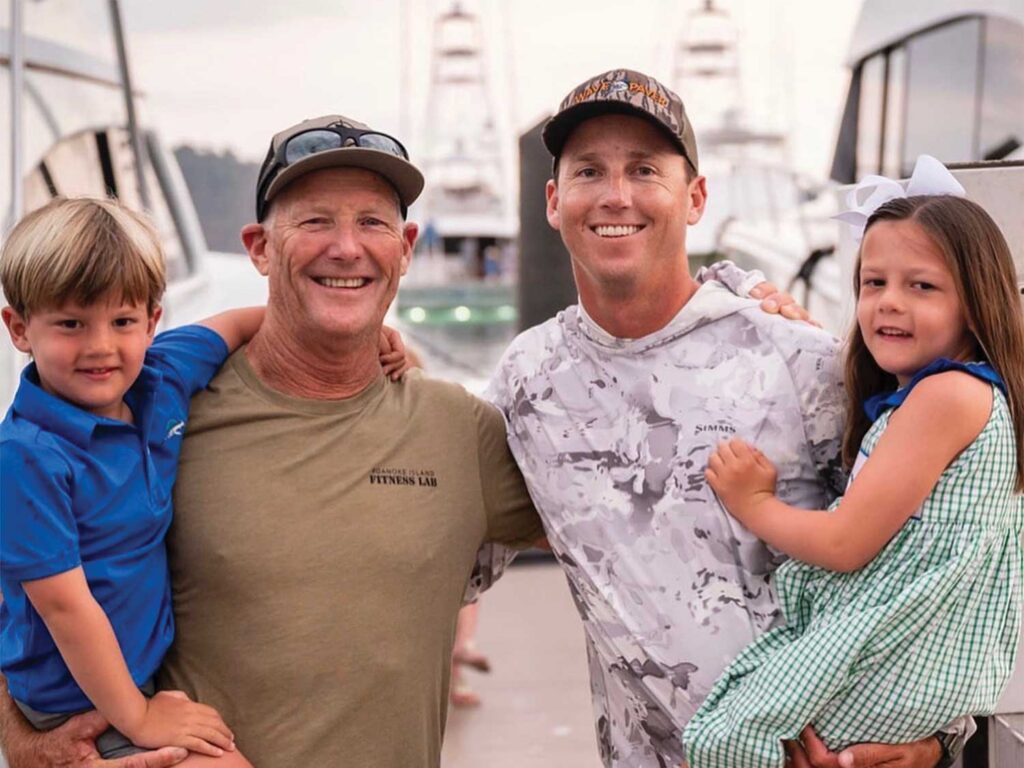
I recently traveled to Los Sueños Resort in Costa Rica to review the newly splashed 64-foot Tarheel demo boat during the Los Sueños Triple Crown. There, I found myself with a unique opportunity to sit down with John (John #1) and his son, also John (John #2), for a rare conversation with two generations of Bayliss while in their element.
Q: You fished commercially many years ago. What do we see in your boats today that you learned from commercial fishing?
John #1: It is not about what has gone into the boat, it is more of a mindset. What was great about commercial fishing is that it teaches you very quickly that nothing is ever going to go perfectly. I can’t tell you how many times I had a solid plan for the day—set 20 miles of longline gear, haul it back the next day, expect light northeast winds around 10 knots and smooth conditions—and almost every time, something would change. There are so many variables, and you’re constantly adapting.
That environment really builds character. It sharpens your instincts and pushes your seamanship to the limit, because you’re regularly put into situations where you have to make the right call. It’s similar to the sport-fishing world. When you’re fishing tournaments, you build a network of guys you trust, sharing information and ideas. Boatbuilding is no different.
Q: If either of you had a free week right now, would you rather be offshore or overseeing a build?
John #2: That’s a tough one for me. I think it’s really important that my dad and I both fish as often as we can just to stay current. Not only to remain relevant, but to truly keep up with how quickly this industry evolves.
We pick up new ideas simply by using our own boats and spending time on the water with other people. Even when we think something is as good as it can possibly get, there’s almost always a way to make it better. I’m reminded of that constantly through fishing.
I might be in the shop putting together a tackle center, convinced it’s as refined as it can be. Then we take the boat out and use it for 30 days, and suddenly I’m thinking, “You know, I’d probably do this a little differently next time.” Not because anything was wrong with the original design, but because there’s always room to improve.
That’s why it’s so important for us to stay hands-on and keep fishing. It’s the only way to keep learning, evolving, and pushing things forward.
John #1: The team we have here is so good that it makes coming into work every day genuinely enjoyable. Being around these guys, solving problems together, and feeling like we’re making progress—it’s incredibly rewarding.
Honestly, I get just as excited walking into the shop to work with this crew as I do heading offshore in the morning, getting ready to set out. That says a lot, because there’s a real sense of anticipation in both. For me, it all comes down to growth—whether it’s on the water or in the shop. That constant progression is what keeps it exciting.
Q: What are some of the challenges you see in the industry right now?
John #1: I think there’s always been a competitive edge among builders, but it’s a unique kind of competition. At the end of the day, everyone is trying to build the best possible version of what we like to call a “weapon”—the tool you use to chase fish. It’s all about gaining that edge, whether it’s for the next tournament or the next trip offshore. We’re constantly pushing to make each boat better than the last.
As for the biggest challenge, I’ll be candid: It’s the people side of the business. John and I truly value every man and woman who works here. Since COVID, the workforce has shifted. It’s become more transient, and fewer people seem to be looking for long-term careers in the same way they used to. That makes the team we do have even more important to us.
The individuals who have been here five, 10, 15, even 20 years are the backbone of everything we do. We feel a real responsibility to them, to our owners and to ourselves to work hard to keep that group intact. Because the reality is, without them, none of this works.
John and I could build a boat ourselves—but if it takes 70,000 man-hours, you’re talking decades to complete one. What makes it possible is the team. And what makes our operation unique is just how much we do in-house. Aside from the tower and soft goods, nearly everything—from welding and polishing to fabrication, CNC work, jig building, design, wiring, mechanical systems, and even paint and fairing—is handled right here. That level of craftsmanship requires an incredible amount of coordination.
So, more than anything, what we value and strive for is maintaining our culture—keeping this team together. We’re far stronger as a unified group than we would ever be with a revolving door of talent. That’s something John Boy and I are deeply committed to, and honestly, it’s what we’re most proud of.
Q: What is your current role at Bayliss? And how is it working with your dad?
John #2: I serve as the project manager for new construction, so I oversee all our new builds from start to finish. At any given time, we’re building four boats simultaneously—sometimes even more. As we begin a fifth, the first is usually nearing completion and getting ready to head out the door. It’s a constant cycle, which keeps everything moving and demands a lot of coordination across the entire team.
And I can honestly say I never dread coming to the shop. [My dad has] a wealth of knowledge—he’ll forget more than I’ll ever learn when it comes to both fishing and boatbuilding. But working alongside him every day has been invaluable.
Looking back, he did me a huge favor, though it didn’t necessarily feel like it at the time. About 15 years ago, when I started full-time over in the hull shop, he told me, “You’re going to learn this from the ground up.” And that’s exactly what I did. I understand now how important that was, and I’m grateful we took that path. It gave me a level of confidence I wouldn’t have otherwise, having gone through every step of the process and really getting to know the guys along the way.
Being with him every day is great, especially because this industry is always evolving. We’re still learning together in real time, but at the same time, he’s constantly teaching me. He has a way of breaking things down into simple terms that just make sense. I might be heading in a certain direction, and he’ll say, “I wouldn’t do that—and here’s why.” Most of the time, he’s already tried it.
I’ll admit, when I was younger, there were times he’d tell me not to do something, and I’d go ahead and do it anyway. Looking back now, I can laugh and say… yeah, he was right.
Q: You recently launched your first express. Is there anything different on the board?
John #1: There’s nothing I can really share just yet, so you’ll have to stay tuned. But I can say that our current projects are all refinements within familiar size ranges. We’ve never built the same boat twice, and that’s intentional. Every program is different—each owner, each crew. They all bring their own vision and their own twist. And on top of that, we’re always pushing to make each one better than the last, so there’s constant evolution.
The next few builds are tied to some pretty high-profile programs, which we’re really excited about. And right behind those, we’ve got a repeat client coming back for his fourth boat, which says a lot. When you reach that level of trust with an owner and their crew, the whole process becomes incredibly collaborative. The flow of ideas, decisions and communication just clicks. At that point, it really becomes about one shared goal: figuring out how to make the next boat even better than the last.
Q: If you could fish anywhere in the world, where would you fish?
John #1: We’re in a phase right now where we really enjoy fishing the Pacific, and there are several destinations out there that make it especially appealing. One of the biggest reasons is that, at the right time of year, you can consistently find calm conditions, which opens the door for a much more accessible and enjoyable experience.
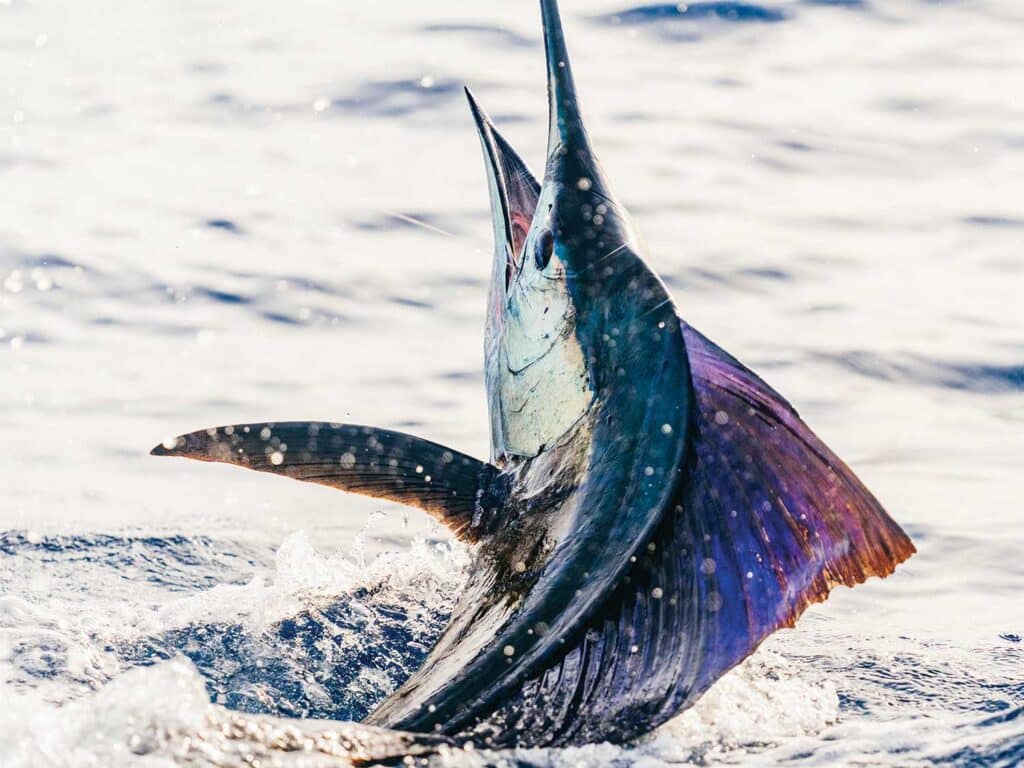
That’s important to us, especially as fishing becomes more of a family experience. John has two young children and, along with his wife, they’re going to be a big part of our time on the water moving forward. The Pacific offers a great training ground—not just for them, but for all of us. It’s the kind of place where an 8-year-old can hook their first sailfish, and you’re not worrying about rough seas, seasickness or visibility.
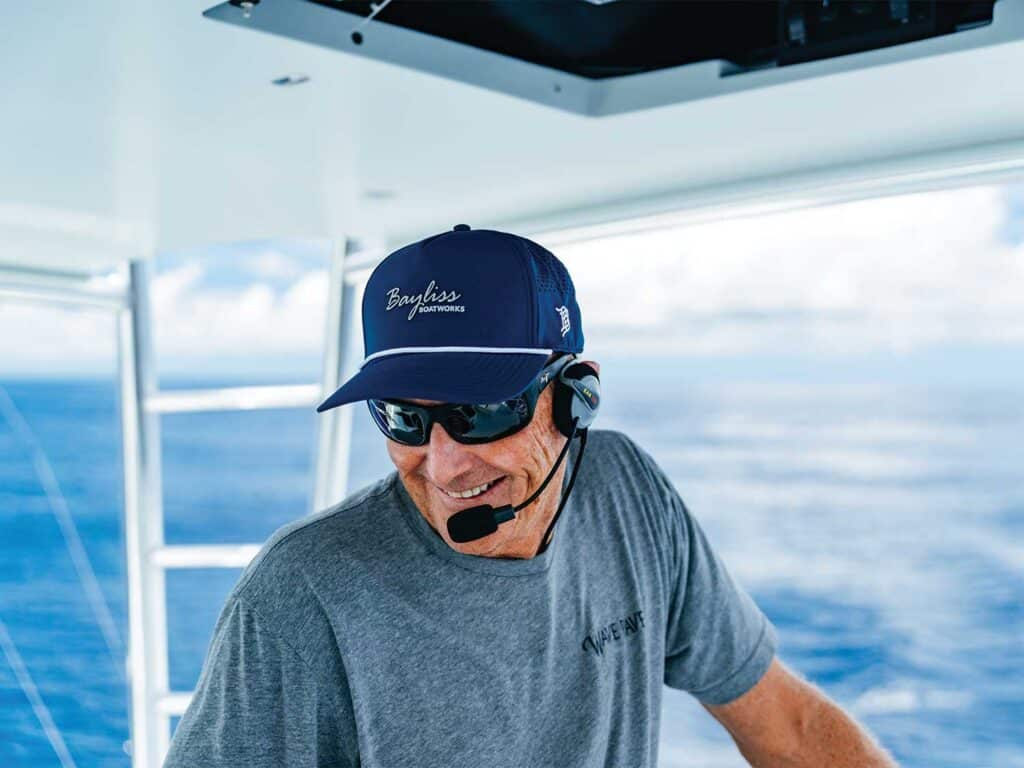
And then, as you build from that foundation, there are the more advanced destinations. I’ve never been to Cape Verde, but I’m actually heading there next week with one of the best crews out there, on a fantastic boat, Wave Paver. I’m incredibly grateful for that opportunity.
John #2: My short answer? The Azores, for a lot of the same reasons. It’s a place I’ve always wanted to experience. The chance to see giant blue marlin there is a huge draw, and from everything I’ve heard, the landscape is just incredible. It’s one of those destinations that offers both world-class fishing and a truly beautiful setting, which makes it pretty special.
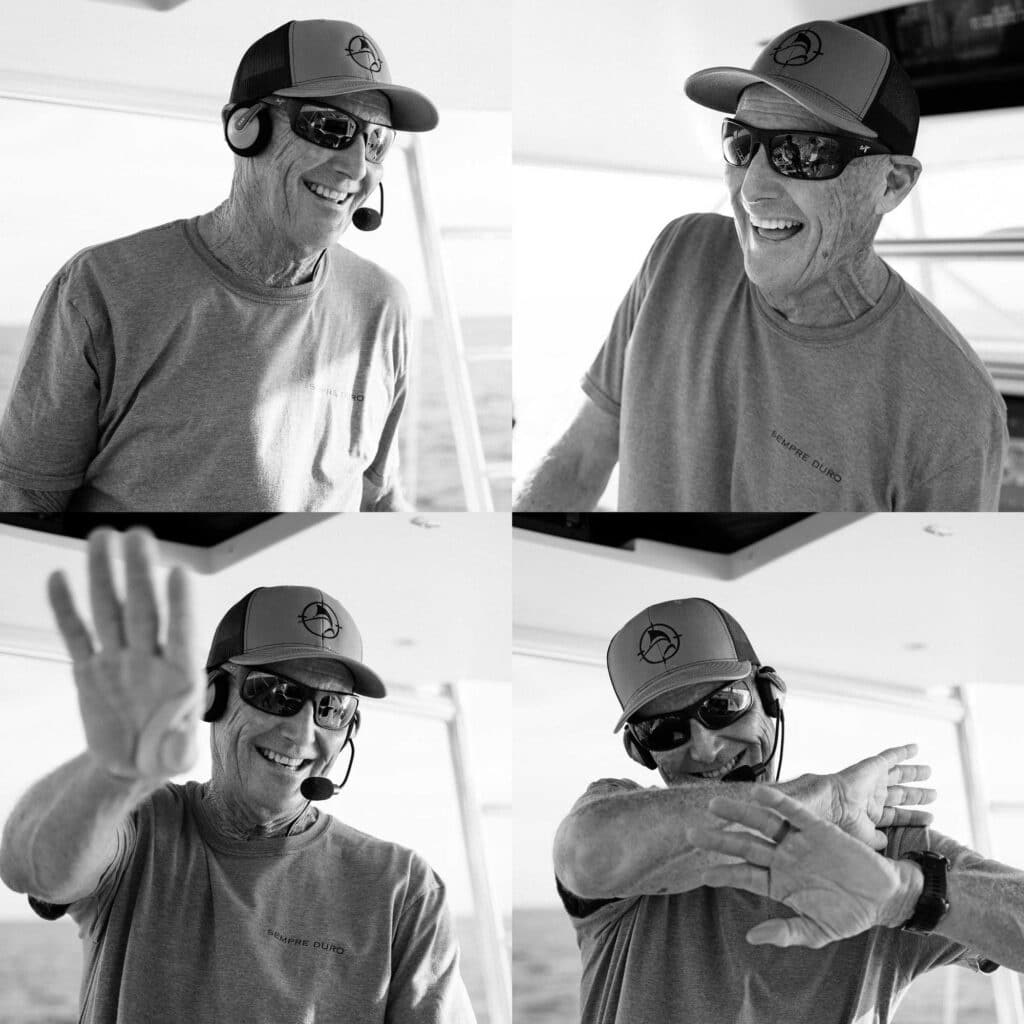
Q: How do you hope people talk about Bayliss boats in 25 to 30 years?
John #1: I hope that, when someone eventually cuts into them to do a modification, like a nuclear reactor, they’ll say, “I can’t believe they went through so much effort in a place you can’t even see.” I make a point of stressing this to our team as well. Just because you think someone won’t notice a hidden area doesn’t mean it won’t matter eventually. That mindset—understanding that every detail counts—is essential when building these boats. Everything matters, even the parts that aren’t immediately visible.
When that attention to detail is consistent throughout, it eventually reaches the right person—the owner. A captain will notice it and recognize that the team has been through this before, that we understand what it takes to fix something in an obscure location.
We fight hard to avoid putting the crew in a difficult position. Our goal is always to give them a setup for maintenance and the removal of parts that may eventually fail. We never want them to feel trapped or frustrated, asking, “Why did they do it this way?” That responsibility—making sure the crew is set up for success—is always on our shoulders.
Q: Do you think you will ever slow down, or is this how you are wired?
John #1: I really hope this is just how I’m wired. My goal is simple: I want to power-slide into my grave and drop in with a smile. The other day, John mentioned he feels like he’s constantly going and going. I get that. But that’s also the life we’ve built together—5:30 a.m. CrossFit, shop until 6. Rinse and repeat all week. Weekends are for hunting or fishing. We work hard, play hard, and spend an awful lot of time doing all of it together.
It makes me think about my dad, who got cut short a bit, and how much I wish he were around to see some of this. He was the one who got me started, and he remains my No. 1 mentor. I’ve also had some amazing mentors along the way—captains like Emory, Chip and Sam, plus all the incredible folks who helped us in boatbuilding. Those experiences inspire me, and they make me want to give 100 percent every day. I also hope John will be kind enough to tell me when I’m starting to get in the way. I don’t want to be a pain in the ass around here. If he tells me sincerely and nicely, I’ll take it to heart and adjust.
But as long as I can be productive and helpful, I want to keep doing this. Why would I retire from something this rewarding and fun?