Subscribe to Marlin magazine and get a year of highly collectible, keepsake editions – plus access to the digital edition and archives. Sign up for the free Marlin email newsletter.
Not so long ago, diesel engines weighed a lot, smoked a lot, and produced relatively meager horsepower for their size. But a mechanically inclined captain or owner could do a fair amount of work on them because of their simplicity. Fishermen learned to “adjust the rack” on Detroit Diesel two-strokes, and while these dinosaur powerplants burned a lot of fuel and sprayed oil everywhere in the engine room, they would almost always run.
Today, a laptop computer serves as the most important piece of diagnostic equipment on board a modern sport-fishing boat. Electronic control has become the norm, and numerous sensors within the engines continuously monitor all critical engine functions, so you know when a problem arises instantly.
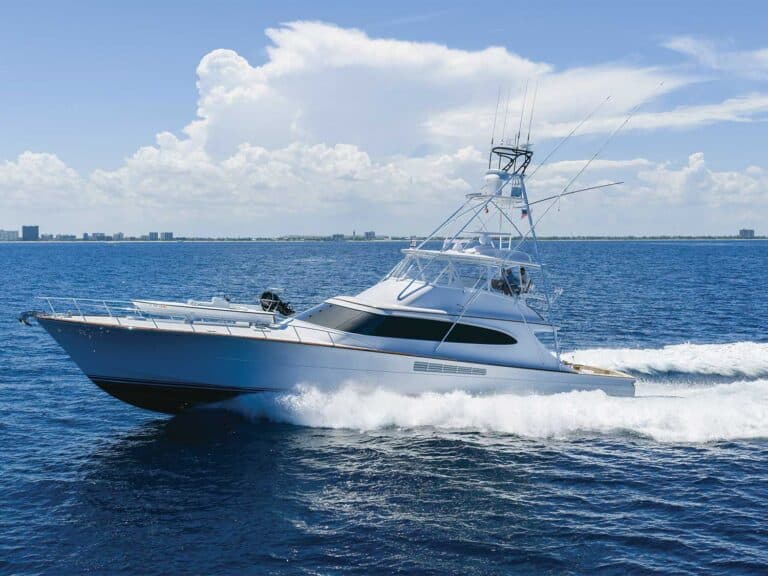
Common rail fuel injection has replaced mechanical fuel injectors, and advanced turbocharging technology has enabled manufacturers to push more air and fuel through smaller blocks, creating engines with amazing horsepower-to-weight ratios. The need for speed drives all this, of course, as cruise speeds have steadily climbed higher. In the old days, many boats cruised around 20 knots or less. Today, many cruise at 40 knots or more.
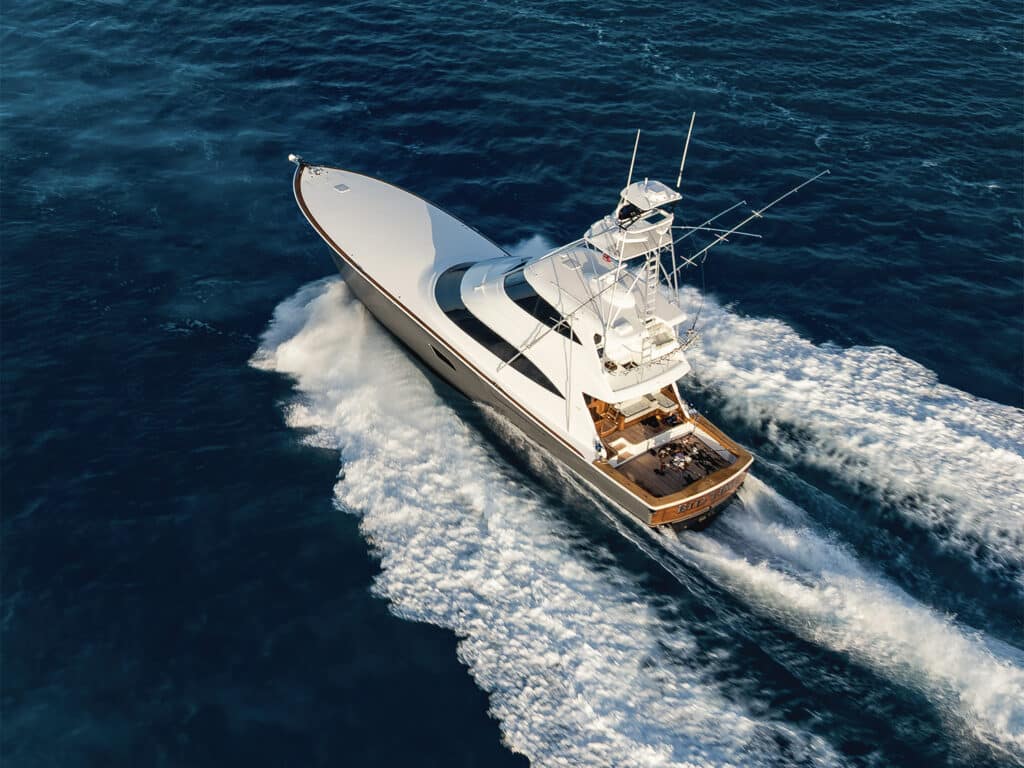
These developments come as good news for us, the consumers. Less weight, more power, optimized fuel economy and lower emissions equal better performance and a better experience on the water overall. And computer control and monitoring add a significant level of reliability to the mix as well, since you discover potential problems while they remain small, before they become big problems.
Of course, gone are the days when you knew your buddy had hooked up because you spotted a large cloud of black smoke in the distance. But breathing that stuff never seemed fun to me, and I’ll take clean over dirty every time. The new generation of marine diesel engines offers exceptional performance driven by powerful technology and represent the best we’ve seen yet. Here are a few new options to consider.
Caterpillar C32B
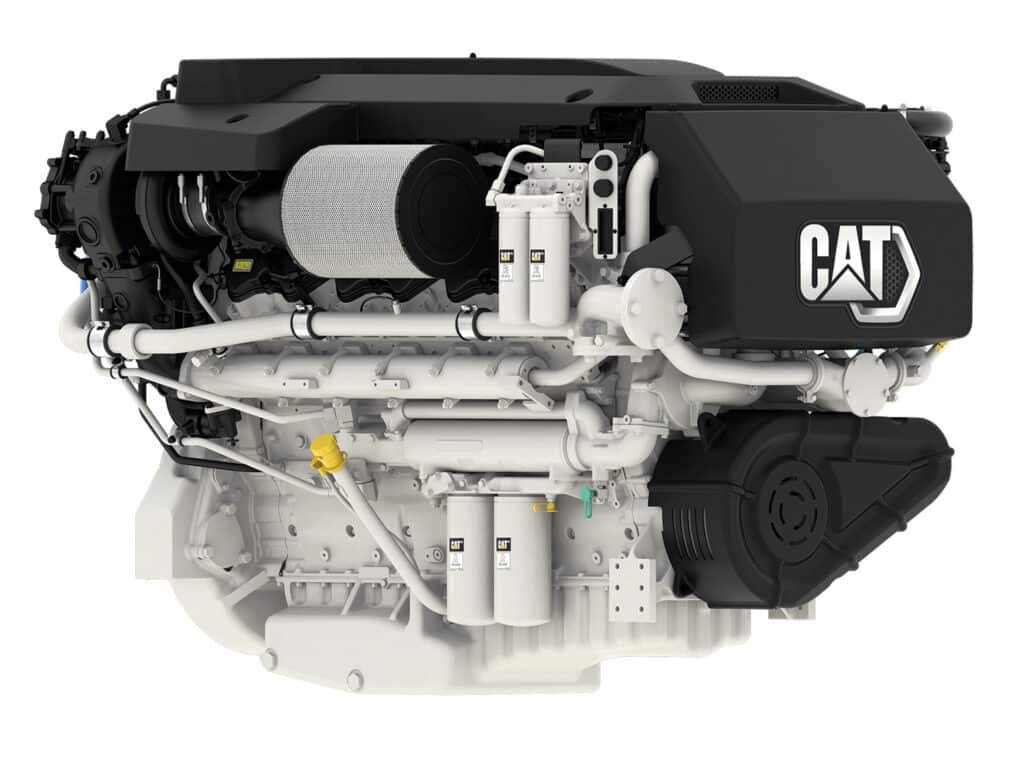
Caterpillar’s C32B is specifically engineered for sport-fishing yachts. It’s the same size and about the same weight as the C32 but delivers more power, so drop-in replacement becomes easy for owners wanting an upgrade. The C32B comes with an “E” tier rating, which means it can be operated at wide-open throttle as much as 8 percent of the time (up to 30 percent load factor). Rated at up to 2,433 mhp, this 12-cylinder diesel has a 32.1-liter displacement and comes with a recommended 250-hour interval between oil changes. An advanced unit injection fuel system makes the C32B up to 25 percent quieter under low-speed conditions, enhancing opportunities for onboard conversation. And Cat’s MPC100 Propulsion Control System provides dependable control even in the harshest conditions, with a small footprint that integrates easily into a helm’s design and provides clear haptic feedback. It can also be configured for multiple powertrains.
MAN i6X
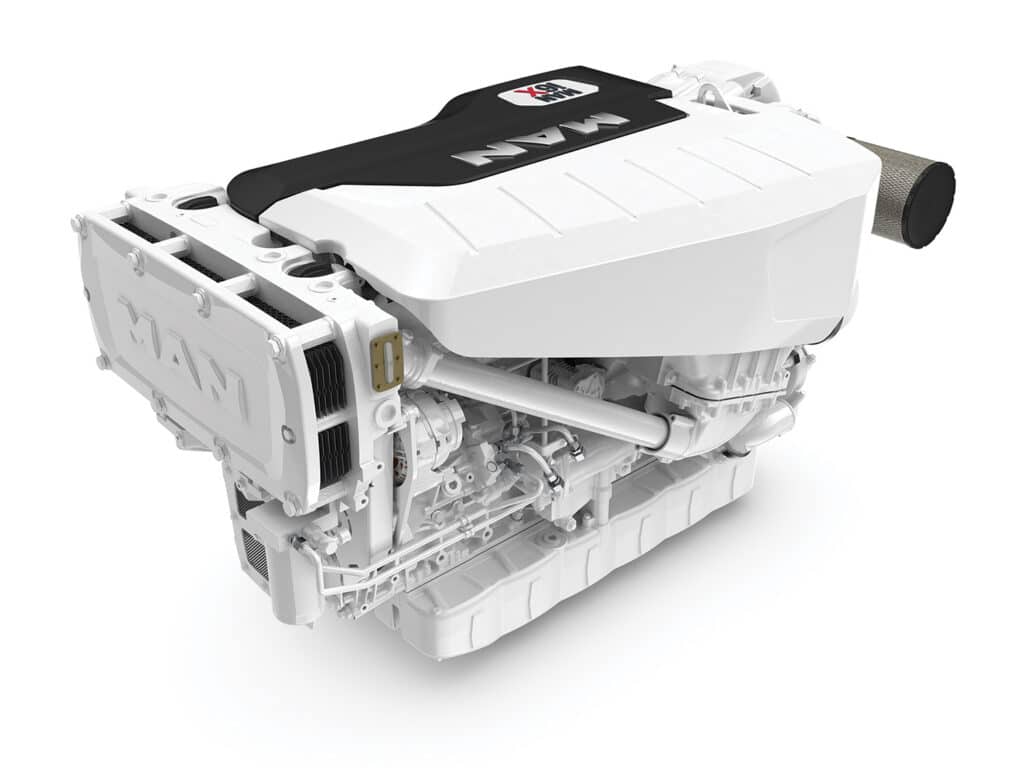
MAN will increase the top rating on its i6 line of engines from 850 hp to 1,000 hp with the new i6X. A 900 hp version will be available as well. The i6 line, introduced in 2015, previously offered models in 730, 800 and 850 hp variations. All i6 MANs feature a 12.4-liter displacement based on the previous D2676 engine. Like the previous i6 models, the new ratings will utilize a single turbocharger, which keeps both complexity and weight down. The new engines will have an advanced intercooling system and a demand-driven oil-cooling concept for peak performance and longevity. They will also meet the relevant emission requirements of IMO Tier II, EPA Tier 3 and EU Recreational Craft Directive 2013/53EU. The MAN i6X will be presented at the Cannes Yachting Festival in September of this year and be available in the first quarter of 2028.
MTU Series 2000 M96Z
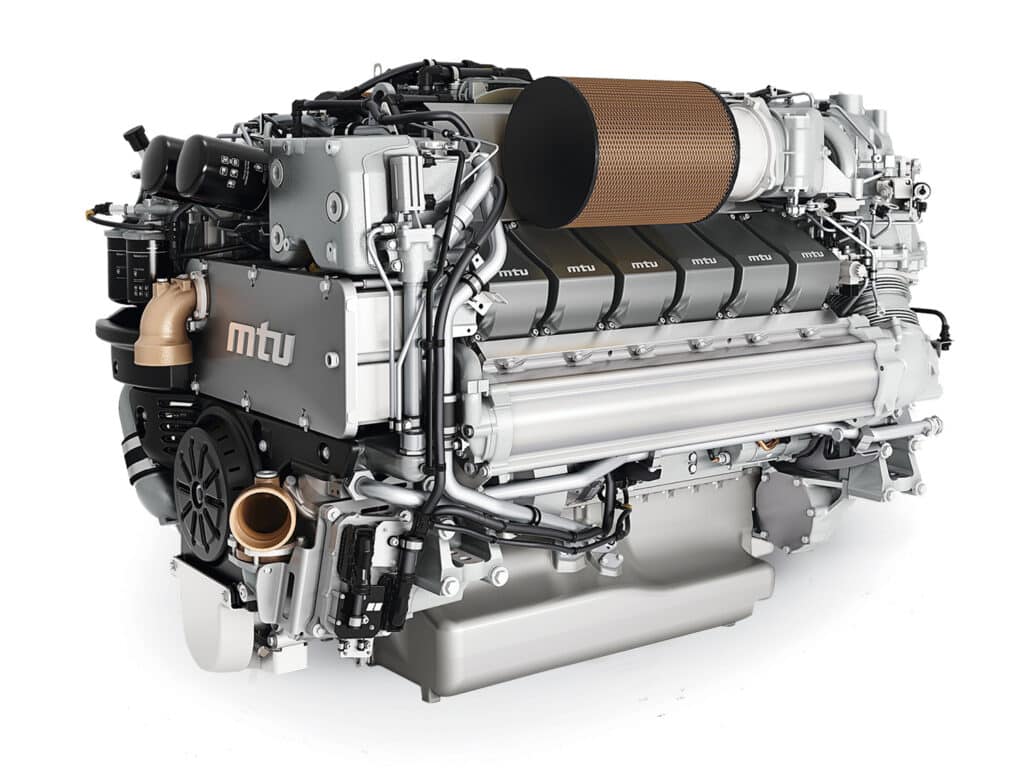
A new 12-cylinder version of the MTU Series 2000 has been launched by parent company Rolls-Royce, designated the 12V2000 M96Z. MTU accomplished this with only minor changes in weight and dimensions compared to the previous 12V2000 M96X model. An advanced turbocharger system delivers powerful acceleration at low exhaust emissions, and a reinforced crankcase, strengthened cylinder heads and new pistons ensure the reliability and durability of the engine. Like other MTU engines, the 12V2000 M96Z is approved for use with HVO (hydrotreated vegetable oil) renewable diesel. Certification according to IMO II and EPA Tier 3 recreational ratings is also available. “The new 12-cylinder version of the MTU Series 2000 engines stands for maximum performance, increased power density and impressive acceleration—another milestone in our commitment to providing our customers with first-class propulsion solutions for demanding maritime applications,” says Dr. Jörg Stratmann, CEO of Rolls-Royce Power Systems.
Scania 13L
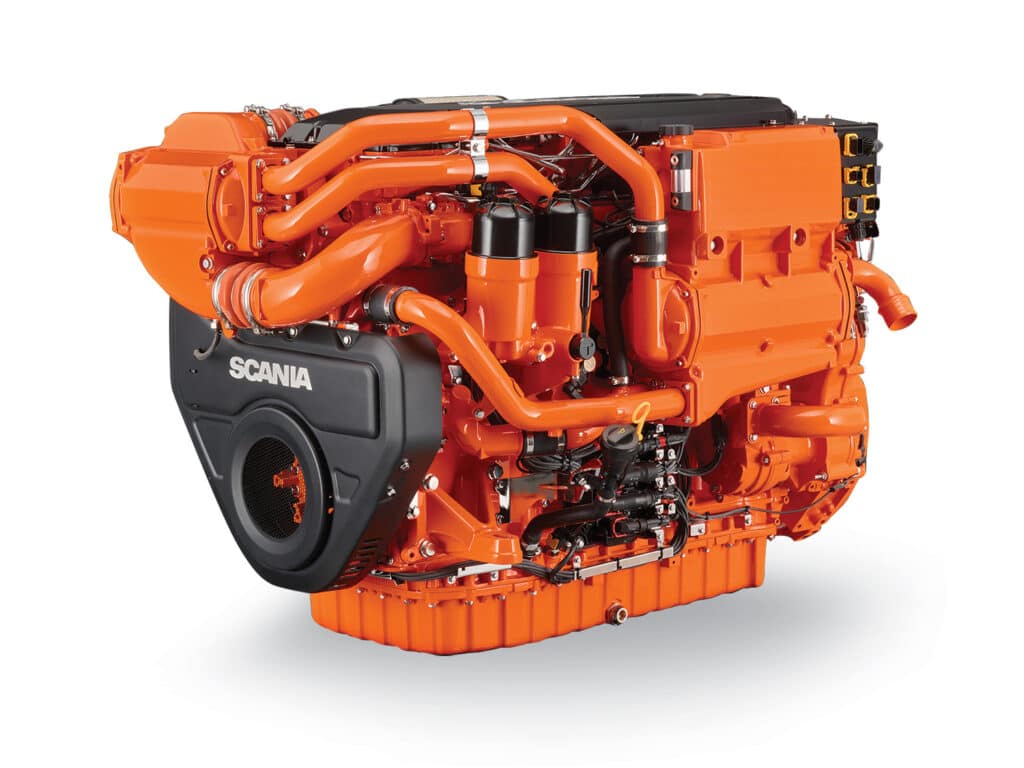
The Next Generation 13-liter Scania marine engine will be rated from 350 hp to 1,050 hp, depending on emissions requirements, application, duty ratings, and rated speed. This is the largest power range from a single engine platform in the current 13-liter class. It will provide a best-in-class power-to-weight ratio compared to similar 13-liter diesels on the market today. A new engine block design features a mono-block cylinder head and rotating assembly, including a crankshaft, pistons and dual overhead cams. These contribute to an engine that is remarkably reliable. Internal lubrication and cooling systems have been redesigned to reduce internal friction, and the Next Generation 13-liter engine will have an updated engine management system called the Scania EMS S10. The Scania factory, in Södertälje, Sweden, operates on 100 percent renewable energy. Scania has prioritized suppliers strong in sustainability as well. The Next Generation 13-liter engine will also see up to a 7 percent reduction in CO2 compared to the current platform and is alternative fuel-ready.
Volvo Penta D13 IPS Hybrid
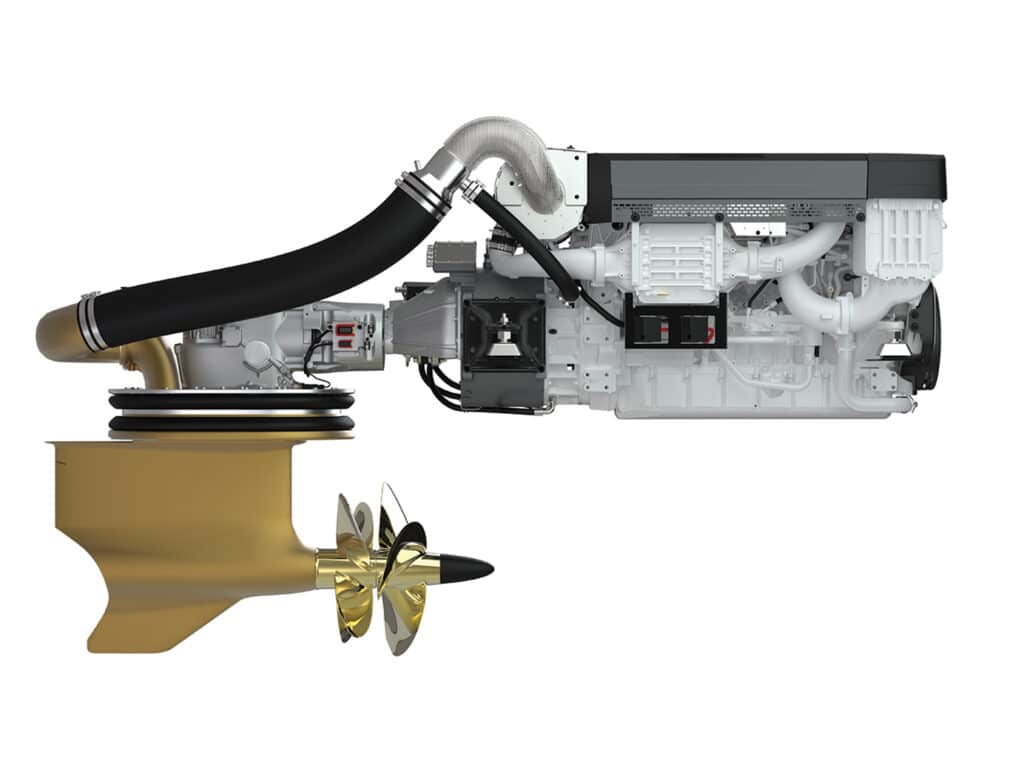
Volvo Penta has introduced a new D13 IPS Hybrid propulsion system, which fully integrates hybrid-electric technologies. The system provides near-silent operation by combining propulsion, electric motors, batteries, energy management and controls into a single package. The captain can select between electric, hybrid and crossover modes. In pure electric mode, boats cruise quietly at low speeds, dock with precision, and anchor in near silence. Noise and vibration are reduced dramatically. High-capacity batteries also power onboard amenities without the need for a generator. The D13 IPS Hybrid is compatible for use with HVO100, a renewable paraffinic fuel that can reduce emissions by up to 90 percent compared to conventional diesel fuel. In addition, the system has a compact aftertreatment system that complies with IMO III, the toughest emission legislation. All components connect through Volvo Penta’s Electronic Vessel Control (EVC) system, ensuring that signature features such as Joystick Driving, Assisted Docking, Autopilot and Glass Cockpit operate seamlessly across all drive modes.
Things to Consider When Repowering
Repowering a sport-fishing boat represents a major effort in terms of complexity, time and money. Basically, you must disassemble a substantial portion of your boat, remove the old engines and all the tangential items associated with them, and replace it all with new gear. Chances are none of the control systems the old engines used will work with the new ones, so a considerable amount of rewiring becomes necessary.
Modern electronic controls simplify that somewhat, since you don’t need bulky control cables running everywhere anymore. And as we’ve mentioned, smaller engines now produce more horsepower, so available mounting space may not be the biggest hurdle you face, as it often was in the past. Older boats sometimes came with cramped engine rooms, built to accommodate a specific diesel engine. If a boat got built around a V-6 Detroit, for instance, there may not be adequate length available in the engine room to install inline-six diesels.
It’s crucial to undertake a repower with a clear goal in mind: What exactly do you hope to accomplish? More speed? Better economy? More range? All three, probably. Also consider the ramifications on resale value carefully. Will you have a chance of recouping some of the money you’ll spend when you decide to sell the boat? Probably not, but a clear-headed evaluation of the financial side of the project helps prevent disappointment down the road. If you’re adding more horsepower, you’ll surely need new propellers, but you may also need larger drive shafts, struts and sometimes even rudders. A large-scale re-engineering of the drivetrain can add a lot of cost.
And speaking of financial matters, just know that it will inevitably cost more than you initially think it will. Those of you who’ve repowered boats know that fact of life, but if you haven’t, just be aware that you’ll almost certainly find other things that need fixing as the project moves forward. We call that the “while we’re there” principle, and the potential list gets long. How is the generator holding up, and are the fuel tanks still solid? Do the engine mounts need to be rebuilt to accommodate the new engines (almost certainly), and could the engine room use a fresh coat of paint? Addressing issues with these things can be accomplished easier when the engines are out of the boat, but they add time and cost to the project.
The last bit of advice concerns who you choose to do the repower. Choose carefully. A great installation with everything properly wired and aligned will bring you instant happiness when you get back on the water. Conversely, a bad installation will bring you nothing but headaches, potentially major ones. But there are many highly skilled craftsmen in excellent yards, so doing a little homework will lead you to the right one and make your boat better than ever.