Subscribe to Marlin magazine and get a year of highly collectible, keepsake editions – plus access to the digital edition and archives. Sign up for the free Marlin email newsletter.
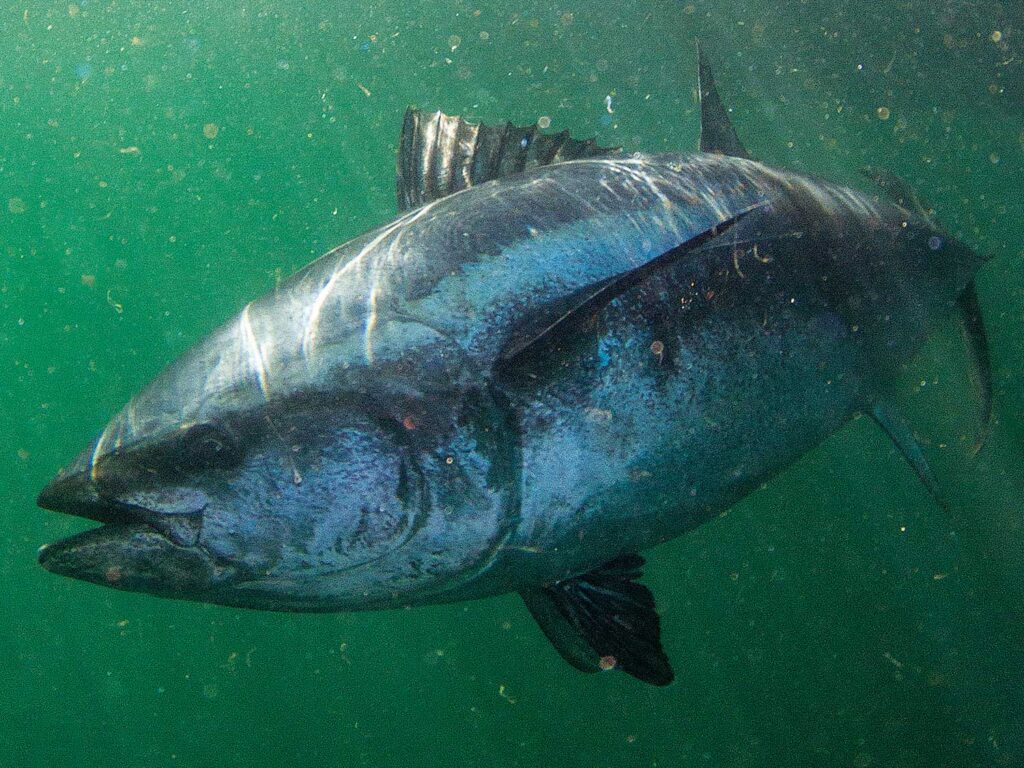
There are few sounds in the world better than that of a clicker screaming from a tuna attached to the other end. Whether you’re targeting bigeye on the troll or yellowfin on the chunk, or hoping for a bluefin while making the run offshore, success in the East Coast tuna season usually comes from making the right decisions before you ever put a bait in the water. While every trip is different and each year unique, my overall approach rarely changes.
Finding the Right Water
Before leaving the dock, I spend a lot of time studying sea surface temperature, chlorophyll, altimetry and current movement. I’m searching for areas where multiple conditions overlap. Temperature breaks, clean blue water pushing against greener water, current edges and bottom structure all create opportunities for bait (and predators) to gather. I’ll even go as far as to look on the AIS trackers to see where the commercial squid boats are working and if their locations overlap any of these features.
Bigeye and Yellowfin on the Troll
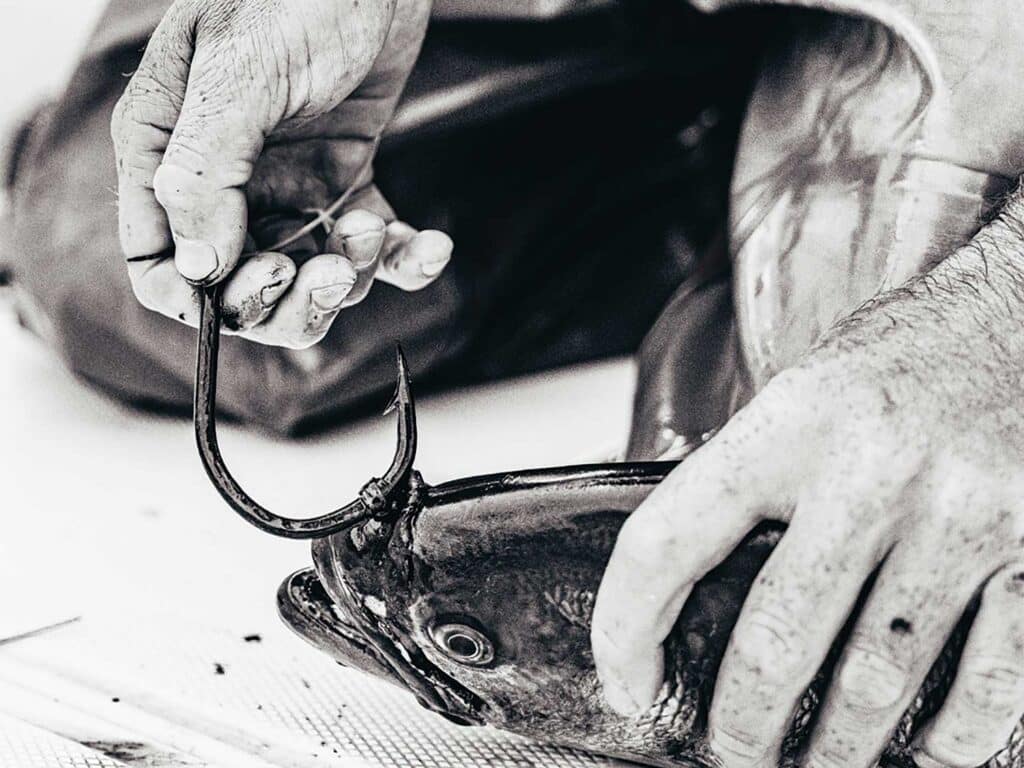
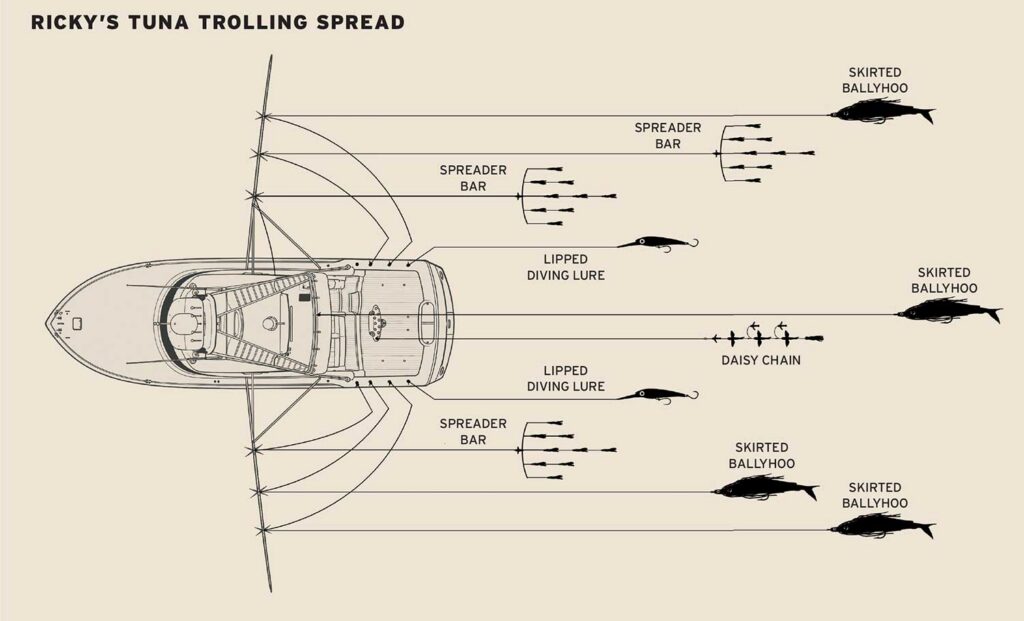
My standard tuna trolling spread in close mostly consists of lipped diving lures on the flat lines, spreader bars and bird chains. Farther back in the spread it changes to single baits, like a skirted ballyhoo. If I am yellowfin fishing, I pull 11 to 14 lines on a sport-fishing boat. If I am targeting bigeyes, I will use some larger baits and make it a nine- to 11-rod spread.
The only real difference between trolling for yellowfins and trolling for bigeyes is location. Yellowfins and bigeyes can mix together at times, but bigeyes tend to hang in the 150- to 300-fathom depths that often relate to structure. Yellowfins can be anywhere; their presence relates to water-quality conditions. As the season goes on, you tend to see these tuna spend less time in the same locations.
Don’t Ignore the Ride Out
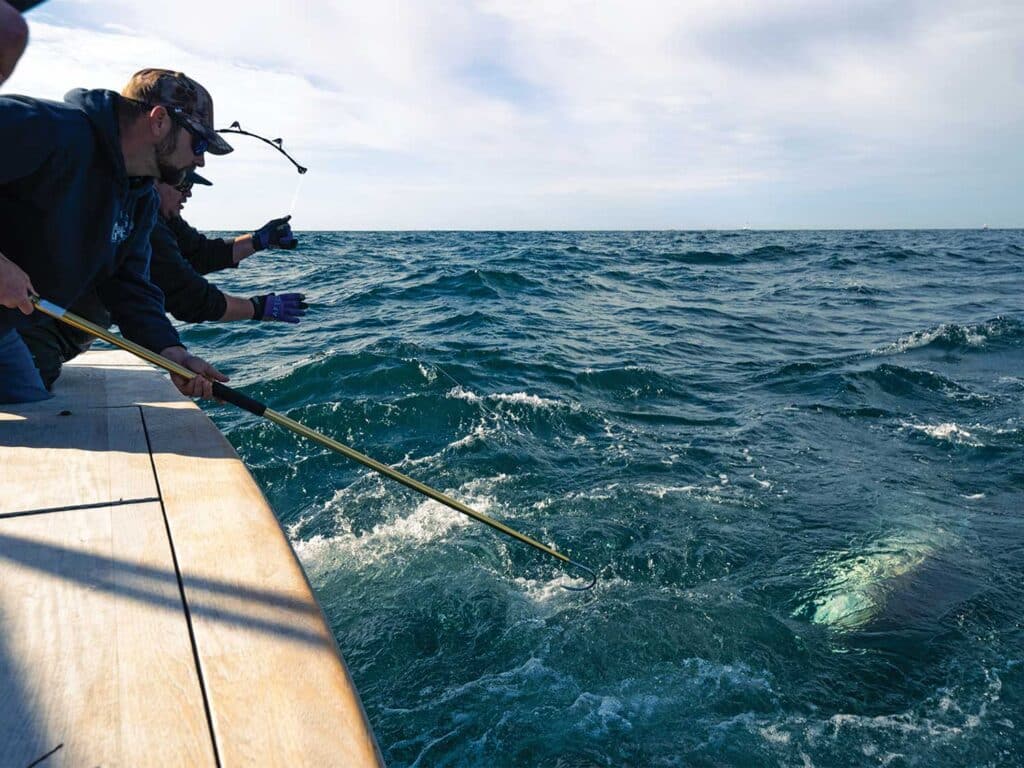
Some of the best bluefin opportunities happen before you ever reach the canyon, especially early in the season. When the migration is happening, bluefins are usually the first to be caught in the canyons in the early season. As the water warms, these fish tend to move to the midshore fishing grounds in 20 to 40 fathoms while the yellowfins and bigeyes move into the canyons, offering a great opportunity to catch your bluefins on the ride out. Keeping one or two spinning outfits rigged with topwater plugs or stickbaits, or some other casting lure of your liking, can come in handy.
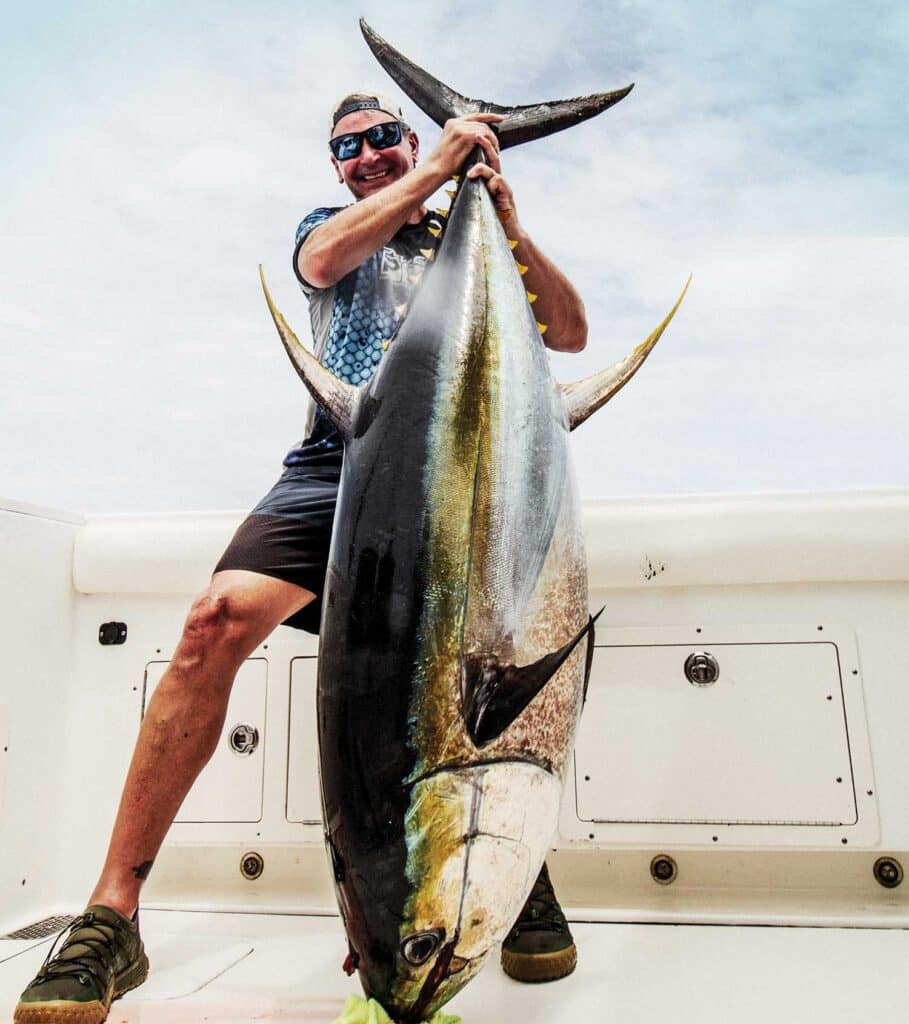
Tuna on the Chunk
Moving into fall, tuna prefer to eat chunked baits, and trolling gets difficult. Loading up on flats of butterfish, sardines, squid, or live baits like peanut bunker is a must to be successful. Prepping for a chunking trip means precutting your chunk baits ahead of time. Being prepared with extra rigs, plenty of 30- to 50-pound fluorocarbon leader and lightweight chunking outfits is key. This is also when outfitting your midshore spinning rods with vertical jigs can come in handy.
Once I figure out where I want to set up my drift, I establish a steady chunk line—not fast, not slow, just consistent. Too many anglers dump handfuls of bait overboard every few minutes. I want four to five chunks drifting naturally through the water column always within sight on the next batch, creating a continuous trail rather than isolated piles of bait. This is why having them precut is important. Key tips here are to be sure that the hook is hidden in your bait and you use light enough fluorocarbon leader to get the bites. Some days I have to scale down to 30-pound-test to get bit. If the bite is tough, I will experiment with different line sizes and leaders. I also put a bait or two down at different depths, usually based on where I am marking fish or the thermocline on my sounder. Fish tend to ride the thermocline, so I have found being in or just above it is the proper zone to get bites.
The Little Details Matter
When it comes to tuna fishing, small details consistently produce big results. Pay attention to water quality instead of simply chasing temperature. Watch your sonar (and yes, I am not just talking about the omni) as closely as your trolling spread. Take the time to establish the perfect drift before chunking. Keep your chunk line consistent. Always have a pitch rod ready for mahi, topwater action, or whatever else you feel you may encounter. Being ready for any situation that may arise is crucial. Most importantly, stay adaptable.
Conditions offshore change by the hour, and the crews who consistently catch tuna aren’t necessarily fishing harder. They pay closer attention to features, conditions and changes, and make the proper adjustments to capitalize on those changes.
Fishing rewards preparation, observation and patience. Put those three together, and whether you’re looking for bigeye on the troll, yellowfin on the chunk, or an unexpected topwater bluefin on the ride home, you’ll put yourself in the best position to make the most of every offshore opportunity.