Subscribe to Marlin magazine and get a year of highly collectible, keepsake editions – plus access to the digital edition and archives. Sign up for the free Marlin email newsletter.
In today’s billfish tournament scene, the margins are razor thin—and the money on the line is anything but small. From the mid-Atlantic to the Caribbean to South Florida, the best crews aren’t just showing up with a good spread; they’re showing up with a system. And more often than not, that system starts long before lines ever go in.
At the highest levels, bait isn’t an afterthought. It’s the foundation. How the contents of your bait freezer are sourced, handled, rigged, and managed over multiple days can be the difference between a check and going home empty-handed.
A Mid-Atlantic Perspective
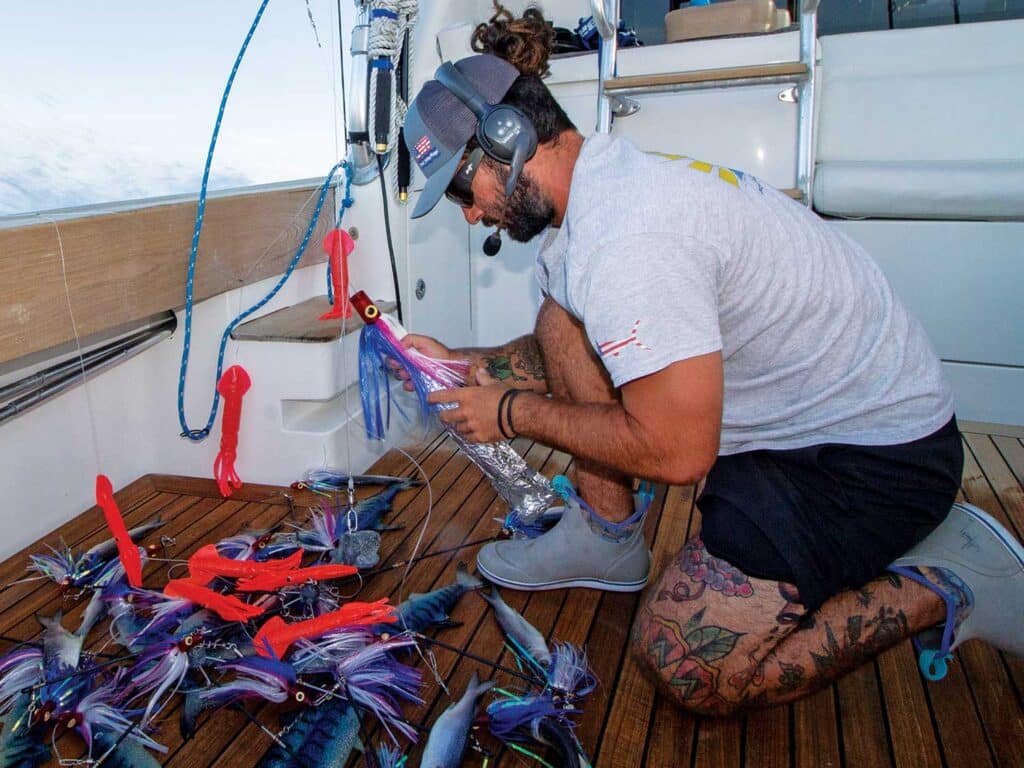
For Capt. Jon Duffie out of Ocean City, Maryland, that preparation shows up in sheer volume and redundancy. “It wouldn’t be uncommon for us to have six to eight dozen hook baits rigged going into Day One,” Duffie says. “You better do everything you can to have the best presentation.”
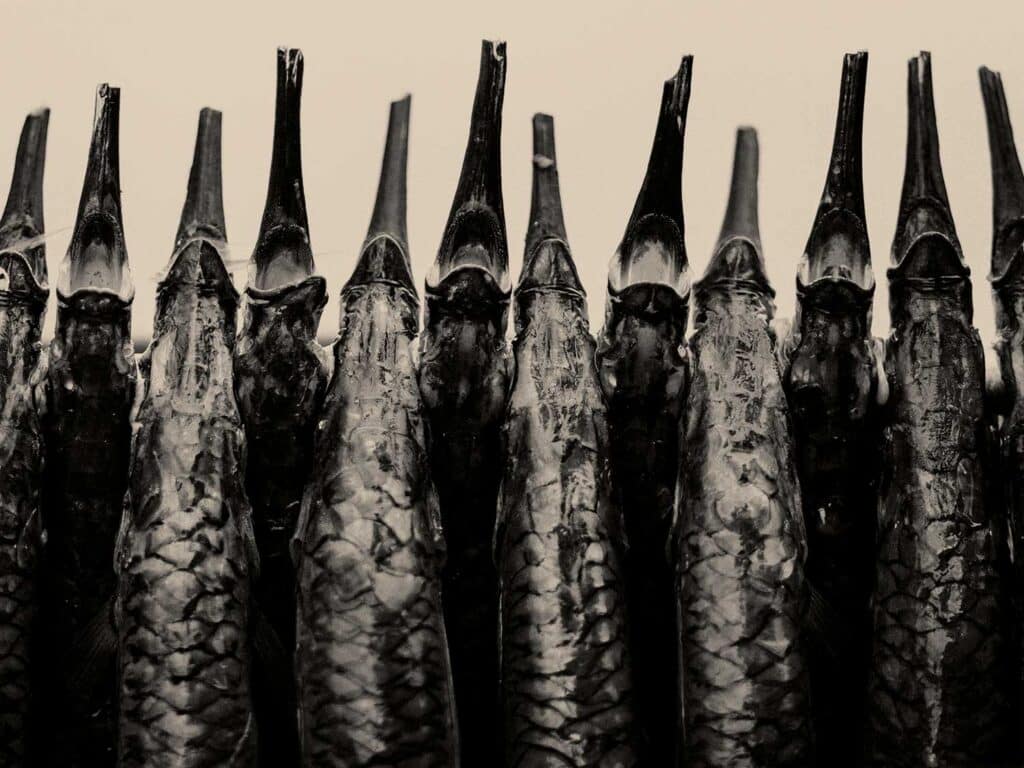
Duffie’s system doesn’t start the week of the tournament; it starts months in advance. He’s in regular contact with a bait supplier in the Florida Keys, letting them know he wants greenback (inshore) ballyhoo. Greenbacks are hardier and survive freezing and prep better than the bluebacks that come from deeper water. That proactive communication ensures that Duffie and company get the quality bait his team depends on, season after season.
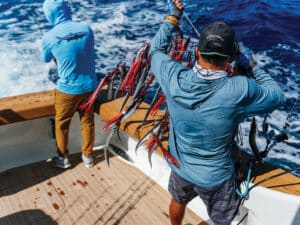
When it comes to rigging, his approach is similarly dialed in. Dredges are fully rigged the day before, often with backups for every tier. Hook baits are rigged fresh every single morning—no exceptions. With money and pressure at all-time highs, Duffie doesn’t see daily rerigging as an expense, but rather as insurance. “Compared to the cost of fishing the tournament, it’s nothing.”
Duffie’s attention to detail, however, goes even deeper. No fresh water ever touches his baits. Everything is handled with salt water, kept cool and damp, and rigged carefully to avoid tearing scales or damaging the bait. Even the pressure applied with Monel wire matters. Squeeze it too tight, and you compromise the bait before it ever hits the water.
“Be gentle,” Duffie says. “If you pull too hard, you’re making the marlin’s job easier.” That level of precision is what defines the mid-Atlantic style: high volume, constant rotation, and an almost obsessive focus on presentation.
Attention to Detail Rules the Caribbean
Move south into the Bahamas and Caribbean, and the conditions force a different kind of discipline. For Capt. Raul Gonzalez running Bar South, it’s not just about how much bait you start with; it’s how fast you burn through it.
“I like to have at least five dozen baits—that’s a pretty safe number,” Gonzalez says. “There’s a lot of bycatch… and the water’s hotter, so everything washes out faster.”
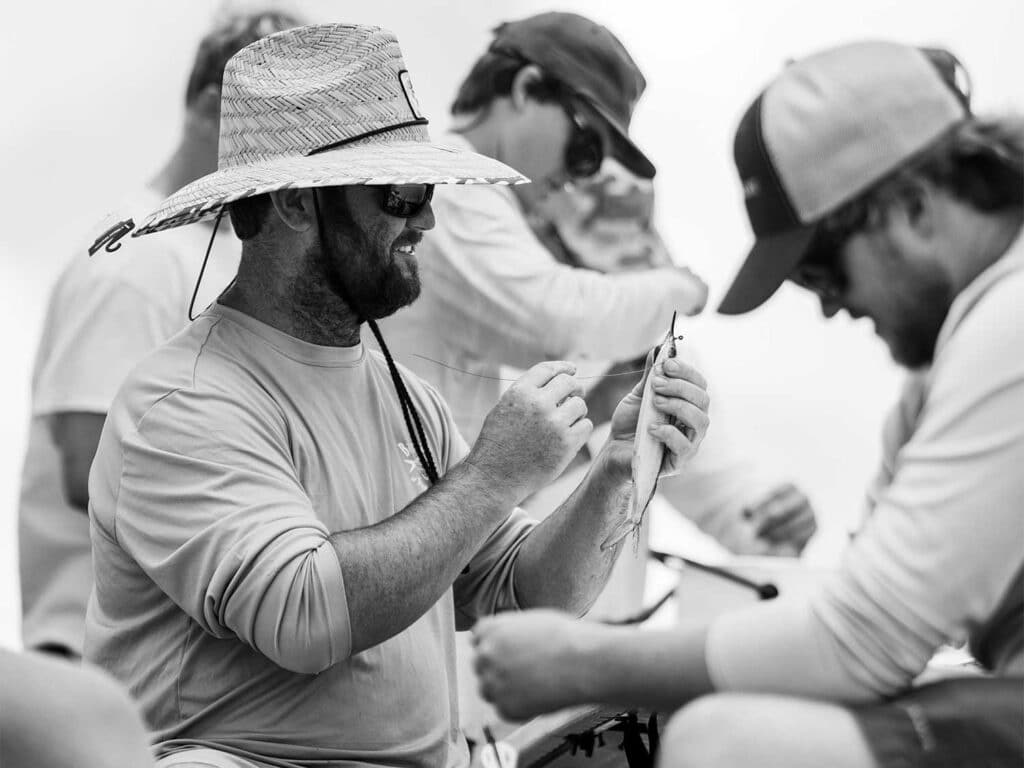
Heat and constant action from mahi, wahoo and barracuda mean bait turnover is inevitable. Gonzalez counters that with efficiency. He rigs mullet days in advance because they hold up well. Gonzalez staggers his ballyhoo prep with careful thawing and shaded rigging sessions late in the day.
“I’m constantly changing out the salt water or brine water when I’m prepping,” he says when asked about initial bait prep. “You want to keep the bait clean.” And when it comes to selecting bait in the first place, Gonzalez is blunt. “If you see blood in the pack, it’s been thawed before.” That might seem like a small detail, but it’s one that can cost you bites.
Veteran Perspective from South Florida
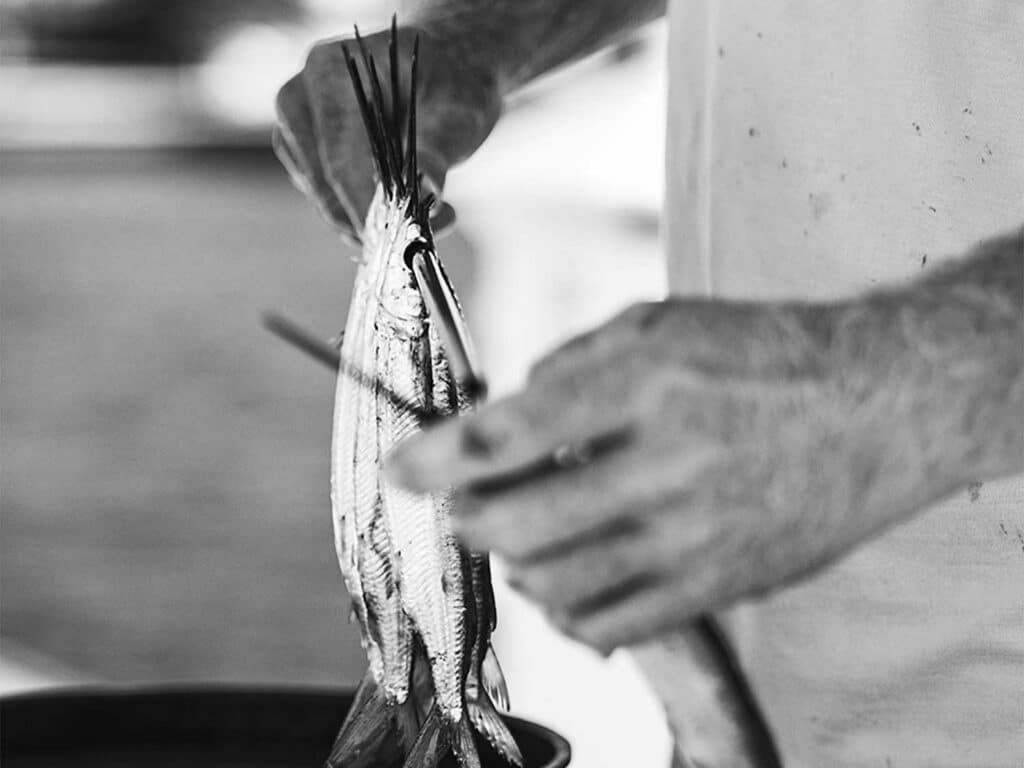
Down in South Florida’s sailfish circuit, Capt. Glenn Cameron on The Floridian takes things even further—especially when it comes to dredge-fishing. Cameron regularly starts a tournament with around 100 ballyhoo for hook baits and 300 to 400 dredge baits, mostly locally sourced mullet.
His hook baits are procured and initially prepped ahead of time—often a month in advance—but final rigging still happens the morning of Day One. Pitch baits for blue marlin tournaments are ready too, rigged with Spanish mackerel or chugger-ballyhoo combos.
But more than numbers or technique, Cameron points to something less tangible as the real separator. “Quality of bait is everything,” he says. “And that comes from your relationship with your bait guy.”
For Cameron, building and developing that relationship takes years. His advice? Keep the bait guy happy, take everything they offer, and maintain communication so you get the prime bait when it’s available. That network ensures his team is never scrambling at the last minute. It’s the kind of edge you can’t teach.
Preparation and Planning Are the Names of the Game
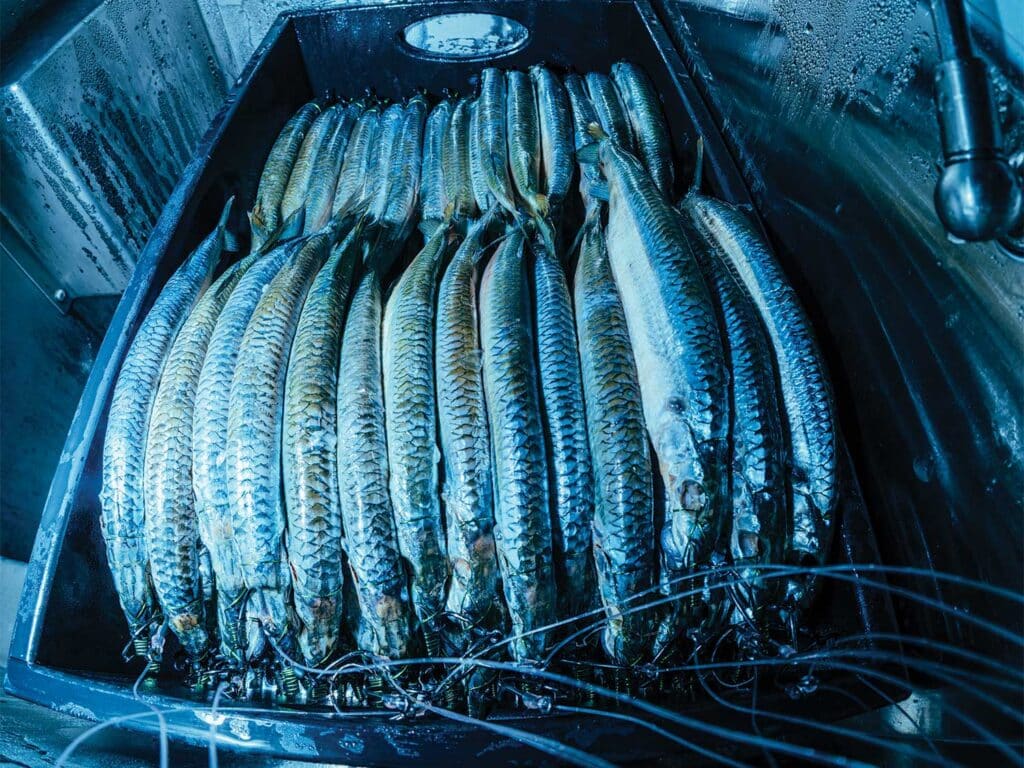
Planning and preparation are considerations that echo across regions. The best crews aren’t scrambling for bait the week of a tournament. They’re sourcing it months in advance, working with trusted suppliers, and building relationships that ensure they get the best product when it matters most.
Whether it’s Duffie rigging fresh baits every morning in Ocean City, Gonzalez managing turnover in hot Caribbean waters, or Cameron stacking hundreds of dredge baits for a South Florida sailfish bite, the principle is the same: Winning teams don’t just fish better; they prepare better. And in today’s tournament world, that preparation starts long before Day One. It starts with good bait, handled the right way and with the right people behind it.