Subscribe to Marlin magazine and get a year of highly collectible, keepsake editions – plus access to the digital edition and archives. Sign up for the free Marlin email newsletter.
Ah, the World Cup. Where teams from around the world compete on a global stage for ultimate bragging rights and national pride. And no, I’m not talking about fútbol.
Every year since 1985, the Blue Marlin World Cup has been big-game fishing’s one-day equivalent of the FIFA spectacle that captivates the globe every four years. And although there was no extra time or penalty kicks to determine the 2026 champion, the race for this year’s Blue Marlin World Cup was the tightest in tournament history.
A total of 148 teams competed in this year’s BMWC, and well before lines-in, there were some heavy favorites. Cape Verde had been experiencing an incredible season that started in late March. Kona had produced quality fish in the days leading up to the Cup, and Bermuda was stacked with 50 teams competing for the global prize. Then there was the South Pacific, always a contender and home to the defending champions from 2025.
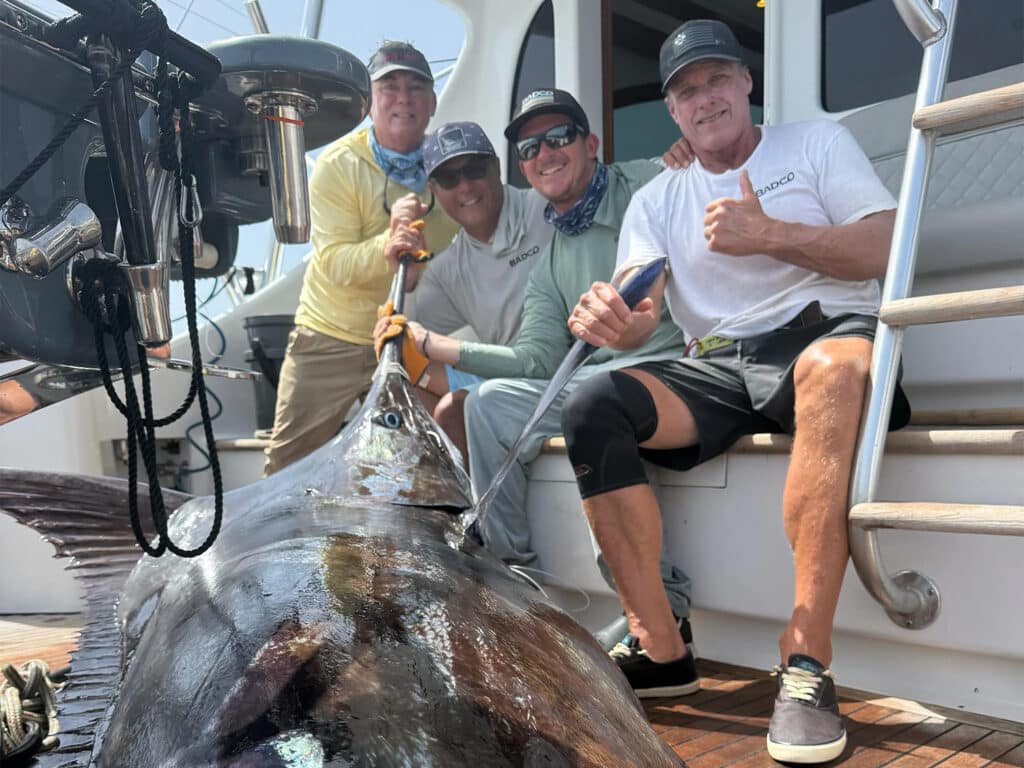
Anticipation was high, and we didn’t have to wait long before the first fish was reported. Bad Company had boated a blue marlin at 10:47 a.m. in Cape Verde that measured 119 by 65 inches. Certainly a quality fish and large enough to meet the 500-pound tournament minimum, but the world would have to wait for an official weight.
From my temporary outpost in Bermuda, where I was working the Bermuda Triple Crown, the news spread like wildfire as teams were just putting lines in the water for the first day of fishing. While the measurements signified a strong fish, it was certainly beatable by Bermuda standards.
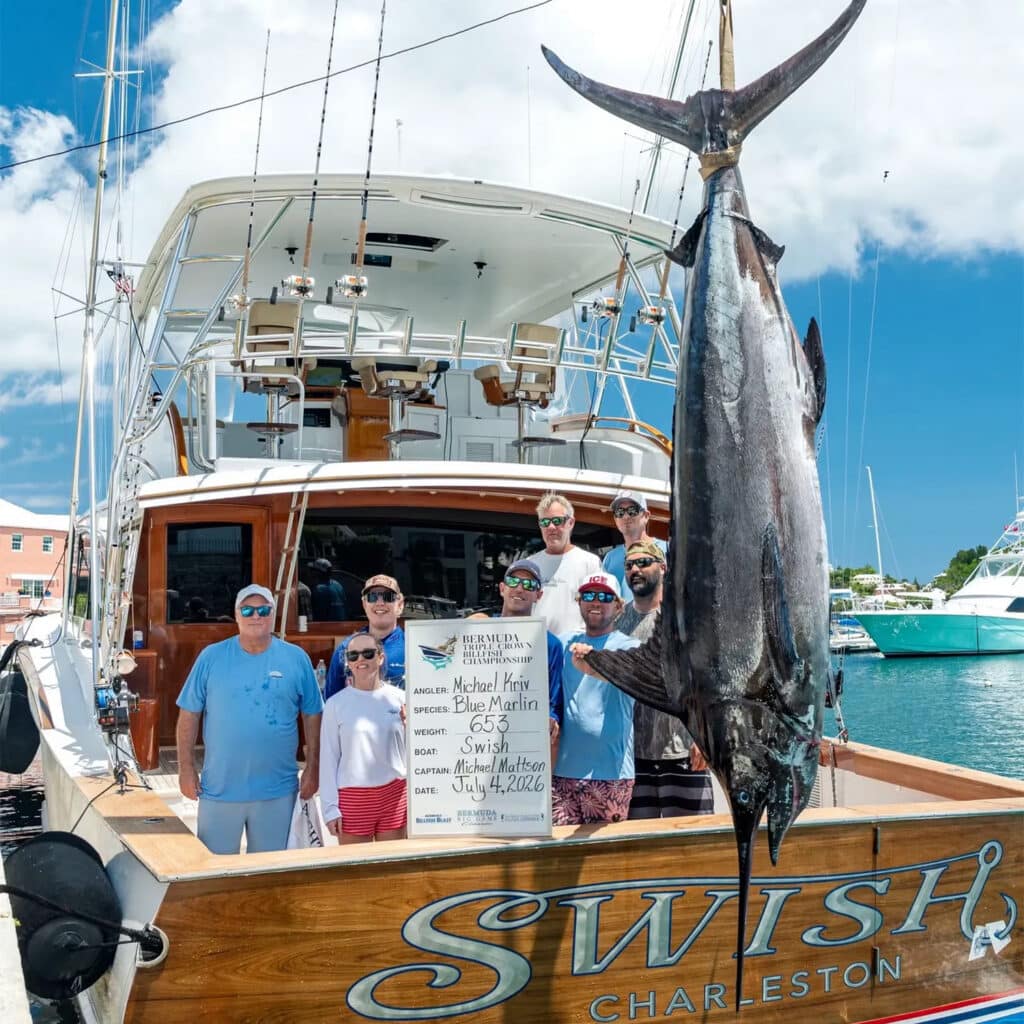
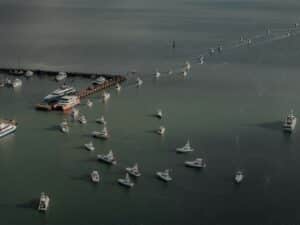
So when Bree radioed tournament control that they had boated a fish and were headed to the weigh station, a crowd quickly grew at Barr’s Park as locals and non-tournament affiliates gathered to see if she would be a contender. With the scales stopping at 617 pounds, the team and crowd erupted in celebration. It was a solid qualifier for both the World Cup and the Bermuda Billfish Blast.
With plenty of fishing left in the day, Bree headed back out to see if they could strike twice. The weigh station was cleaned up, Bree was back fishing, and we had just sat down for a quick lunch when the message came through that Swish had also boated a fish and was headed to the scales.
Lunch was bypassed.
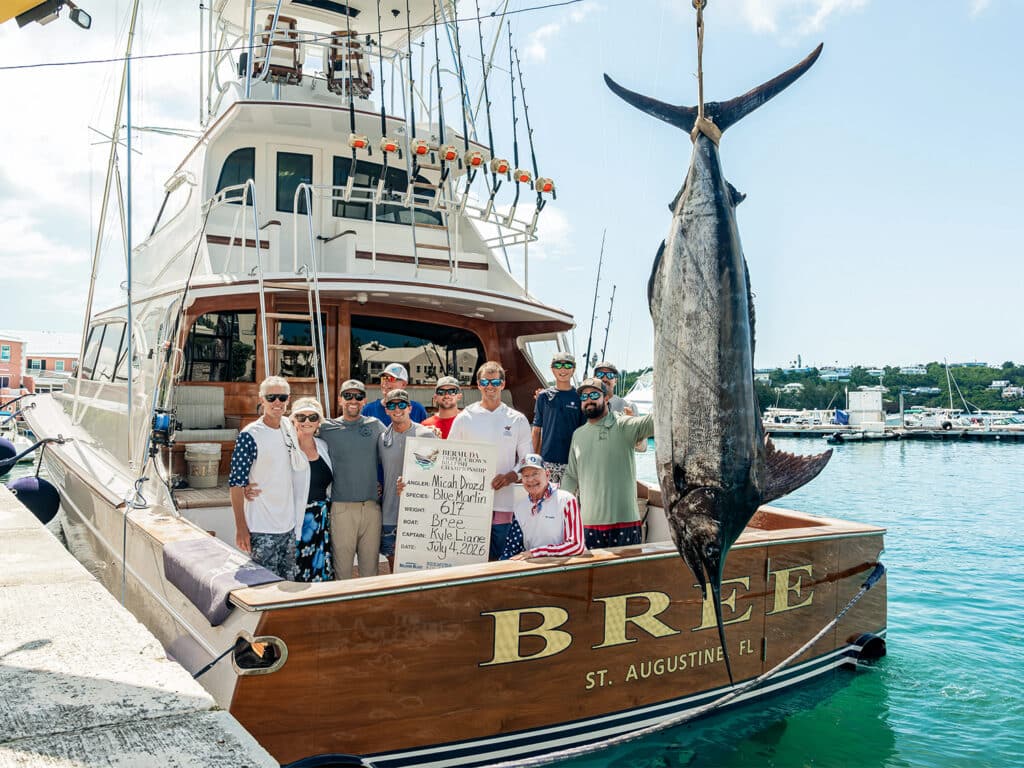
This one measured 119 inches as well, but girth reports were slow and varied. Upon first sight, she was noticeably thicker than Bree’s fish from just a few hours earlier. And the scale confirmed it: 653 pounds, making Swish the new unofficial leader of both the BMWC and the Bermuda Billfish Blast, as no weight had yet been reported for Bad Company’s fish.
That only added to the drama as the fishing windows began to close in Cape Verde and Bermuda. Everyone was waiting with bated breath for the infamous “And we’re back!” live tournament update from Fly Navarro, tournament director of the BMWC, but as the afternoon stretched on, no official weight for Bad Company had been posted.
By then, it was 4:30 p.m. in Bermuda, and we once again made our way down to Barr’s Park for video verification for Day One of the Bermuda Billfish Blast. Arriving on scene, our tournament director, Michelle Gaylord, pulled me aside.
“Did you see?!”
I hadn’t seen, but I knew exactly what she was referencing.
“What was it?” I shot back instantly.
“653 — same as Swish.”
After a short pause and a few choice words of disbelief, we moved on to the obvious question: How would the tiebreaker work?
Having already spoken with Fly, Michelle filled me in on Rule No. 9 of the BMWC, which states that in the event of a tie, the winner is determined by the fish that was boated first in its respective time zone. Not quite as dramatic as extra time or PKs, but nevertheless, this would be the tightest finish in BMWC history.
Neither of us knew who had boated their fish first, so once again, we waited for Fly’s official ruling. But that would have to wait, as Kona and the South Pacific still had plenty of fishing left in their respective time zones.
So once again, the big-game community watched and waited.
And while I attempted to stay awake until the final zone had finished fishing, the day’s action had taken its toll. By 10 p.m., I was out.
Waking at 1 a.m. for my nightly bathroom trip, I couldn’t help but check my phone. Foolish move, as returning to bed wasn’t easy. But it was official.
Bad Company had won.
No qualifiers had been weighed in Kona or the South Pacific, and Bad Company had edged out the win on time, boating its fish at 10:47 a.m. Cape Verde time. Swish boated its fish at 12:51 p.m. Bermuda time.
“No, this has never happened in the history of the BMWC,” Fly Navarro told me early the next morning. “What’s even crazier is that all three qualifying fish had the exact same length of 119 inches. Pretty incredible.”
So there it is. In a summer dominated by global competition, the 2026 Blue Marlin World Cup brought all the drama, excitement and emotion that has captured much of the world over the past month, just packaged in a big-game fishing box.
And as a big-game angler and fan of this sport, what more can you ask for?
Congratulations to Bad Company on their historic win, and to Swish for an equally impressive catch. Also, a tip of the hat to Fly and the BMWC team for handling this unique situation so well and keeping the big-game world updated as the drama unfolded.
Thankfully, we won’t have to wait another two or four years to do it all over again.