Subscribe to Marlin magazine and get a year of highly collectible, keepsake editions – plus access to the digital edition and archives. Sign up for the free Marlin email newsletter.
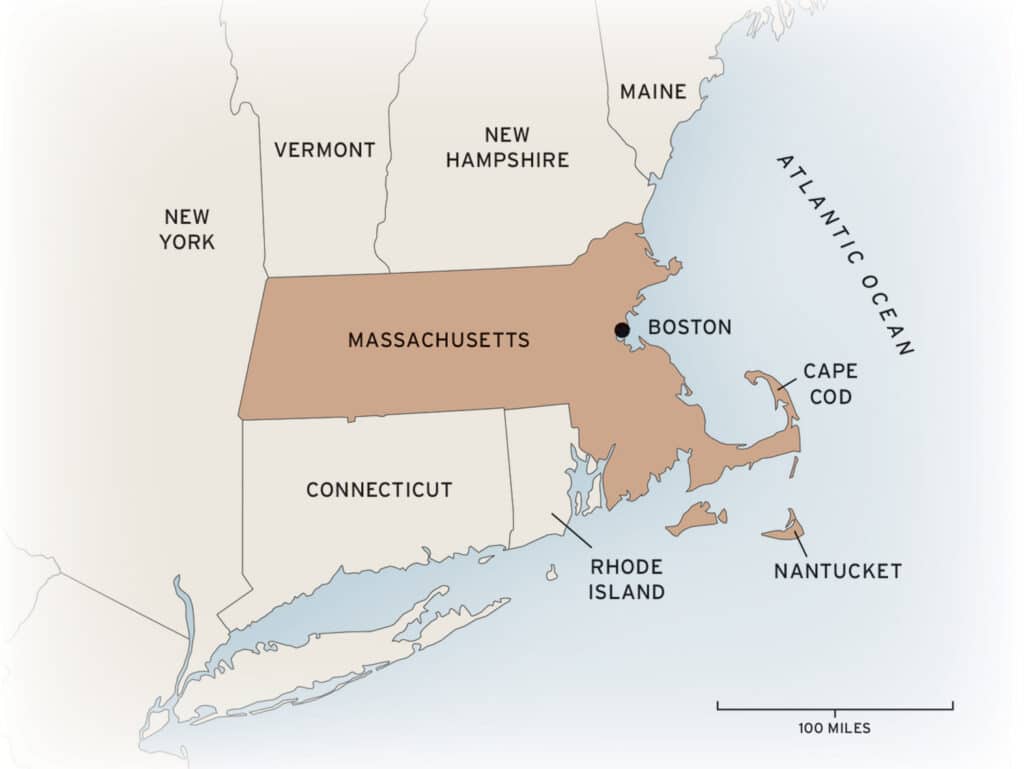
If you hadn’t just read the title and I told you that some 192 miles of coastline produced the following list, where would you think it might be? The Azores? Mars? The planet Fishtopia? 182-pound wahoo. 1,260-pound blue marlin. 131-pound white marlin. 1,228-pound bluefin tuna. 319-pound bigeye tuna. 630-pound swordfish. 73-pound striped bass. 61-pound dolphin. Nope. Massachusetts. That’s right, that Massachusetts.
But the thing is, there is much more to the story than an incredible lineup of really big fish. This part of New England is home to some of the highest-quality seafood products on Earth. Nantucket Bay scallops, bluefin tuna with some of the highest fat content (and highest market prices) in the world, lobster and award-winning oysters.
This same seafront has done nothing less than influence the development of the United States—and the world. The underpinnings of the Industrial Revolution (whaling started in Nantucket), the setting for some of the greatest ocean-related literature ever written and the American Revolution all trace their roots to right here. A history of boatbuilding, whaling and rum—a culture of seafood, fishing for sport and commerce—seaside towns that are as quaint and picturesque as the North Atlantic is productive.
This is the story of fishing in Massachusetts. To the uninitiated, it may come as a surprise. To those lucky enough to have fished here, the response might be, “Yeah. That’s what I’ve been trying to tell you.”
And yes, that was a list of state records from Massachusetts.
A World-Class Bluewater Destination
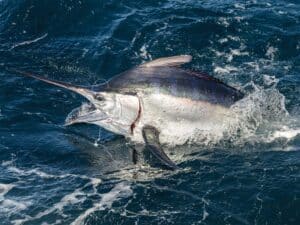
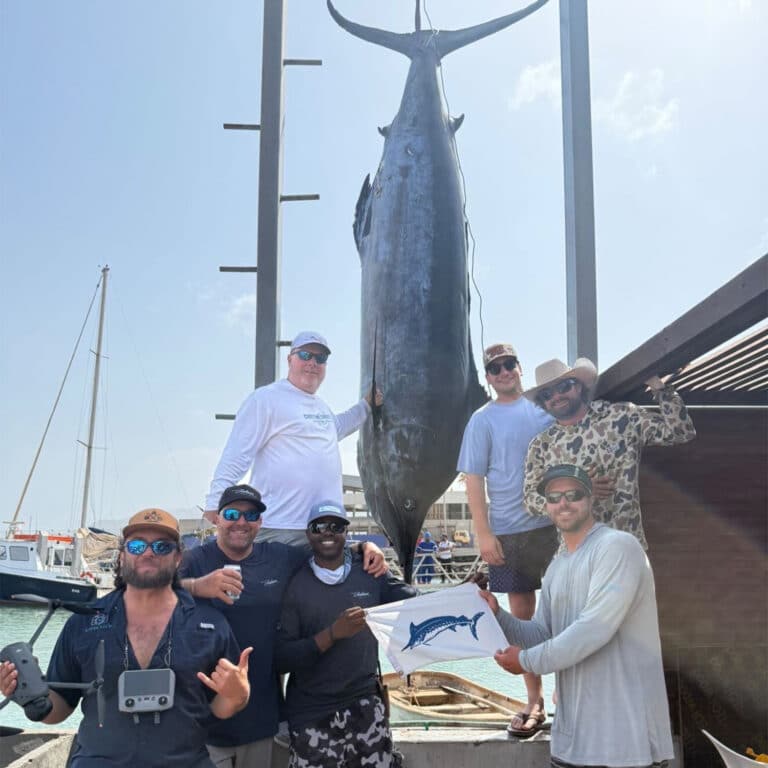
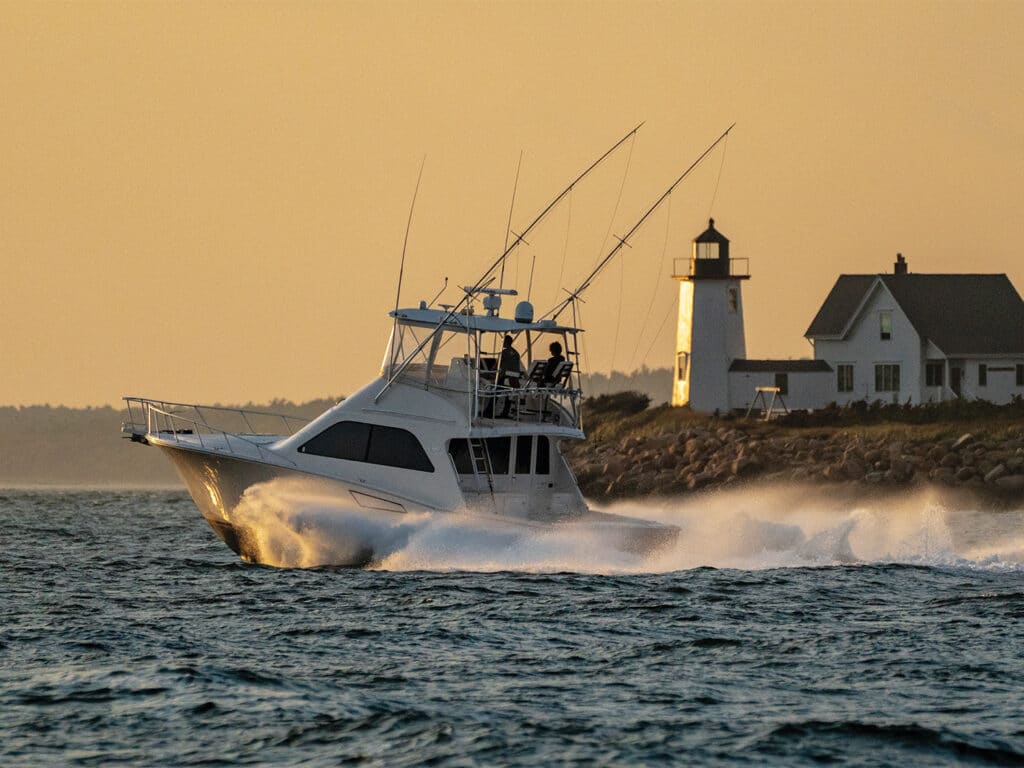
Perhaps no business card in bluewater carries as much weight in this part of the world as that of Capt. Damon Sacco. An intensely nice man who shares his perspective graciously, Sacco has run Castafari Charters since 1998. His Cataumet, Massachusetts-based 45-foot Jim Smith made headlines this August by catching nothing less than the largest blue marlin ever weighed on the East Coast of the United States. The fish tipped the scales at 1,260 pounds.
But that was far from Sacco’s first notable Massachusetts catch. In 2016, he caught a 182-pound wahoo—a fish that was just a pound shy of the world record. They had to grab the gaff at the last minute because it was so big they thought it was a blue marlin! Oh, and his biggest bluefin? 948. Bigeye? 274.
How does Sacco describe his home state? “I love it because we have access to a vast multitude of species. In terms of offshore pelagics, we have just about everything that swims in the Atlantic Ocean. Blue marlin, white marlin, swordfish, bluefin, albacore, yellowfin, bigeye, wahoo—even sailfish now.”
Sacco’s offshore season runs from about mid-June to mid-September. “Some years it stretches into October. As long as the blue water is there, the fish will be there.”
He fishes the Northeast Canyons, a network of bottom topography that ranges from 70 to 100 miles offshore of Cape Cod. As the year progresses into fall, Sacco’s attention turns to bluefin.
A Historical Fishery From a Number of Perspectives
Capt. John Galvin is another of the Bay State’s offshore headliners. After spending some time in Los Sueños with the Jaruco operation, he returned home to run a private outfit, El Diablo, a 72 Viking, and Diablo, a 46 Valhalla, in Nantucket.
“We’re at the confluence of nutrient-rich cold waters from the Gulf of Maine and the Labrador Current. This mixes with eddies from the Gulf Stream to produce nutrient-rich upwellings, especially at canyon edges offshore,” Galvin provides. “In Nantucket, we’re 30 miles south-southeast of Cape Cod. We’re the second-farthest point east in the U.S.”
“We’re at the northern range of many species, so we get bigger fish. Where else in the world can you theoretically catch all that we can catch?” Galvin explains thoughtfully. It was Galvin who suggested we investigate the lineup of Massachusetts state records.
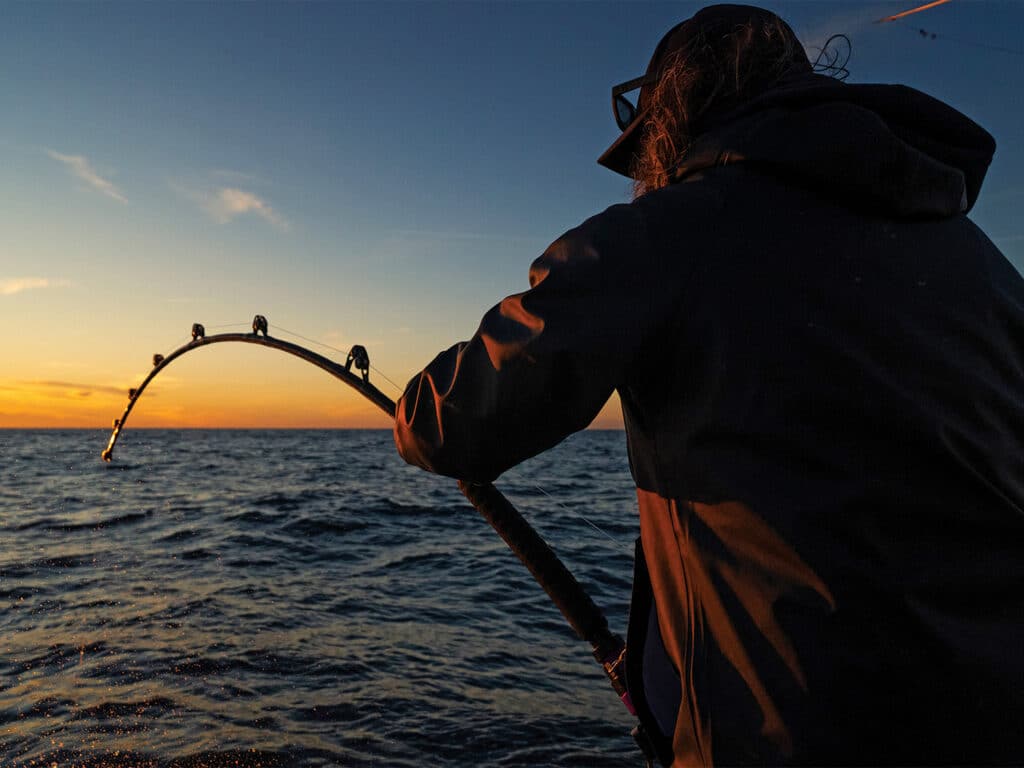
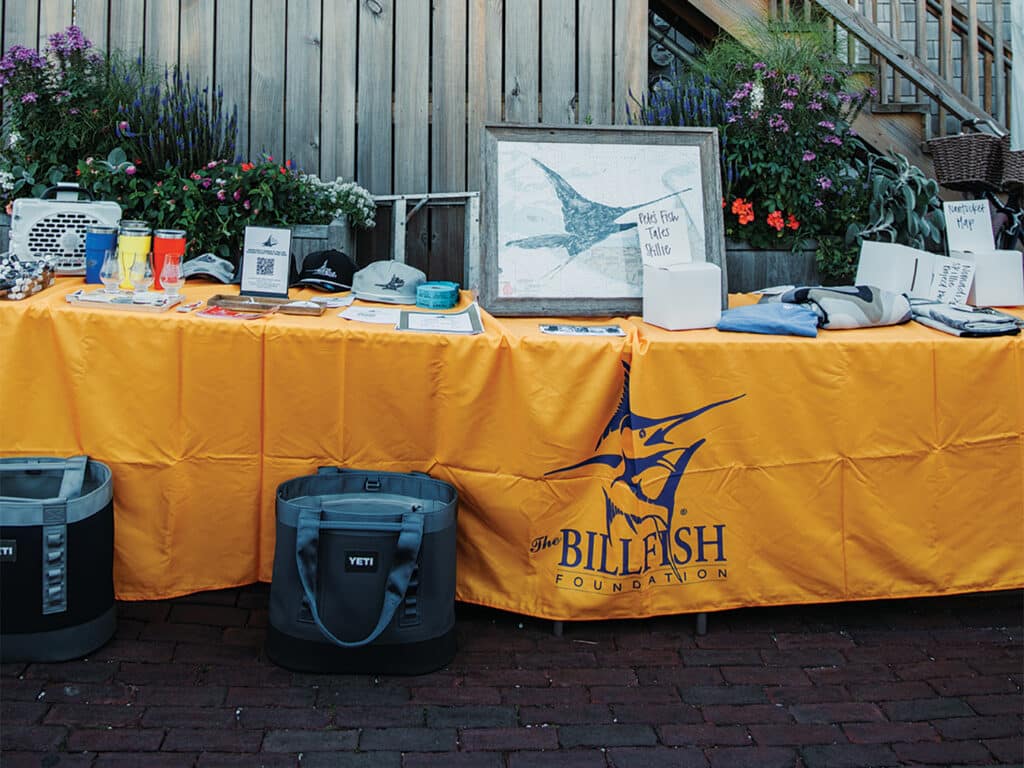
There is another world-class fishery here that is perhaps just getting its time in the sun. “We have a nearshore white marlin fishery. I co-founded the Skillie Project with Matt Rissel and the Billfish Foundation team. We routinely catch 80- to 100-pound white marlin in 50 feet of water. It’s sight fishing, within sight of land.”
The Skillie Project, named for the local term for white marlin, is based in Nantucket. In its third year, the project has deployed satellite tags with the goal of seeing where these fish go. In many ways, the project illustrates just how interesting this place really is.
“Nantucket was the whaling capital of the world. This is where it all started. It’s rich in maritime, fishing and world history,” Galvin explains. Rendered whale blubber provided the combustion that drove the Industrial Revolution.
“Our skillie fishery was an offshoot of the old harpoon fishery for swordfish. The Nantucket Anglers’ Club is historic. Many of the old pictures have plaques that are engraved on ivory (sperm whale teeth).”
From Historic to Modern
From the historic islands of Nantucket and Martha’s Vineyard to the quaint shores of Cape Cod, Massachusetts is also home to the modern and incredibly accessible Boston. As Capt. Joe Gugino, owner of charter service and all-around regional fishing hub FishBoston.com, says, “I could pick you up from the airport and put you on some striped bass on your layover to the Azores to catch blue marlin.”
Gugino is well connected in the sportfishing space. He’s centrally involved in the Skillie Project, but most of his charter focus lies on Massachusetts’ inshore headliner—the striped bass. And this place is a world-class fishery. You can even catch them in the middle of Boston Harbor. “40 inches is a good fish. 45 is a really good one. My best on topwater was 52 inches,” Gugino says.
But the striped bass is far from the only easily accessible, world-class fishery here. And that’s part of what makes this place so special. Capt. Eric Kulin of Snapshot Charters made his career chasing bluefin in the waters around Cape Cod. While much of his time is dedicated to running a private operation these days, he still charters a handful of days each year. From his 28 Contender, Kulin really enjoys putting anglers onto the run-and-gun brand of bluefin fishing that is perhaps unique to this part of the world.
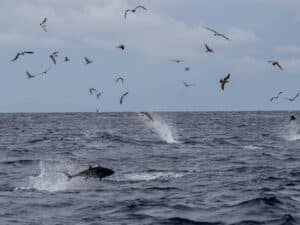
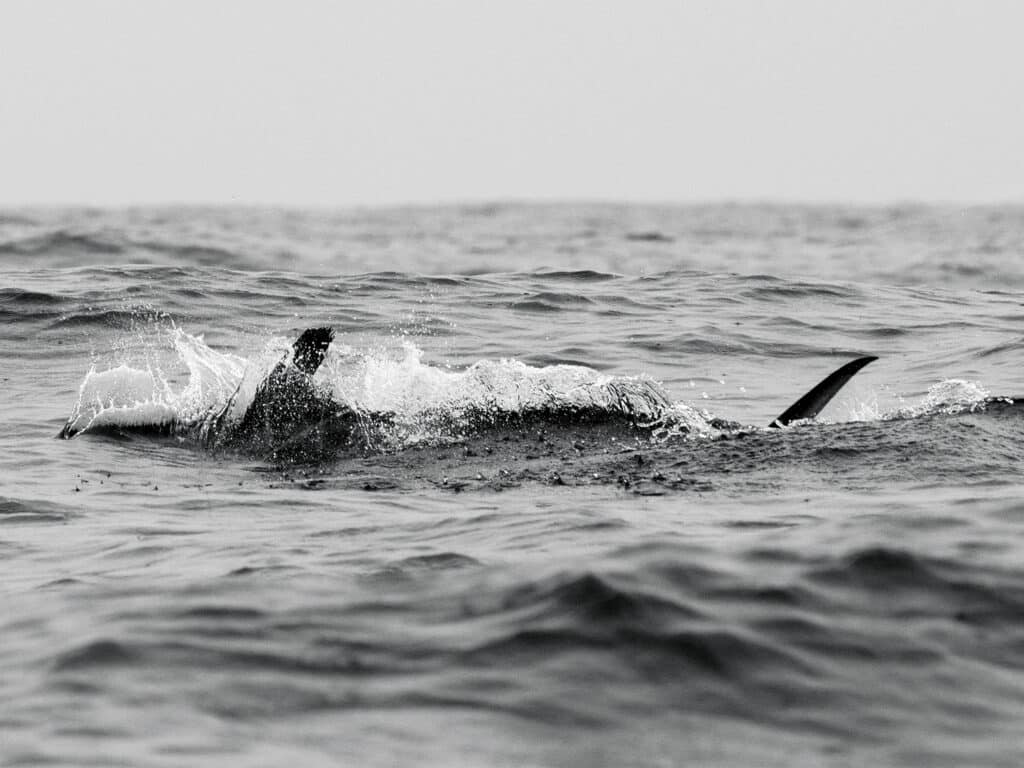
“This is the best place in the world for topwater bluefin,” Kulin begins. “It’s a function of bait—there’s so much bait here. Herring, mackerel, halfbeaks. That’s the most fun thing in the world. Throwing topwaters, you’re so excited and focused because you’re always ready to come tight. It’s visual. Epic. It’s super exciting. When it’s good, it’s great.”
Part of what makes this fishing so unique is the bodies of fish involved. Many years, Cape Cod Bay will get waves of intermixed size classes. A recreational fish, one that can be harvested by sportfish guys, runs between 27 and under 73 inches. A giant is anything over 73.
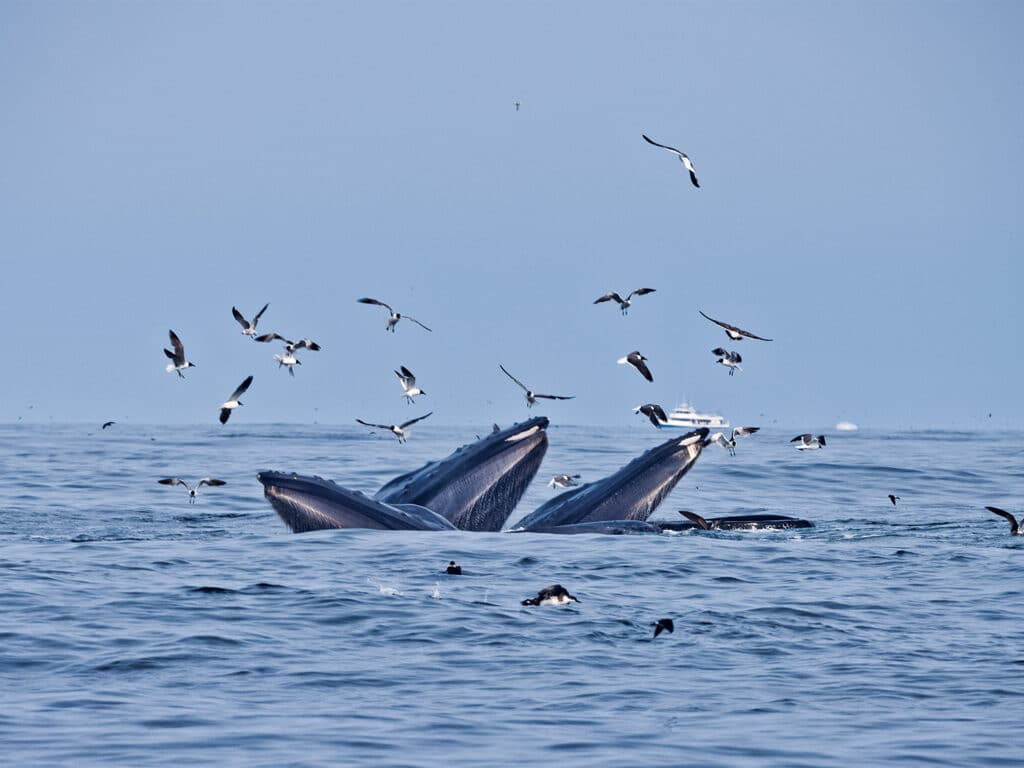
The run-and-gun fishery involves locating a school. Sometimes they’re on birds, sometimes whales. Sometimes they’re breaking the water. Then the fun begins. “You have no idea what size they are until they come out of the water,” Kulin explains. “Once we see them, then we set up depending on their size.”
Kulin is among a specialized group of charter captains who trailer their boats and launch from various ports, depending on which is closest to the action. The combination of run-and-gun center consoles with the ability to launch closer to the fish greatly expands his range. He may coordinate with guests where to meet him in the morning. “In a normal year, we’re running all over Cape Cod. We’ll fish Montauk, Martha’s Vineyard and Marblehead.”
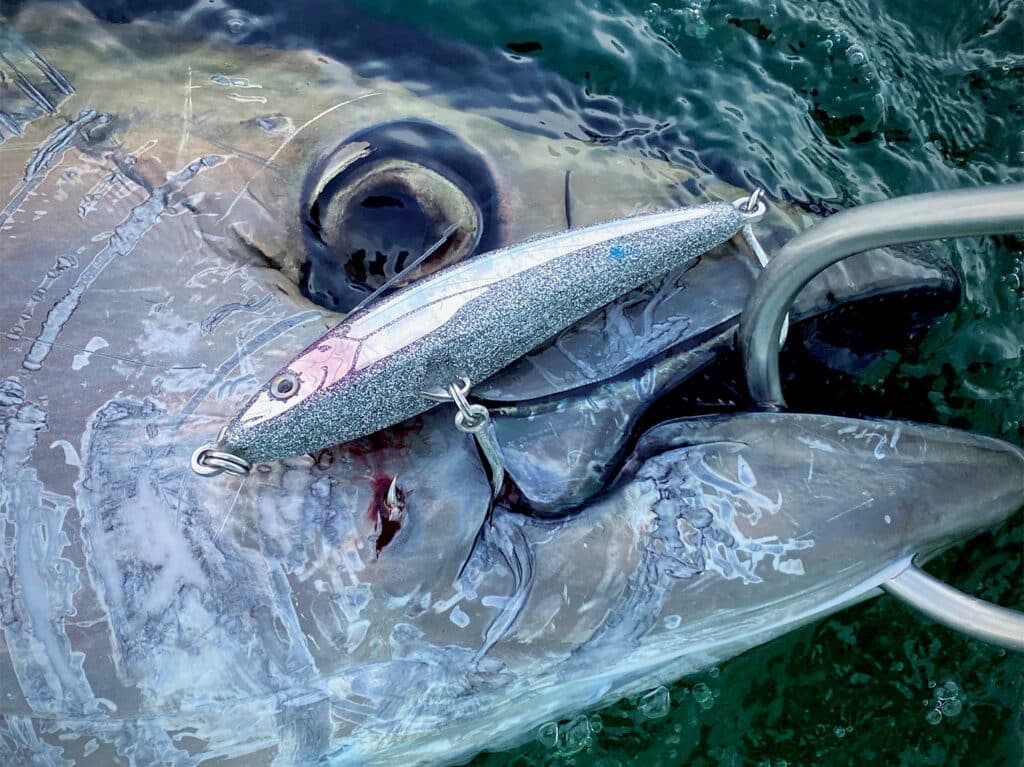
And just as Massachusetts has developed its own mobile style of fishing, it has produced a specialized variety of lure to make it happen. Jason Ward, a native of New Zealand, came to the Cape while working on bluefin charter boats. He watched guys targeting fish on heavy spinning gear and saw that many of the lures at the time did not hold up.
“Siren Lures was born out of the desire to build a better mousetrap for myself. I was working on a charter operation and seeing traveling guys from Japan. I saw the best stuff that was available. At the time, it was handmade lures coming out of Japan,” Ward explains. These lures were not widely available, so he started making his own.
He has built a business on crafting some of the finest, highest-performance lures on the market. They were made specifically to tangle with 100- to 200-pound bluefin on heavy spinning tackle—the biggest fish caught on his lures have been around 600. A decade and a half later, Siren Lures fills orders for clients around the world. “In any given week, we send orders to Norway, Spain, Italy, Australia, New Zealand. We have a lot of customers in the Middle East,” Ward explains.
People. Place. Culture. Access.
That there is so much to this place makes Massachusetts a difficult story to fully encapsulate in a few pages. Most fundamentally, perhaps, it is the intersection of interesting people with a place of abundance. Charter guys like Damon Sacco and Eric Kulin, and captains like John Galvin, share it with those they fish with. Jason Ward makes a piece of it available with each of his lures.
But perhaps it is seafood that ties it all together. After all, the richness of the North Atlantic has been writing stories and providing livelihoods since the 1500s. The expression of this productivity has changed with history—cod, sperm whales, lobsters, bluefin tuna, scallops, now some of the most widely acclaimed oysters on the planet.
Skip Bennett owns Island Creek Oysters in Duxbury. The oysters he grows in Cape Cod Bay are widely recognized as some of the best in the world. Michelin-starred chefs use them (they are the house oyster at the French Laundry in Napa). You can buy them—he ships oysters, caviar, lobster and high-end tinned fish products across the country and around the world. But nothing beats their waterfront restaurant in Duxbury, the Winsor House at Island Creek.
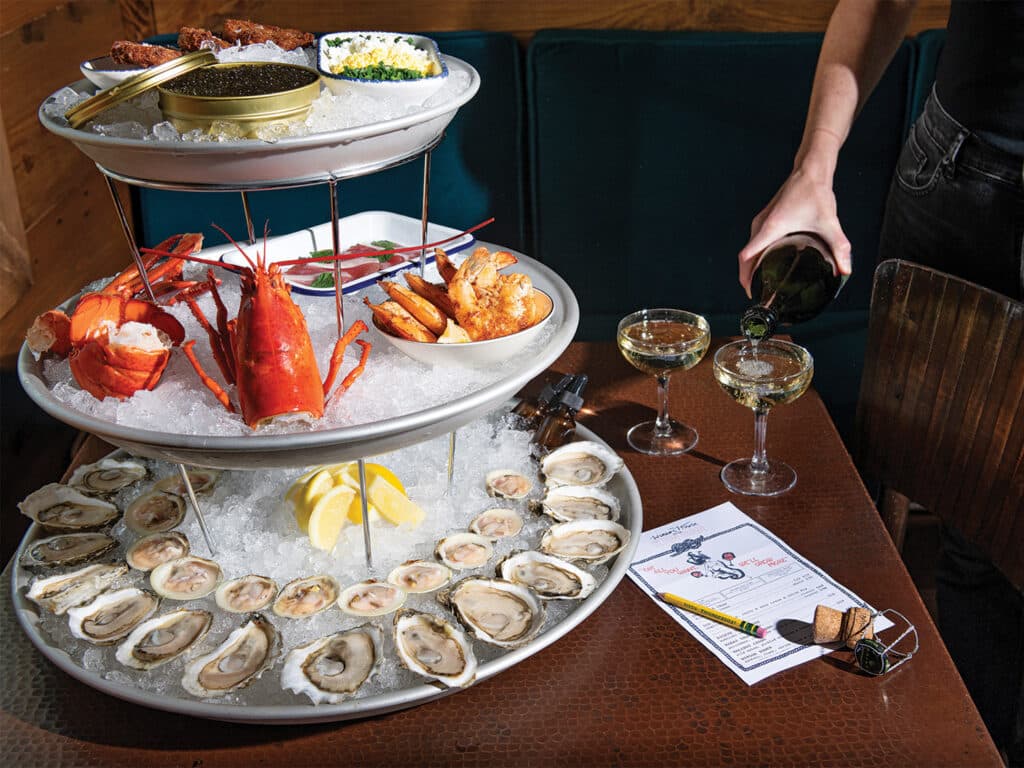
“My family came off the Mayflower and settled here. We’ve never left. Generations have fished the bay. Shellfishing, the tide of the bay, is part of our heritage. You can almost feel the people from the past.”
“Some of the best seafood in the world comes from Cape Cod,” Bennett says. In most places, a statement like this would be the headline. But somehow, in a story about Massachusetts, such a claim popped up only in the third-to-last paragraph.
Yes, some of the best seafood in the world comes from here. So, too, did the largest blue marlin in the history of the East Coast—and a 182-pound wahoo. Oh, and you can also trailer a center console across Cape Cod and catch 250-pound bluefin on topwater. Or spend a weekend in a whaling cabin in Nantucket. Yes, it’s all here. And, yes, it’s all wonderfully set up for you to experience it yourself.
The Azores? The planet Fishtopia? Nope. Massachusetts.