Subscribe to Marlin magazine and get a year of highly collectible, keepsake editions – plus access to the digital edition and archives. Sign up for the free Marlin email newsletter.
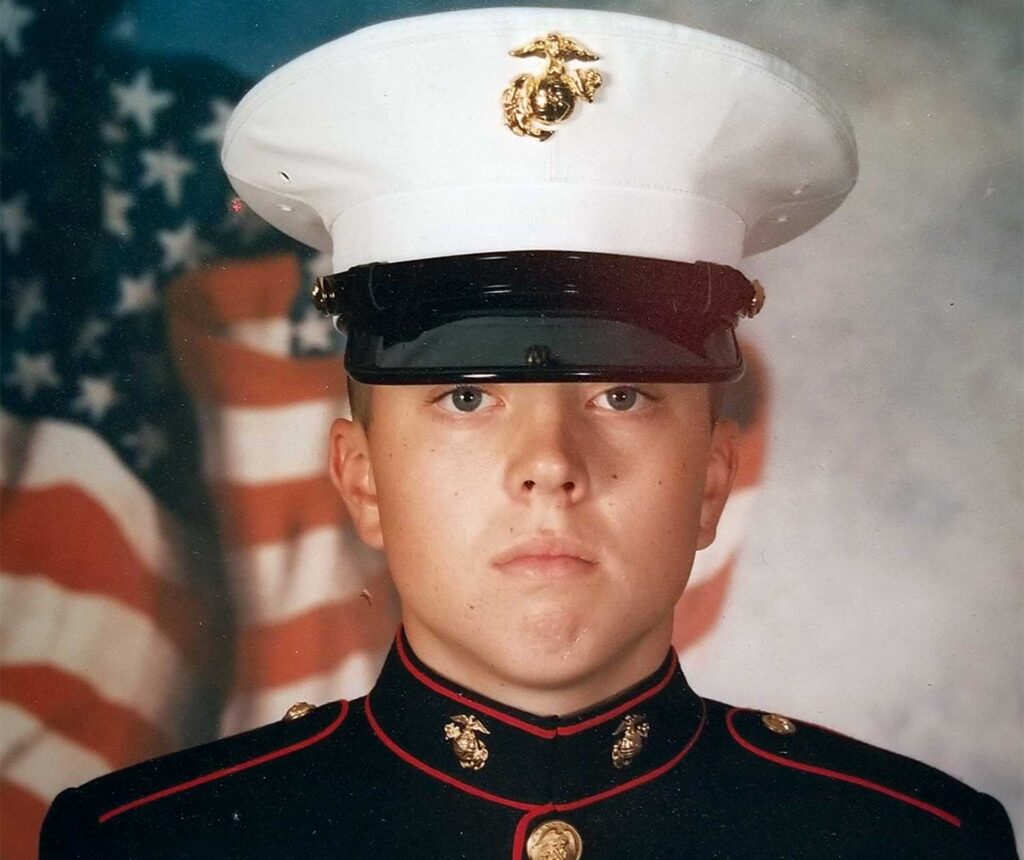
I came out of the United States Marine Corps in 2005 with something I couldn’t shut off. The Corps rewires a man; it sharpens your edges, strips away comfort, and leaves you with a constant need for purpose and pressure. Growing up on the St. Lawrence River in upstate New York, I was already chasing adventure and pushing boundaries as a kid. I ran my first solo boat at 14, learning early how to read the water, handle changing conditions, and rely on myself when things got unpredictable. The Marines took that foundation and turned it into something deeper. They taught me to operate in chaos, embrace discomfort, and find clarity where most people avoid it. Peace, in the traditional sense, was never going to be enough for me.
I wasn’t built to sit still. I wasn’t wired for safe.
That drive shaped everything that followed. I founded Artistic Visions Wildlife and built it into one of the world’s most recognized taxidermy studios. Yet preserving trophies wasn’t enough; I needed to chase them. That’s how Artistic Visions Adventures was born: guiding hunters and anglers into remote corners of the planet for experiences that are truly earned, backed by serious preparation and structure.
Through every step, my wife, Samantha, has been right beside me. Twenty years married, she’s my best friend, my partner and my backbone. She’s taken every risk with me, believed in the vision when it looked impossible, and sacrificed just as much so we could build something meaningful. This life doesn’t exist without her.
Africa changed everything. I’ve returned more than 30 times since 2005, and the continent still electrifies me. It’s raw yet welcoming, honest, and alive with that old-world energy where character and determination still matter. In Mozambique, I found exactly what I had been searching for.
Taking the Leap
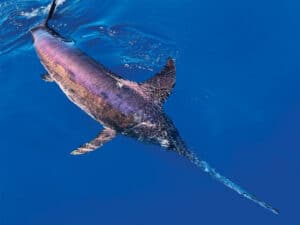
The first time I arrived in Moz was in 2012, guiding Cape Buffalo hunts in the Zambezi Delta. Fishing wasn’t even on my radar. Then, in the small coastal village of Inhassoro, a casual conversation changed the trajectory of my life. Locals told stories of the offshore waters before the wars of the 1970s; waters loaded with massive black marlin, true apex predators that pushed gear and anglers to their limits. I learned about Johnny Harel’s legendary 1,298-pound All-Africa record caught in 1998, not far from where I stood. That was the spark.
By 2014, I began bringing clients to explore the fishery. Every trip confirmed what I felt instinctively: This place was different, lightly fished and full of untapped potential. So, Samantha and I made the call. We bet everything—life savings, stability, certainty—on building a world-class black marlin operation in one of the most remote frontiers left on Earth.
Setting up Mozambique Sportfishing was an absolute mission from the very first day. As an American trying to build a legitimate big-game fishing operation in one of the most remote parts of Africa, nothing came easy. I was fortunate to find a solid vessel already in Mozambique that we could transform into a legitimate marlin-hunting machine, but almost everything else had to be brought in piece by piece. Samantha and I literally flew hundreds of pounds of rods, reels, lures and terminal tackle in our luggage on multiple trips from the United States. We were incredibly lucky to have support from some amazing people and companies in the billfishing industry who understood the importance of what we were trying to do: open up another world-class black marlin destination in one of the most isolated places on Earth.
The bureaucratic reality here is relentless. As Mozambique slowly develops and stabilizes, we still deal with layers of red tape, inconsistent regulations, bribes, theft, and occasional extortion attempts that are simply part of life in remote Africa. There’s only one paved road in the region, and it’s so potholed, you could hide a giraffe in some of the craters. Everything else is deep sand tracks—no marinas, no harbors, no ports, no reliable spare parts. Fuel quality is terrible, power is intermittent, and equipment gets absolutely punished by the salt, sand and heavy seas. Repairing anything is a nightmare.
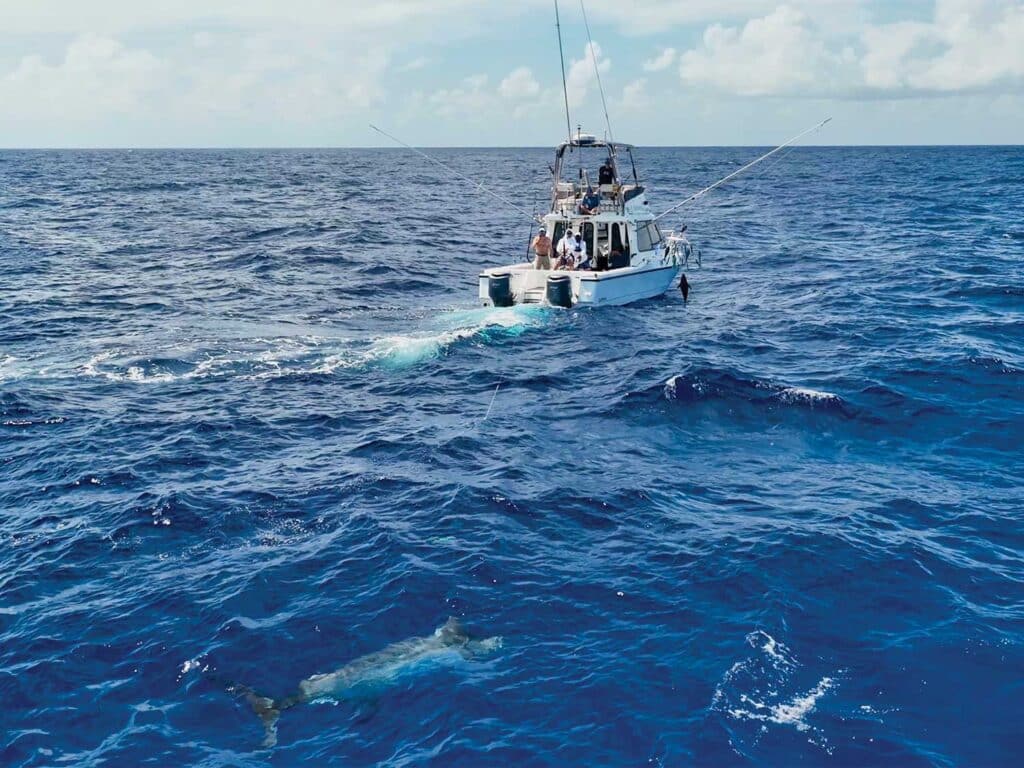
Safety and durability are the only things that matter when we buy or build something because Mozambique will test it every single day. This is still the hardest operation I’ve ever been part of, chasing the biggest fish on the planet from one of the most unforgiving places on Earth. But that daily grind is exactly why it feels so real.
We run everything from beach launches with no harbor. You read the swell, pick your moment and commit. Our boat, Cujo, is the heart of the operation, and keeping her ready takes real daily effort. Our refueling process could be considered an Olympic event. It’s not always glamorous, but it’s calculated and purposeful. That commitment is exactly what allows this fishery to exist in its pure form.
Once you hit the water, everything changes. Just 45 minutes after we board our offshore vessel, we are lines in and hunting giant billfish in open ocean; no other boats, no distractions, just endless blue water and the unmistakable feeling that something massive might be moving beneath you.
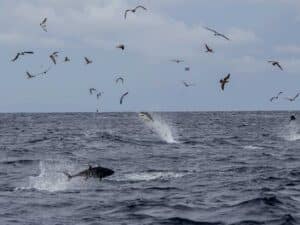
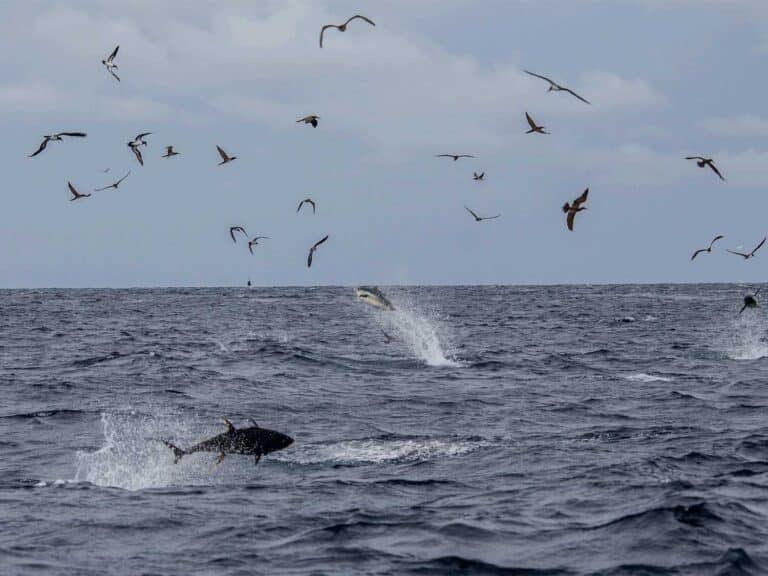
There’s one fish that still haunts me. We spotted her dorsal slicing through the surface hunting tuna in just 25 meters of water a few hundred meters ahead of the boat. She came up quietly behind the right short and ate. After a 22-minute fight, I had her on leader, green and incredibly heavy. We knew she was well over 1,000 pounds. Just as we went for the gaff, she made one last heavy pull and broke us off. That fish is still out there hunting yellowfin, and we are still hunting her.
Big-Game Bazaruto
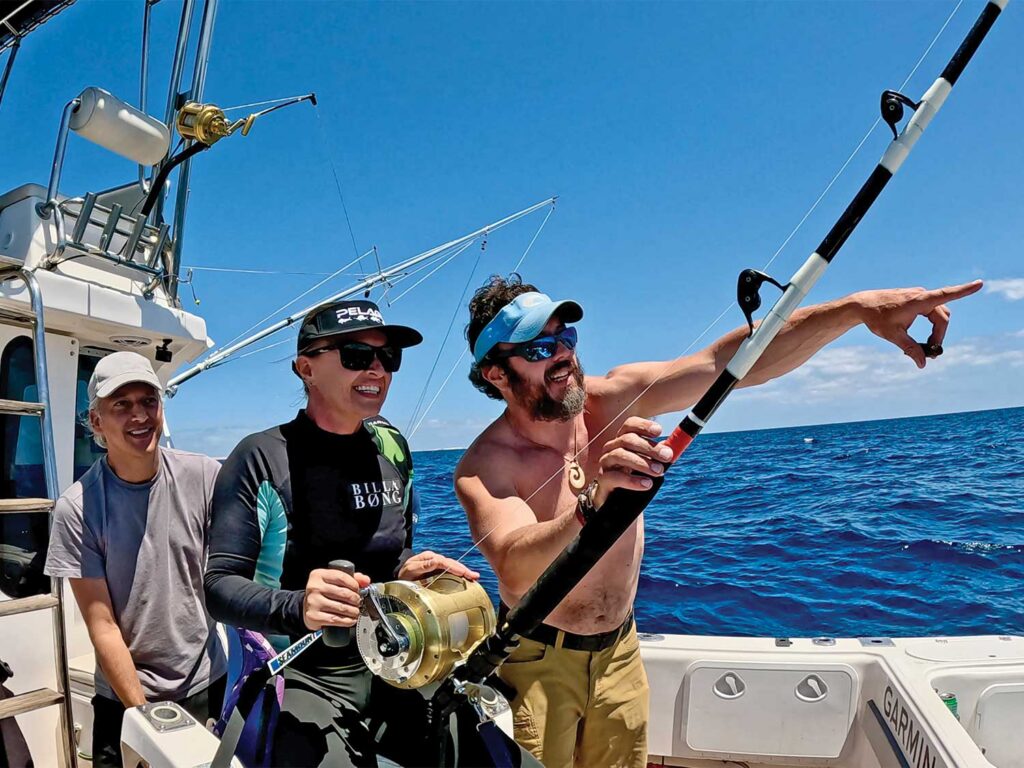
One of the most amazing things about the Bazaruto Archipelago is the sheer abundance of trophy fish. On any given day, you can raise black marlin, blue marlin, striped marlin and sailfish, along with an incredible variety of other inshore and pelagic gamefish like giant trevally (GT), wahoo, tuna, dorado and more.
May through July is one of my favorite periods. The seas are often calmer, temperatures are mild, and we see large numbers of wahoo, sailfish, tuna and dorado. We also have massive GTs caught in the early months on popping gear. Big blue marlin are also catchable during these months, and we continue to explore those deeper edges. I believe there’s legitimate World Cup-winning potential here.
The prime black marlin window runs September through December, with October and November being the absolute peak for big females and realistic grander shots. The entire fishery sits on a mix of sand bottom and productive reef structure with massive current flows around the islands. We fish the full Bazaruto Archipelago, but our most consistent area is the northern point near the lighthouse, a magical stretch of water that turns electric at sundown.
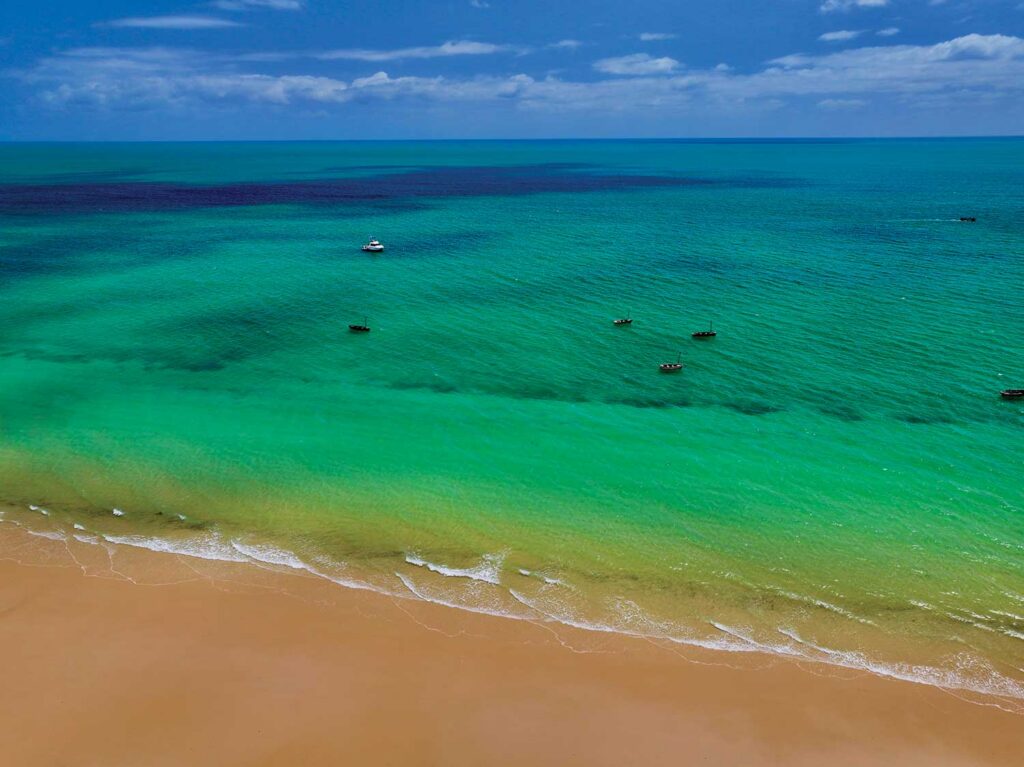
What makes this place unique is how close everything is. We regularly fish in 40-to-140-meter depth while still being able to see locals walking along the powder-white beaches. Even our blue marlin grounds keep the islands in sight. Our primary bait is live yellowfin tuna, but the fish aren’t picky. We’ve caught them on live dorado, wahoo and jobfish as well. The abundance of reef fish keeps the big predators pinned close to the islands.
The weather is always a factor. The southeast trades can blow hard, creating big seas, which is why we build flex days into every package. Cujo is an incredibly dry, capable boat, so we can fish comfortably in conditions that would shut down many other operations.
We fish with heavy tackle in big seas, pulling lures or dropping live 15-pound yellowfin tuna. Everything is built around one goal: giving you a legitimate shot at something extraordinary. Because I believe the next world-record black marlin is swimming. A 1,500-pounder isn’t a fantasy here; it’s a real possibility.
Aside from the fishing, what truly sets this place apart is the setting itself. The Bazaruto Archipelago is a long-lost paradise, one of Africa’s most breathtakingly beautiful and untamed frontiers. Miles of untouched powder-white beaches, impossibly clear turquoise-to-deep-blue water, towering sand dunes, vibrant coral reefs and abundant marine life: manta rays, dolphins, whale sharks and dugongs.
It feels like the Maldives without the crowds, raw, natural and frozen in time. The warmth of the local communities, incredible seafood, piri-piri chicken and genuine hospitality balance the wildness perfectly. It’s not harsh; it’s welcoming.
Corps Connection
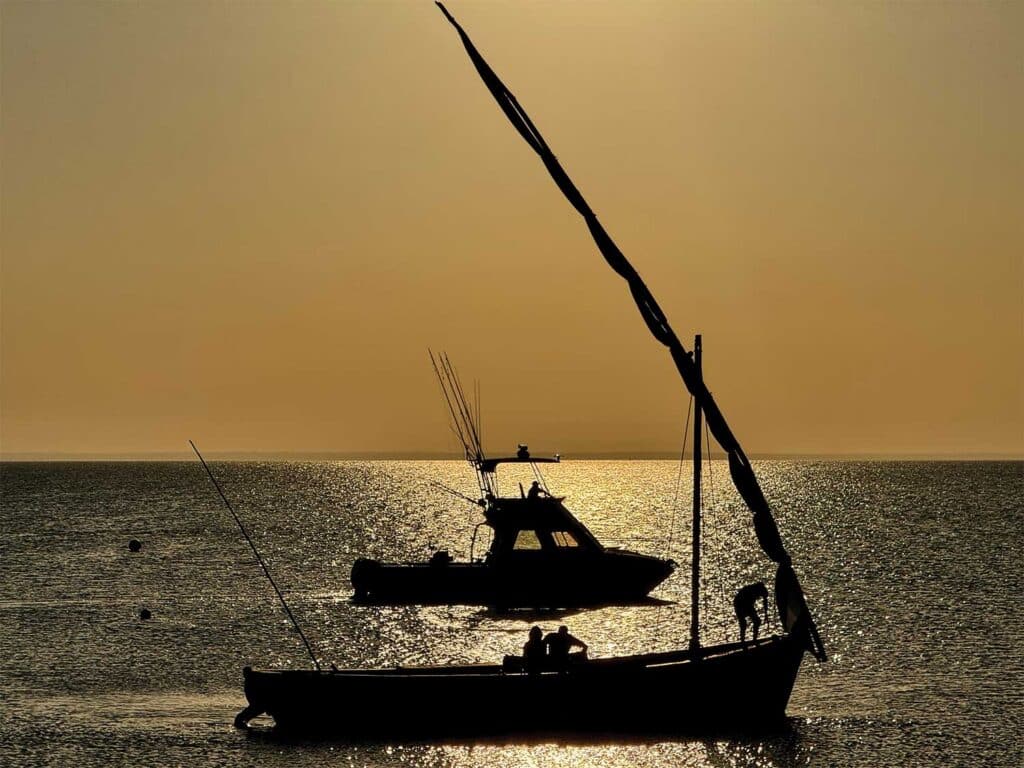
The underlying benefit of this entire journey is that I’ve built the closest thing to the Marine Corps I’ve felt since I got out: being part of a true team environment where captain, angler, deck boss and leader man all matter. My crew is made up of some truly amazing and hardworking men who have become family.
Alberto, my deck boss, was born and raised on Bazaruto Island—fishing is literally in his DNA. He is actually the first person in his tribe to ever catch a marlin. Pierre, our operations manager, is South African but has lived and worked in Mozambique for over 20 years. He handles the day-to-day logistics and captains our gamefishing boat, AtLast. Irené, my marlin captain, is from Zimbabwe and brings more than a decade of big marlin experience on these waters. He’s one of the kindest, hardest-working people I’ve ever met and completely understands the vision of what we’re trying to build.
For me, the deck is where I belong: running the spread, reading the moment, coaching the angler through pain and doubt, and watching someone push past their limits to achieve something they’ll carry forever.
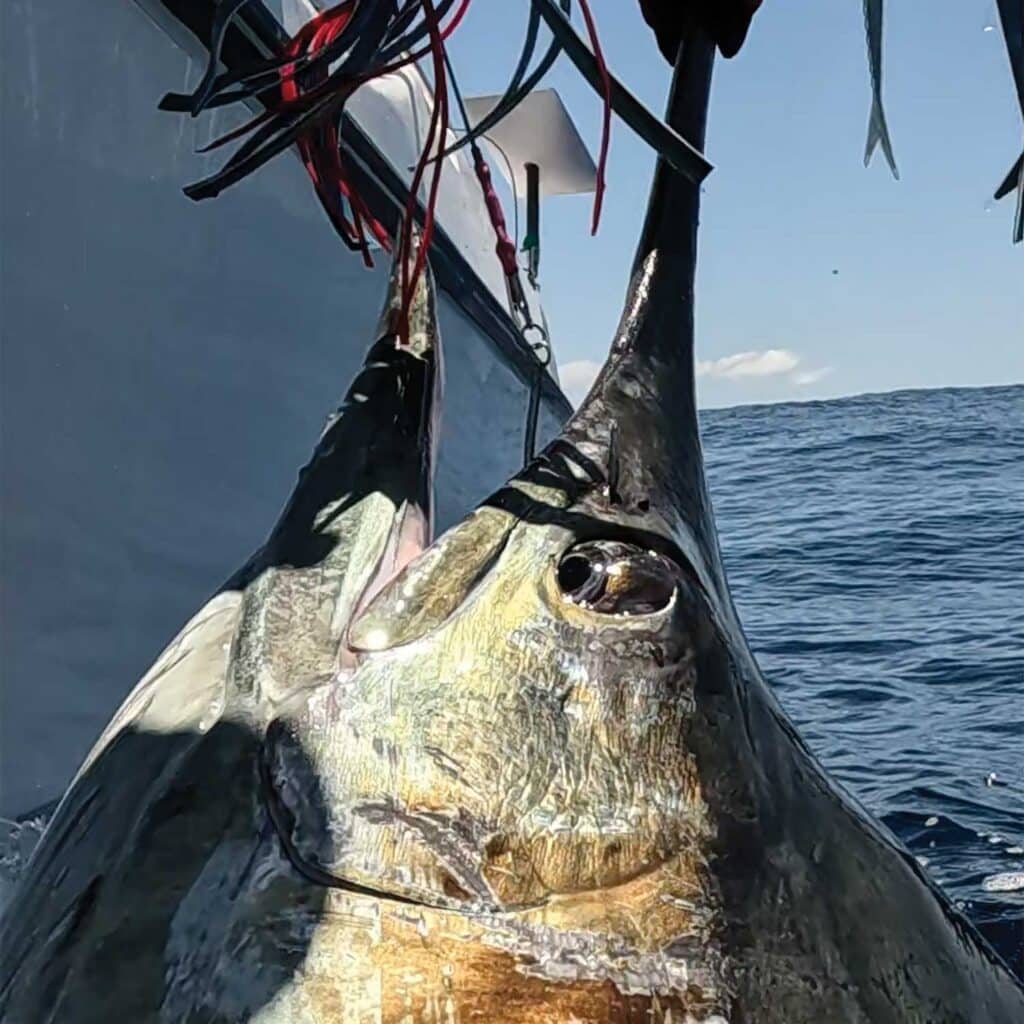
This is the sport of kings: chasing giant black and blue marlin. In that instant, the adrenaline becomes the best rush on the planet as you’re strapped to the apex predator of the sea, a 1,000-pound missile earned through blood and sweat. Nothing else comes close. Seeing a fish north of a 1,000 pounds changes your life forever and awakens something primal deep inside you. It’s a true test of strength, determination, character and mental durability.
But none of this happens without the team. Pierre, Irené and Alberto are the backbone of Mozambique Sportfishing; they are true rock stars who show up every day with skill, heart and commitment. This is a collective effort built on trust and shared purpose.
The Baz Experience
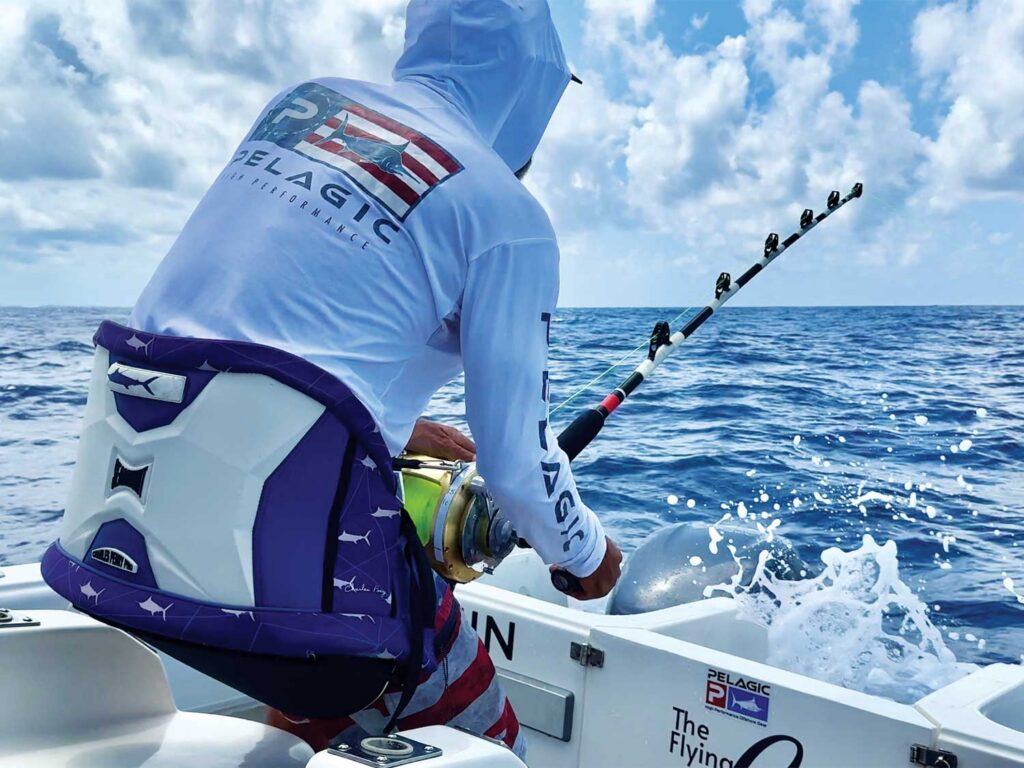
Over the years, what we’ve built has started to get noticed. We’ve had the privilege of hosting Ron Kawaja and the Pelagic team, Josh Jorgensen from BlacktipH, and anglers like Pat Lyons. We’ve also helped facilitate trips for Bad Company Sportfishing, and watching what that team accomplished out here only reinforced what we already knew.
This fishery is real. And it’s only just getting started.
What you find here isn’t just another fishing trip. It’s a return to the frontier; it’s a call to challenge everything comfortable and modern in us. Every trip carries the same electric potential: the violent, heart-stopping strike of a giant sea creature that fights like it owns the ocean. The fierce, untamed beauty forges an immediate connection to something bigger than yourself; call it nature, call it God. There is nothing more electric than hunting a prehistoric god of the ocean in such a wild and untamed corner of Africa.
Mozambique remains one of the last true frontiers—wild, untamed, and still holding secrets. Out here, there are no guarantees, only real adventure, breathtaking beauty, and the genuine possibility of the fish of a lifetime. It’s certainly not easy. But something the Marine Corps taught me is that with the right team behind you, nothing’s out of reach.
Because somewhere in these remote, unfished waters, I know there’s a monster swimming. And that’s what we’re reaching for here on the last frontier.
Getting There
Getting to Bazaruto is surprisingly straightforward. Most US clients fly nonstop from Newark or Atlanta into Johannesburg, South Africa. You’re met at the airport and taken to a hotel for dinner and a good night’s sleep before catching a one-hour flight to Vilankulos, Mozambique, where you will be met by a MozSF representative. From there, our team handles all transfers; it’s roughly a one-hour drive to the mainland lodge or a 90-minute boat ride to the island.
No special medical shots are required beyond standard travel vaccinations. It is a malaria area, but the constant sea breeze on the beach keeps mosquitoes to a minimum. We don’t take malaria meds, but it’s something to be aware of.
On off days you can enjoy the nice pool, walk the iconic beaches, snorkel, visit local villages, or explore the haunting ruins of the Grand Hotel on Santa Carolina Island (Paradise Island), a once-luxurious 1950s resort now completely abandoned. It feels like stepping into another world.