Subscribe to Marlin magazine and get a year of highly collectible, keepsake editions – plus access to the digital edition and archives. Sign up for the free Marlin email newsletter.
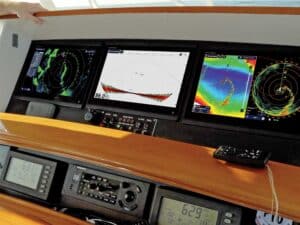
Mention marine electronics in the big-game world these days, and the conversation usually jumps straight to omnidirectional sonar and Starlink. But remember MFDs? Transducers? VHFs? They’re still here, still evolving and still essential. Beyond the headline-grabbers, plenty is happening. Here are some of the latest and greatest you may have missed.
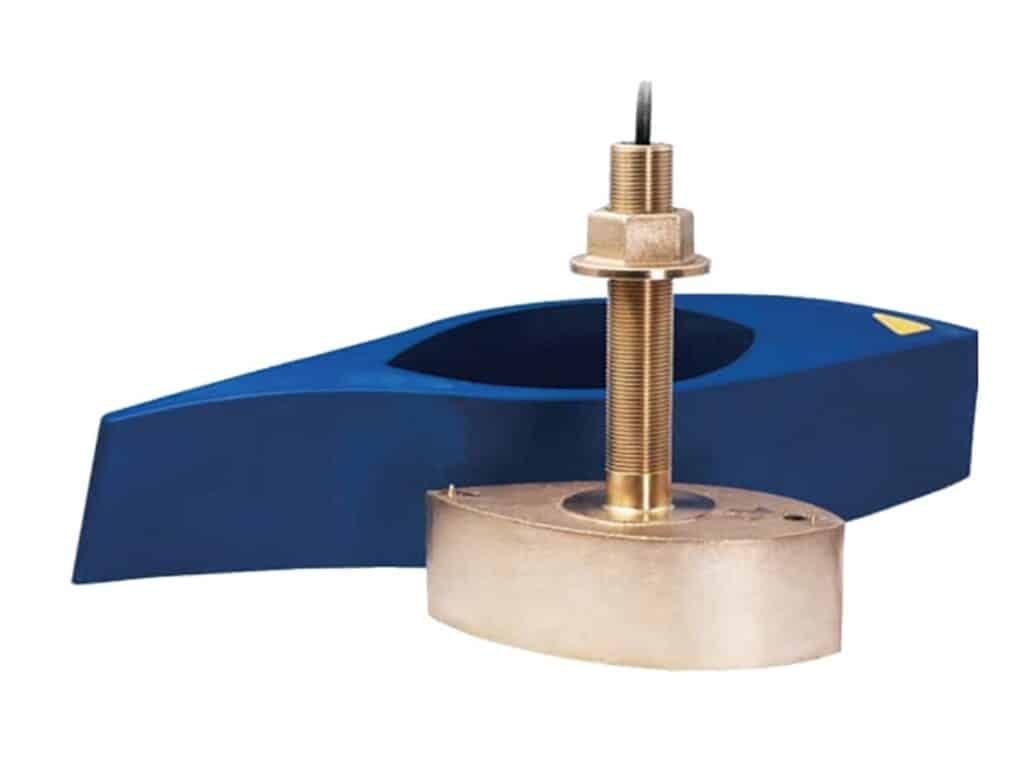
Airmar CHIRP Transducers
Airmar offers two transducers in its CHIRP line, both pairing the same two elements: a medium-frequency element operating from 60 to 100 kHz and a high-frequency element running from 150 to 250 kHz. The higher frequency is better suited to shallower water, while the lower frequency reaches deeper. Together, the two elements provide 140 kHz of combined transducer bandwidth.
The primary difference between the two designs comes down to mounting and boat size. The through-hull version is built for larger boats, while the transom-mount version is intended for smaller vessels. The medium-frequency element in both units will read beyond 1,300 feet, while the high-frequency element is best suited to water 500 feet or shallower. The deeper frequency should appeal to swordfishermen and billfishermen, while the higher frequency is well suited to pelagics closer to the surface.
Both transducers also use Airmar’s proven Xducer ID technology, which allows a compatible Simrad multifunction display to identify the transducer once connected and configure it automatically. That makes setup relatively simple, aside from pulling the wires.
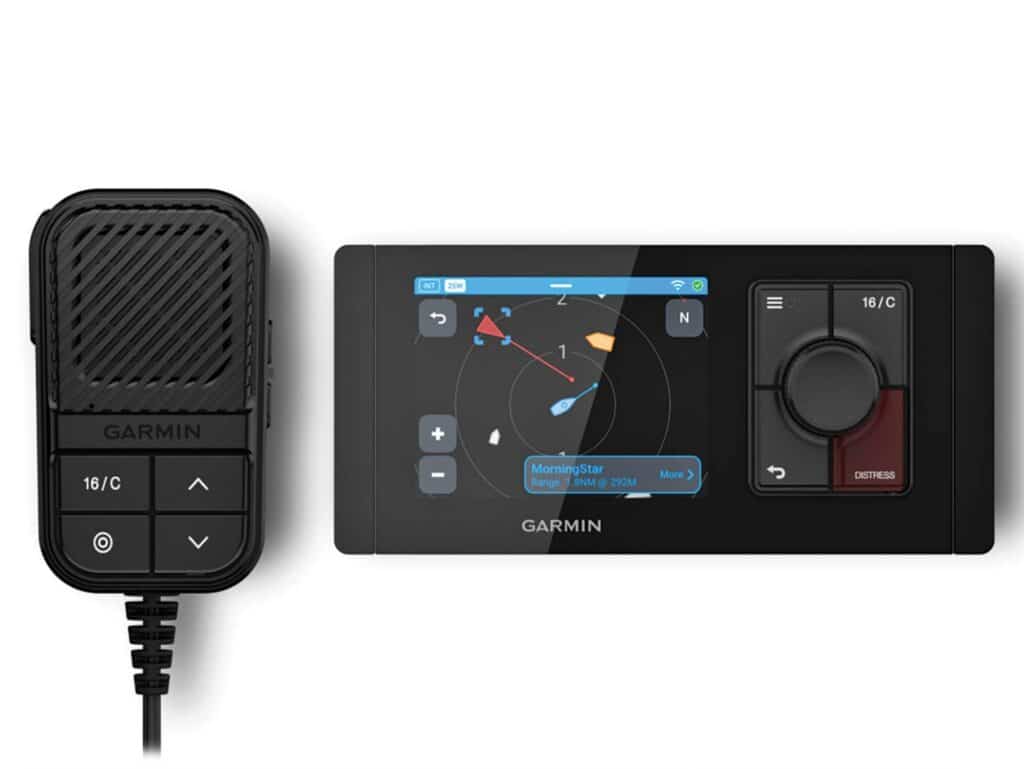
Garmin Signal VHF 400 and VHF 220
The Garmin Signal VHF 400 and VHF 220 operate on the same core hardware platform, including a 3.5-inch IPS LCD touchscreen and a 25-watt high/1-watt low transmit system. Both carry IPX7 waterproof ratings and come standard with Class D DSC (digital selective calling) and integrated GNSS navigation. Both units also include Garmin’s adaptive noise-cancellation system and three-minute VHF audio playback, saving users from having to ask someone to repeat a transmission. Ports for hailers and remote microphones are included as well.
The primary difference is AIS capability. The VHF 400 offers both AIS receiving and transmitting, while the VHF 220 offers AIS receiving only. Even without transmission capability, the 220 adds a significant layer of situational awareness by allowing users to see the positions of AIS-transmitting vessels within VHF range on a connected display.
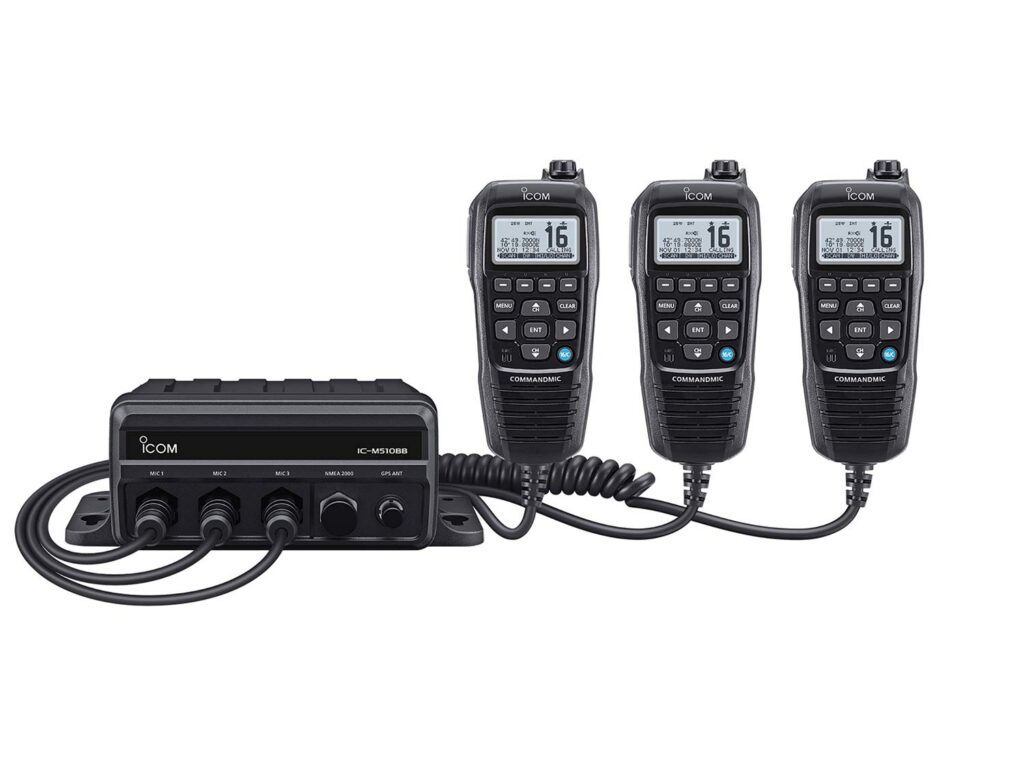
Icom VHF Solutions
The Icom IC-M510BB is a black-box VHF solution designed for larger boats. It is especially useful aboard vessels that need communication between the cockpit, bridge and flybridge because the system can be expanded with Icom’s CommandMics. Each microphone incorporates the radio’s primary functions, along with its own speaker and color LCD screen.
The 25-watt VHF includes built-in AIS receiving, allowing operators to track other vessels without adding another black box. Its internal GPS provides DSC and other safety functions without requiring the radio to rely on a multifunction display’s GPS system, adding flexibility during installation.
The internal GPS also supports an anchor-watch feature that monitors the boat’s position while on the hook. If the vessel moves outside the designated area, an alarm sounds to alert the crew.
A “say again” function can replay the most recent transmission, helping users decipher a missed call without asking the sender to repeat it. The IC-M510BB carries an IPX7 waterproof rating and includes a 15-watt hailer.
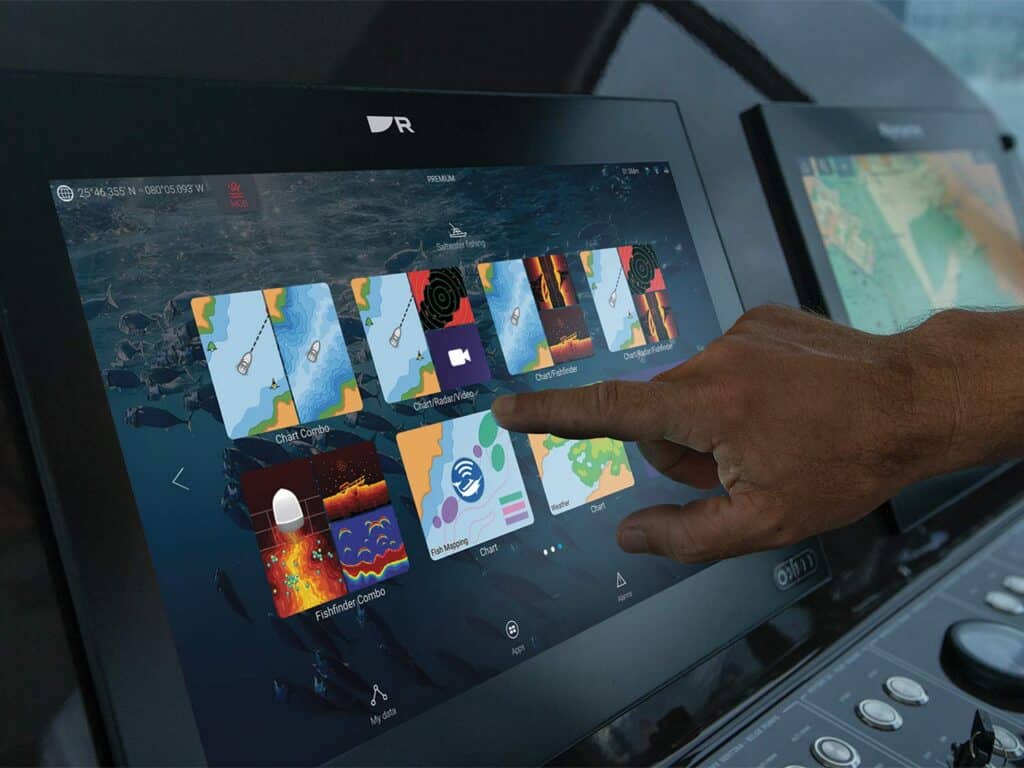
Raymarine Axiom 2 XL
Raymarine’s Axiom 2 XL display series is designed for large, integrated glass cockpits. It is available with 16-, 19-, 22- and 24-inch diagonal screens featuring 24-bit color and brightness ratings ranging from 1,200 to 1,300 nits, helping the displays remain visible in direct sunlight.
The multitouch screen incorporates Raymarine’s HydroTough nano coating, allowing the interface to remain responsive when wet. IPX6 and IPX7 waterproof ratings also make the units suitable for installation in exposed locations. A six-core processor is said to improve map-rendering performance by 30 percent while running Raymarine’s LightHouse operating system.
The displays operate on 8 to 32 volts DC and include three Ethernet ports for system integration. They can interface with Fusion and Rockford Fosgate audio systems, as well as Yamaha autopilot systems. An optional RMK-10 remote keypad provides off-screen control, while app-based Wi-Fi smartphone control is available through the optional YachtSense Link system.
Raymarine’s proprietary LightHouse Charts use official bathymetric data to provide detailed bottom-structure information.
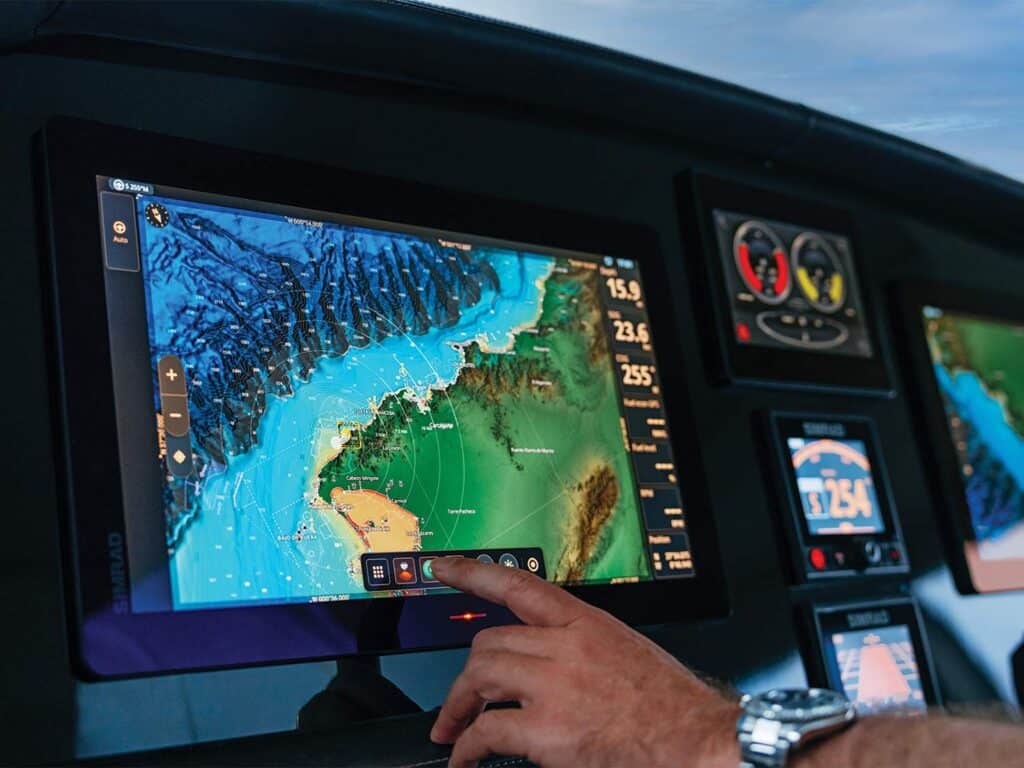
Simrad NSO 4
The Simrad NSO 4 is designed for the modern battlewagon. The flush-mounted display is available in 16-, 22- and 24-inch diagonal sizes and features edge-to-edge glass with gently curved corners. Simrad’s SolarMAX IPS display provides a bright, high-resolution image designed to remain fully viewable while wearing polarized sunglasses.
The NSO 4 runs on NEON, Simrad’s streamlined operating system, paired with an eight-core processor. The combination delivers a claimed 35 percent faster startup and 10-times-faster auto routing while simplifying access to frequently used functions. The system supports C-Map Discover X and Reveal X charts, along with X-Chart Manager for direct internet-based chart updates. FishCast integration can overlay ROFFS fishing data directly on charts, adding another layer of information for offshore anglers.
The NSO 4 is also compatible with Simrad RECON, Rhodan and MotorGuide trolling motors, and integrates with systems from Mercury, CZone, SiriusXM and others.
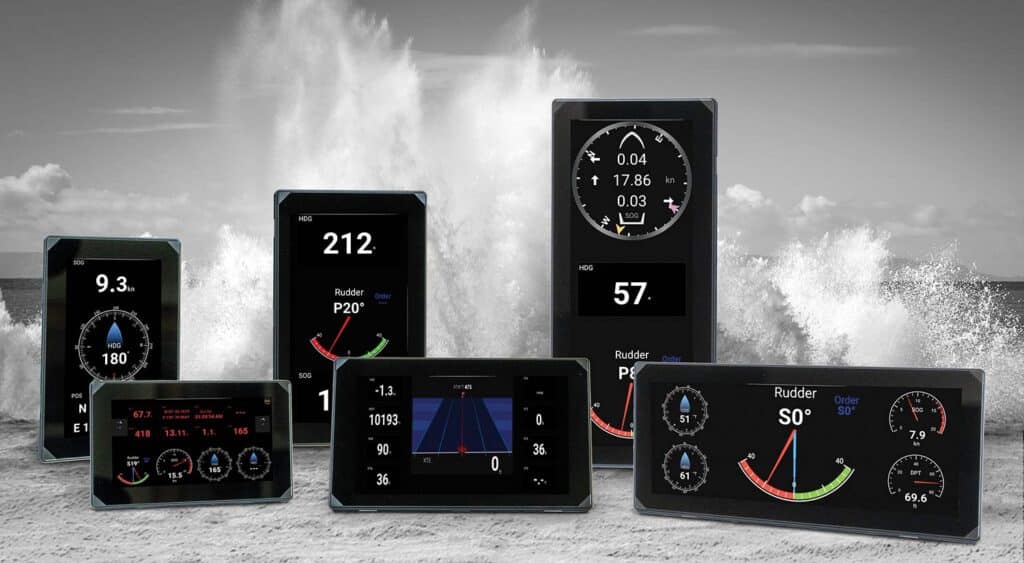
Furuno RD Series
Furuno’s RD Series comes in 7-, 9- and 12-inch displays. These are more than simple information repeaters. They serve as access points to the vessel’s broader navigation and operating systems. From each display, users can access digital switching, navigation data and vessel information, such as heading and speed, along with many of the functions available on the main helm displays.
The units can be mounted vertically or horizontally, making them easy to install throughout the boat, from cabins to seating areas. That gives those aboard convenient access to vessel information and the ability to control connected functions from nearly anywhere. The RD Series also integrates with compatible systems for switching, lighting, audio, battery monitoring and vessel stabilization. While most repeaters are limited to displaying information, the RD Series provides greater control over the boat’s connected digital systems.