Subscribe to Marlin magazine and get a year of highly collectible, keepsake editions – plus access to the digital edition and archives. Sign up for the free Marlin email newsletter.
The mystique of just 10 species of fish is responsible for the development of global sport-fishing industries, commercial and artisanal fishing fleets, and cultural and literary works that represent our shared fascination with the ocean. These 10 species comprise two taxonomic families: Istiophoridae (marlin, sailfish and spearfish) and Xiphiidae (swordfish). Together they represent some of the most iconic fish found throughout our oceans. Despite advancements in research and technology, relatively little is known about them. This lack of data amplifies conflicting narratives where tournament release numbers suggest billfish are thriving, while stock assessments reveal a more precarious picture. In what follows, we examine the conservation status of the world’s billfish species and highlight key elements of their biology and management needs. We’ll use scientific terms such as “overfished” and “subject to overfishing” to describe a stock’s status. While the jargon may seem complex, the premise is simple: “overfished” means that abundance is too low to be sustainable, and “subject to overfishing” indicates that fish are being removed at a rate that is unsustainable.
Regional Fisheries Management Organizations
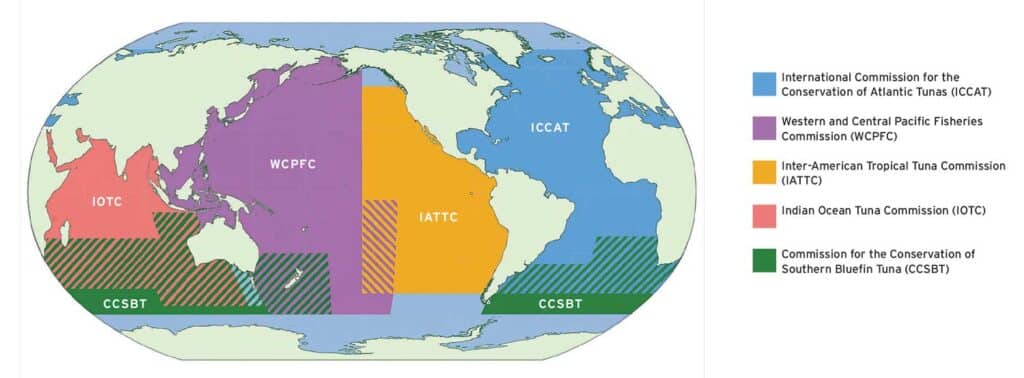
Codified by the United Nations Convention on the Law of the Sea (UNCLOS), five multinational regional fishery management organizations (RFMOs) are responsible for managing the world’s tuna, billfish, swordfish, sharks and other large highly migratory species. Of these, four actively manage billfish and swordfish stocks, including the International Commission for the Conservation of Atlantic Tunas (ICCAT), Western and Central Pacific Fisheries Commission (WCPFC), Inter-American Tropical Tuna Commission (IATTC) and Indian Ocean Tuna Commission (IOTC).
How Billfish Are Managed
The management of the world’s billfish is no simple task. These large, highly migratory species can cross entire ocean basins and even move between oceans, ignoring international boundaries. As a result, countries must work together to manage shared stocks across the high seas and their own exclusive economic zones.
Scientists from each regional fisheries management organization (RFMO) conduct stock assessments to evaluate population health and provide management advice. These scientists are also responsible for establishing stock boundaries and assessing fishing effort across vast ocean areas.
Stock assessments determine sustainable harvest levels and rely heavily on data from fishing activity, including catch rates, fishing effort, and biological information such as age, growth rates and spawning dynamics.
In the United States, several regional conservation actions have been implemented for billfish, including an annual recreational limit of 250 Atlantic blue marlin, white marlin and roundscale spearfish (via ICCAT), and the Billfish Conservation Act, which prohibits the commercial harvest, sale and importation of billfish in the continental United States.

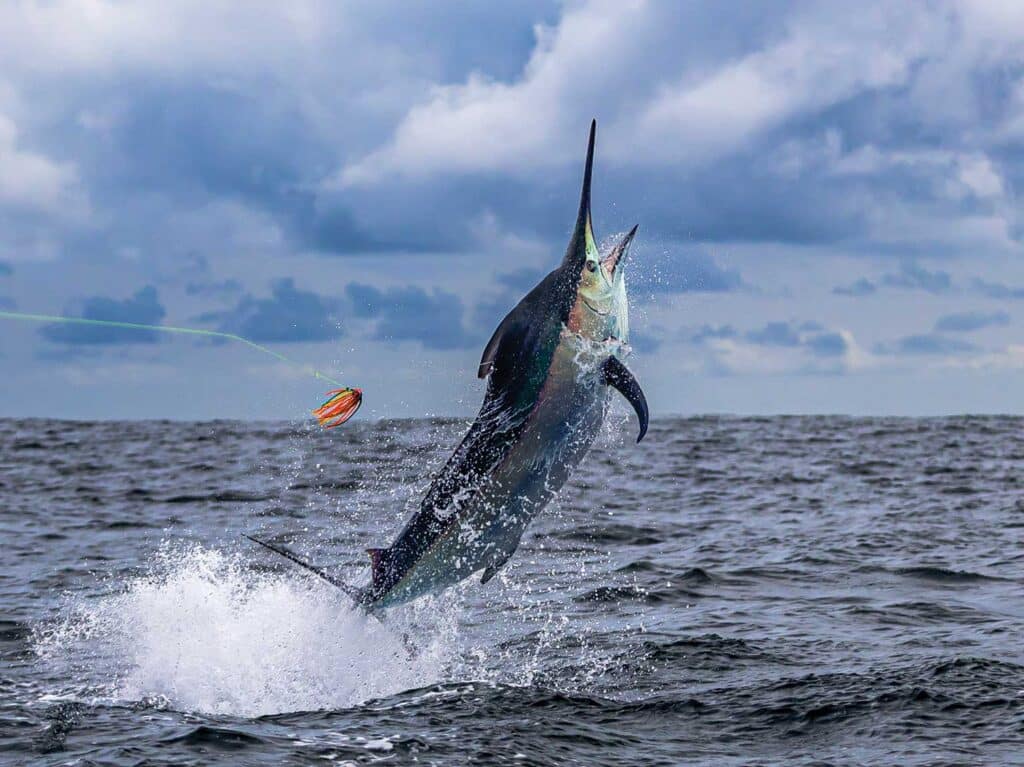
Blue Marlin (Makaira nigricans)
Biology: Distributed throughout the Atlantic, Pacific and Indian oceans, blue marlin prefer the upper 10 meters of the water column and can dive as deep as 1,000 meters in search of prey. The IGFA All-Tackle World Record are 1,376 pounds in the Pacific and 1,402 pounds in the Atlantic, with Capt. Cornelius Choy’s unofficial Hawaiian monster tipping the scales at 1,805 pounds. Blue marlin are highly mobile and have demonstrated long-distance movements of over 4,500 nautical miles in 120 days.
Management and Stock Status: Blue marlin are overfished but not subject to overfishing in the Atlantic (ICCAT), overfished and experiencing overfishing in the Indian Ocean (IOTC), and likely not overfished or experiencing overfishing in the Pacific (joint IATTC/WCPFC), though significant estimated declines in biomass (33 to 37 percent) have occurred over the past three decades.
Conservation: Listed as “vulnerable” by the IUCN Red List, blue marlin are at risk of high incidental catch in pelagic longline fisheries, as well as directed take in artisanal and sport fisheries, though catch reporting for many artisanal fisheries is lacking. When retrieving gear in the Atlantic, longline and purse-seine vessels are required to release blue marlin that are caught alive.
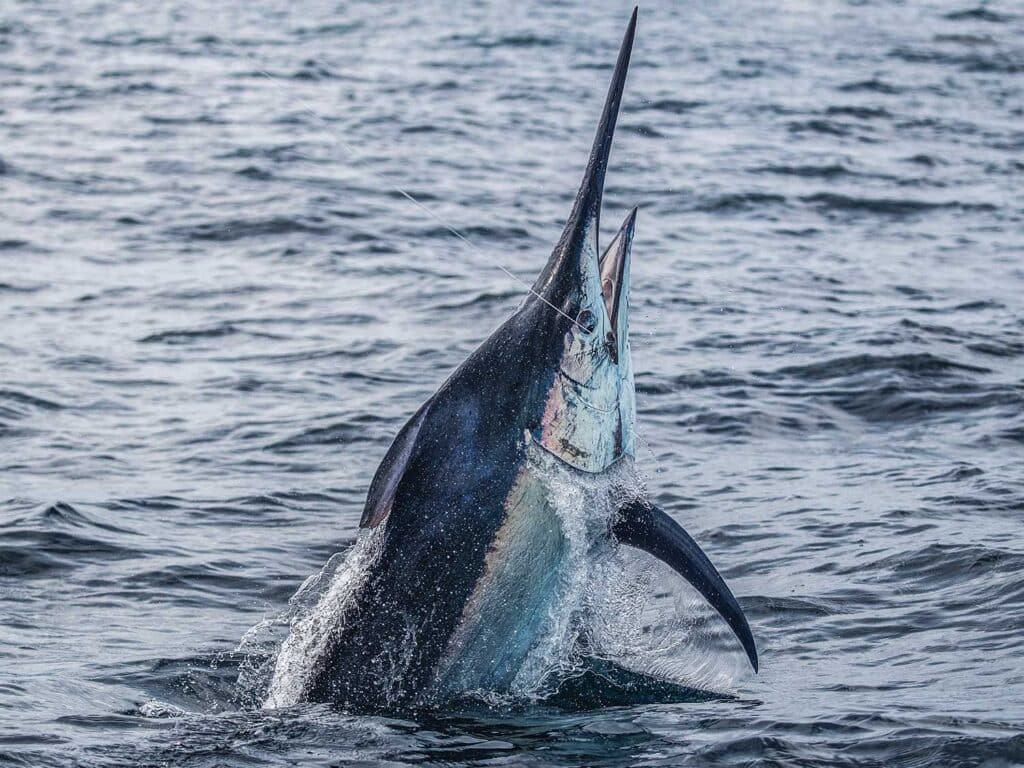
Black Marlin (Istiompax indica)
Biology: Found throughout the Pacific and Indian oceans, black marlin join blues as the largest of the billfishes, with the IGFA All-Tackle World Record weighing 1,560 pounds. Black marlin generally prefer surface waters above the thermocline, though they are capable of diving to depths of 500 meters or more, and are often found close to land masses, islands and coral reefs.
Management and Stock Status: The Indian Ocean stock of black marlin is not overfished but is subject to overfishing (IOTC), although there is great uncertainty over catch levels in the region. Due to missing and limited information, no stock assessments have been conducted in the Pacific, though landings have generally declined over the past 30 years.
Conservation: Listed as “data deficient” by the IUCN Red List, black marlin are frequently taken as bycatch by pelagic longlines, trolling, harpooning and, increasingly, coastal gillnets. A number of Central and South American countries have mandatory catch-and-release fisheries for black marlin and often prohibit their commercial harvest.
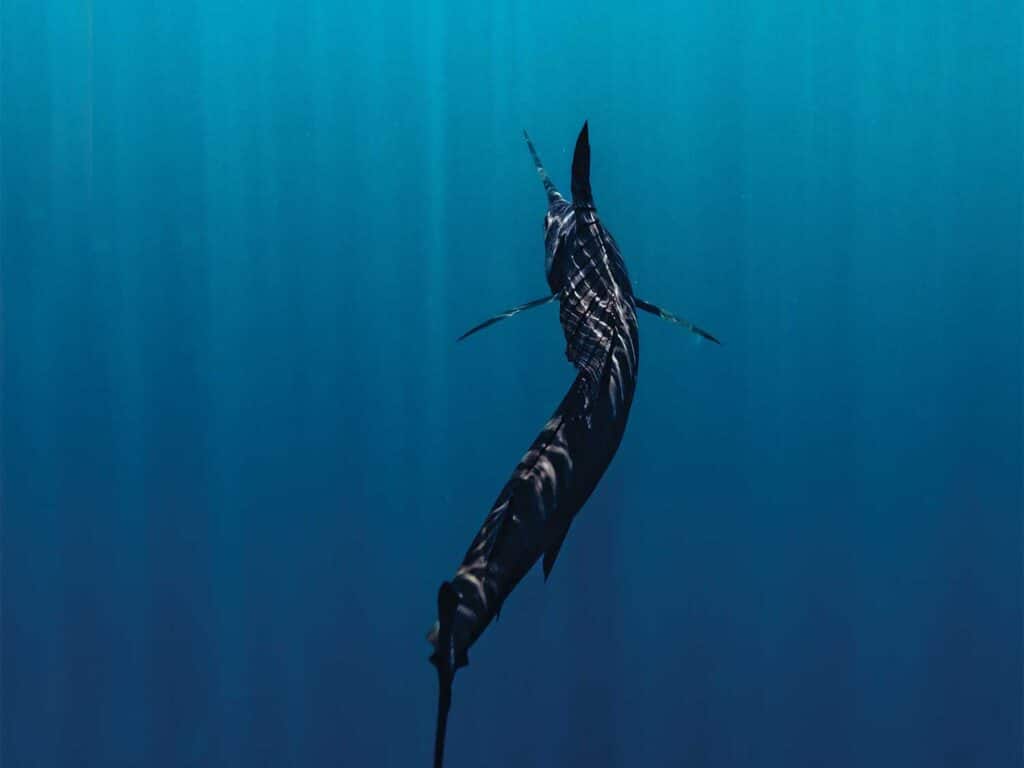
Sailfish (Istiophorus platypterus)
Biology: Often regarded as the least oceanic of the billfishes, sailfish frequent nearshore waters. Found throughout the world’s oceans, sailfish in the Pacific have been reported to grow larger than those in the Atlantic, with IGFA All-Tackle World Records of 221 pounds in the Pacific and 142 pounds in the Atlantic. Once considered two separate species between the Atlantic and Indo-Pacific, recent studies based on molecular genetics have led to the recognition of a single species of sailfish occurring circumglobally.
Management and Stock Status: The East Atlantic stock is not overfished or experiencing overfishing, while the West Atlantic stock is overfished but not subject to overfishing (ICCAT). In the Pacific, the status of the eastern Pacific sailfish stock could not be determined due to a lack of reliable catch information needed for the assessment models (IATTC). Sailfish in the Indian Ocean were found to be neither overfished nor subject to overfishing (IOTC).
Conservation: Listed as “vulnerable” by the IUCN Red List, sailfish are frequently caught as bycatch in longline, purse-seine, trawl and gillnet fisheries. Sailfish are available nearly year-round in recreational fisheries in the Southeast U.S., and catches have increased in coastal gillnets in the Indian Ocean over recent years.
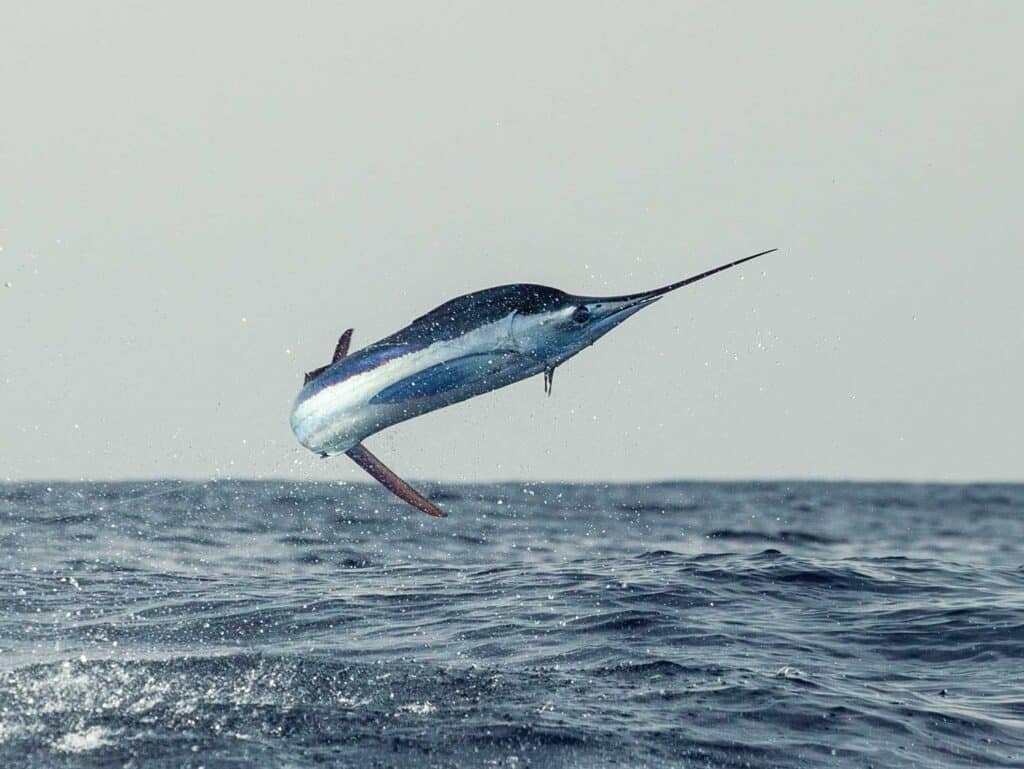
White Marlin (Kajikia albida)
Biology: Found throughout the Atlantic Ocean, white marlin prefer the upper 20 meters of the water column. White marlin are very close in appearance to roundscale spearfish, and are often misidentified as such. The IGFA All-Tackle World Record stands at 181 pounds from Brazil’s Royal Charlotte Bank.
Management and Stock Status: Managed as a single stock, white marlin are assessed in combination with roundscale spearfish, and the most recent assessment indicated that the stock is overfished but not experiencing overfishing (ICCAT).
Conservation: Listed as “least concern” by the IUCN Red List, white marlin are directed take in artisanal and recreational fisheries, and incidental catches in pelagic longline, purse-seine, trawl and gillnet fisheries.
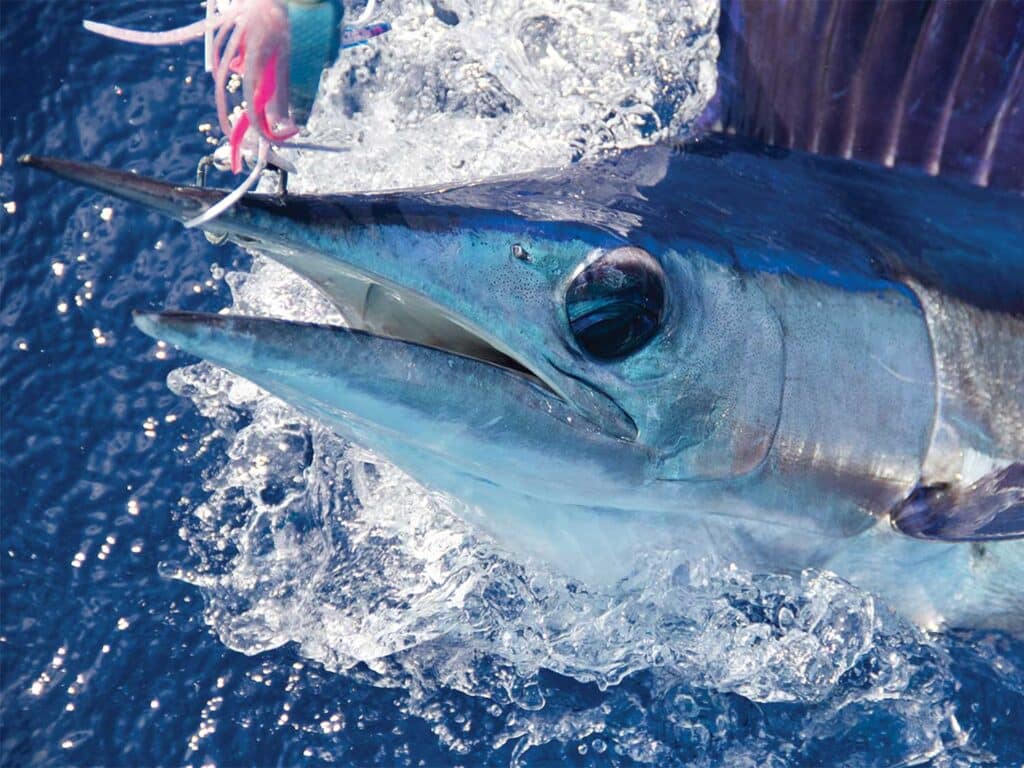
Shortbill Spearfish (Tetrapturus angustirostris)
Biology: Distributed throughout the Pacific and Indian oceans, there is very little known about the life history and biology of the shortbill spearfish. Although frequently encountered by anglers fishing off Hawaii, the IGFA World Record was caught off Australia and weighed 110 pounds.
Management and Stock Status: Primarily caught as bycatch in longline and purse-seine fisheries, the lack of reliable catch data for this rare-event species has prevented a formal stock assessment.
Conservation: Listed as “data deficient” by the IUCN Red List, shortbill spearfish populations are likely declining based on the catch trends of other billfishes.
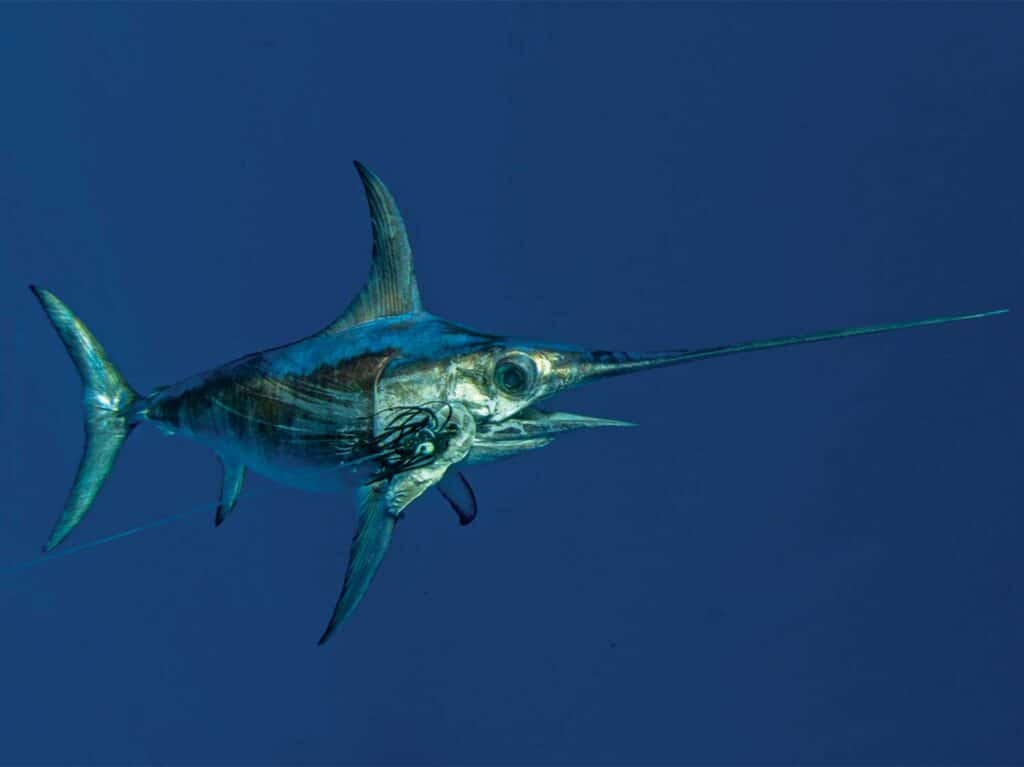
Swordfish (Xiphias gladius)
Biology: Found in tropical, temperate and sometimes cold waters worldwide, swordfish are apex predators that often forage at great depths during the daytime and occupy shallower depths at night. The IGFA All-Tackle World Record swordfish stands at 1,182 pounds. At least four major genetic stocks have been identified throughout their range.
Management and Stock Status: North Atlantic swordfish are not overfished and not subject to overfishing, while the South Atlantic stock is overfished and subject to overfishing (ICCAT). The Mediterranean stock is overfished and may be subject to overfishing (ICCAT). The southwest Pacific swordfish stock is likely not overfished or experiencing overfishing (WCPFC), and the North Pacific stock is likely not experiencing overfishing and likely not overfished (WCPFC). Swordfish in the Indian Ocean are neither overfished nor subject to overfishing (IOTC).
Conservation: Listed as “near threatened” by the IUCN Red List, swordfish are a major food fish and are commonly caught by pelagic longline, harpoon and drift gillnet fisheries. Heavily overfished in the Atlantic during the 1980s and 1990s, subsequent international rebuilding efforts, including individual country quotas, gear requirements, reductions in fishing effort and minimum size limits, have helped rebuild the fishery.
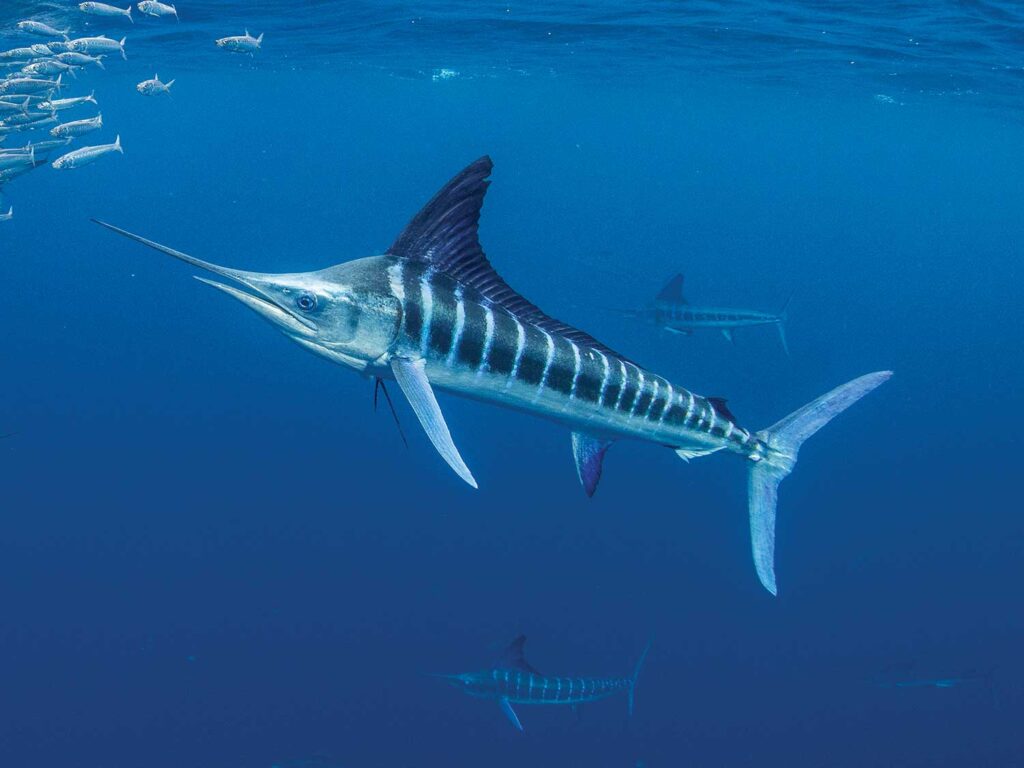
Striped Marlin (Kajikia audax)
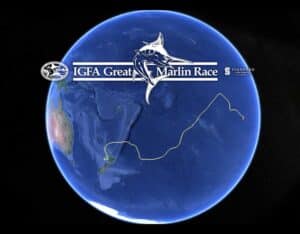
Biology: Often recognized as the most widely distributed billfish by latitude, striped marlin range throughout the Pacific and Indian oceans. The IGFA All-Tackle World Record is 494 pounds. For years, scientists believed the species had relatively limited movements. However, a recent satellite-tagged stripey from the IGFA Great Marlin Race traveled 4,739 nm across the Pacific from New Zealand to just off the Galápagos. Genetic studies show stock structuring between and within ocean basins, especially in the Pacific, where three genetic stocks have been identified.
Management and Stock Status: Striped marlin are likely overfished and close to experiencing overfishing in the southwest Pacific (WCPFC), and likely overfished and experiencing overfishing in the western and central North Pacific (WCPFC). They are not overfished or experiencing overfishing in the northeast Pacific (IATTC), although the stock hasn’t been fully assessed since 2008. They are heavily overfished and experiencing overfishing in the Indian Ocean (IOTC).
Conservation: Listed as “least concern” by the IUCN Red List, striped marlin are an important recreational species and are frequently retained in commercial fisheries. The western and central North Pacific stock is currently under a rebuilding plan due to its continuously depleted status.
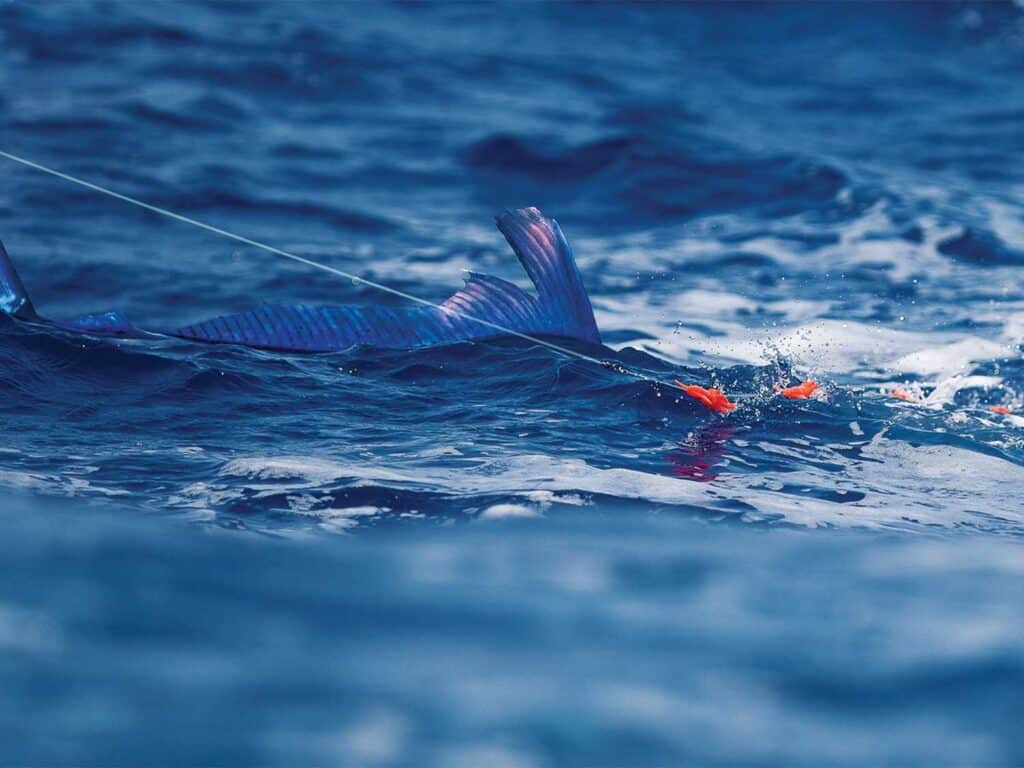
Roundscale Spearfish (Tetrapturus georgii)
Biology: Found throughout the Atlantic and Mediterranean Sea, roundscale spearfish were recognized as a distinct species in 2006. The IGFA All-Tackle World Record is 70 pounds.
Management and Stock Status: Catches of roundscale spearfish have often been misclassified as white marlin or longbill spearfish, and the lack of robust catch reporting has prevented a formal stock assessment.
Conservation: Listed as “data deficient” by the IUCN Red List, little is known about roundscale spearfish movements, habitat use and reproductive biology. This species is frequently caught as bycatch in longline, purse-seine and artisanal fisheries, as well as in sport fisheries on both sides of the Atlantic.
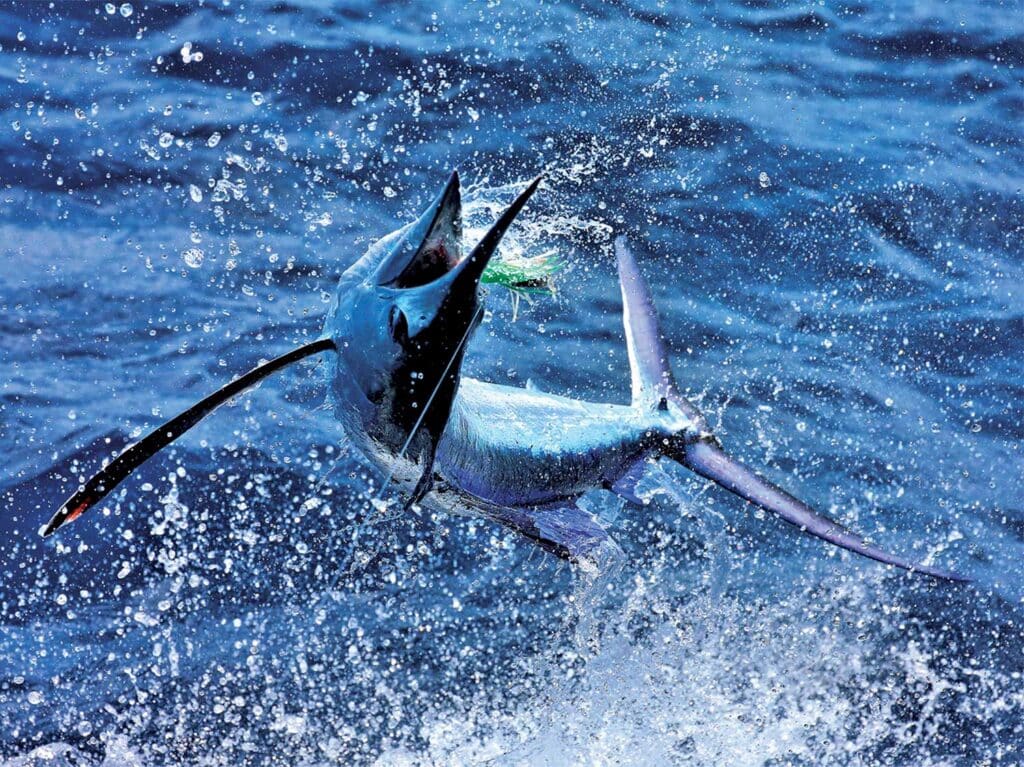
Longbill Spearfish (Tetrapturus pfluegeri)
Biology: Found throughout the Atlantic, longbill spearfish generally prefer depths above the thermocline. Little information is available on their biology and life-history characteristics. The IGFA All-Tackle World Record is 127 pounds.
Management and Stock Status: Due to poor catch reporting throughout the Atlantic, this species has not been formally assessed.
Conservation: Listed as “least concern” by the IUCN Red List, this species is frequently caught as bycatch in longline, purse-seine and artisanal fisheries. They are also periodically caught in sport fisheries.
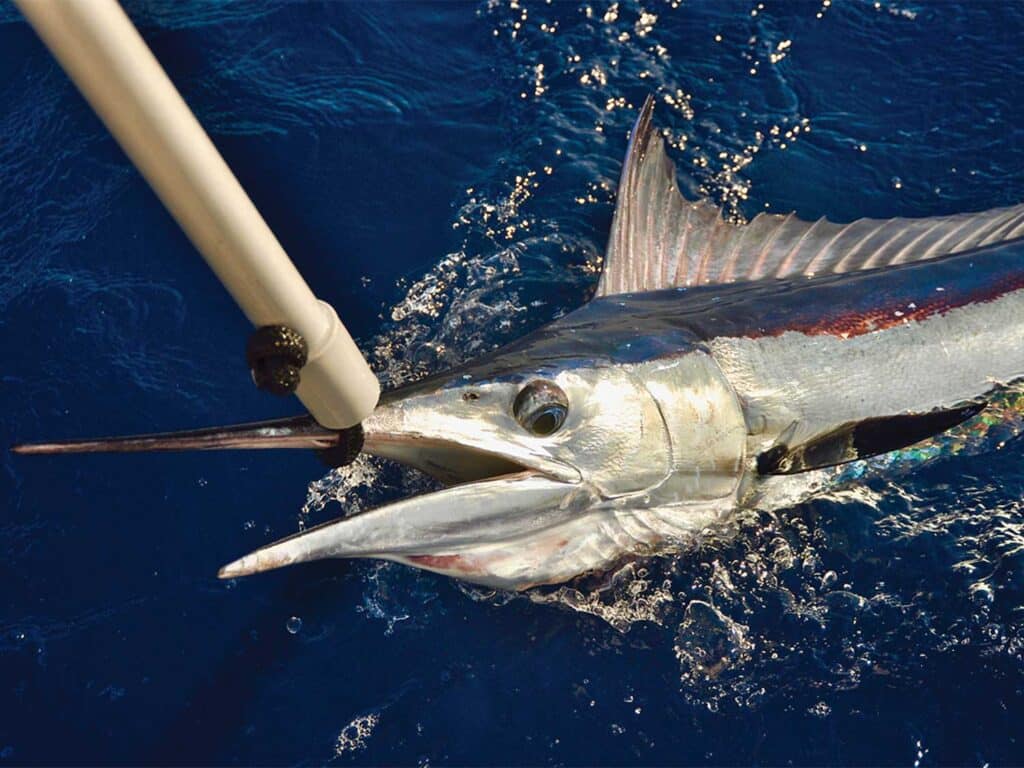
Mediterranean Spearfish (Tetrapturus belone)
Biology: Found throughout the Mediterranean Sea, this species is one of the least studied billfish and likely completes its life cycle within the Mediterranean. The IGFA All-Tackle World Record is 90 pounds.
Management and Stock Status: This species has not been formally assessed, and efforts should be made to improve catch reporting. Additional research is required to learn more about their biology and behavior.
Conservation: Listed as “least concern” by the IUCN Red List, Mediterranean spearfish are commonly taken as bycatch in longline and driftnet fisheries, as well as a small traditional harpoon fishery. This species is often sold in local markets and is popular in sport fisheries.
Looking Ahead
Despite the complexity and scale of billfish management, much about these remarkable species remains unknown. Their wide-ranging migrations and relative rarity make them difficult to study—and because they carry limited commercial value in most regions, they often fall low on the list of priorities for global fisheries managers. Frequently caught via illegal, unreported and unregulated (IUU) fishing, many billfish stocks are depleted and data-limited, illustrating the urgency of robust conservation measures.
But that doesn’t mean they lack champions. Around the world, dedicated organizations, scientists and anglers are working tirelessly to ensure billfish receive the attention, research and protection they deserve, helping to secure healthy, sustainable stocks for future generations to experience and enjoy.