Subscribe to Marlin magazine and get a year of highly collectible, keepsake editions – plus access to the digital edition and archives. Sign up for the free Marlin email newsletter.
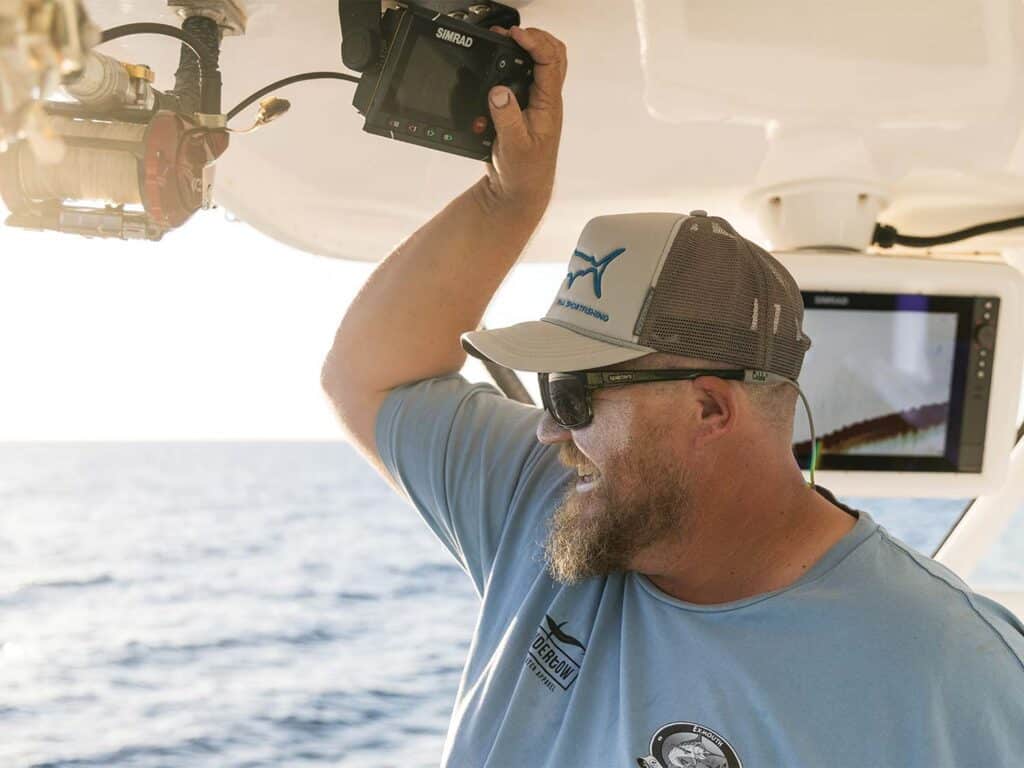
Capt. Eddy Lawler and Peak Sportfishing are no strangers to historic bites. Lawler’s exploits from this remote, beautiful outpost in Western Australia have done nothing less than carve Exmouth’s place on the global sport-fishing landscape.
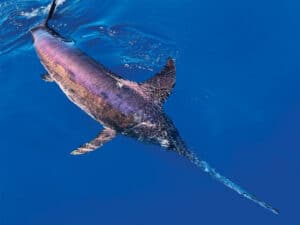
Before talking about the incredible stretch of black marlin fishing in late July, first is some background on Exmouth and some of the things that Peak Sportfishing has accomplished. Exmouth is one of the best places around to target (and catch) a marlin slam—releasing a black, a blue and a stripe in the same day. There are enough black marlin off Exmouth that Lawler and crew can even target them on fly tackle.
Then there is the blue marlin fishing. The season runs from about October through February. Lawler and company target blues in offshore canyons that start about a half-mile from shore. The average-size blue in this part of the world runs around 300 pounds, though Lawler estimates that 1 in 10 will be 500 or bigger. And there are some nice ones.
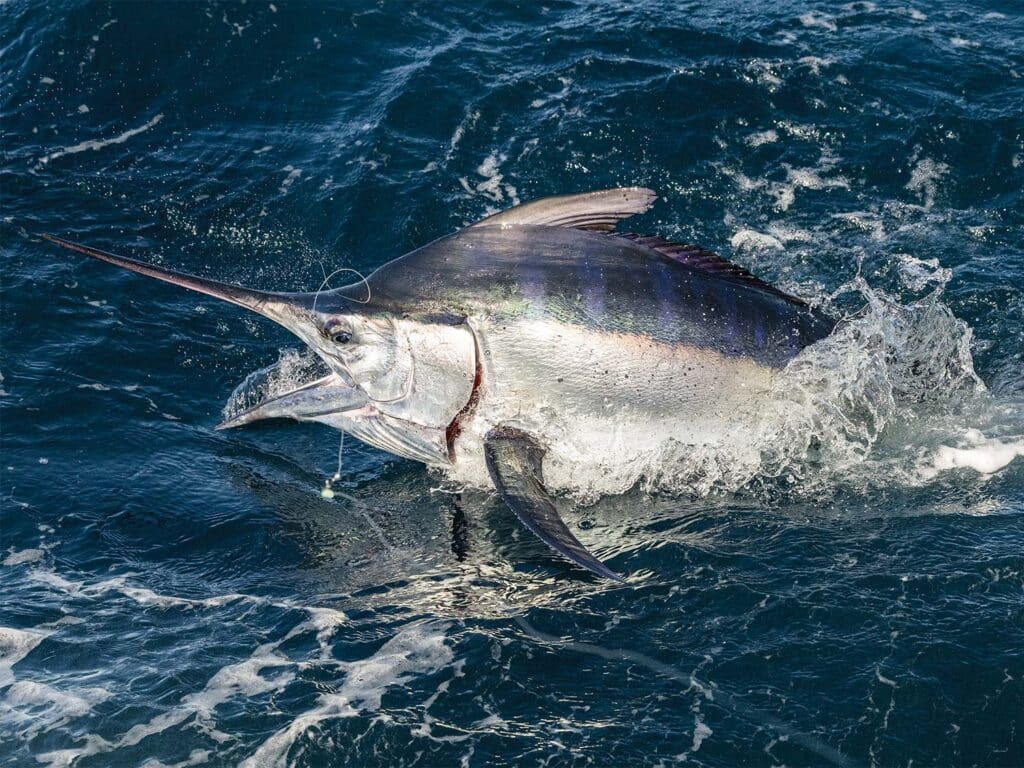
In 2018, Lawler weighed the first grander blue marlin, a fish of 1,089 pounds, in the history of Australia—not the first in the history of Western Australia or the history of Exmouth. This was the first 1,000-pound blue marlin in the long and storied history of Australian sport fishing.
So, yes, Exmouth is a remarkable fishery that is home to plenty of black marlin and good numbers of blues and stripes, and enough sailfish to keep the possibility of a super slam alive. But Lawler’s run on black marlin in late July was something incredible.
“The best day, we caught 22 blacks and a sail,” Lawler begins. “We had the guys, a Kiwi fella who now lives in Australia, who started a new app for logging fish offshore. You log the fish; it gives you a time stamp with ocean and tidal data. After logging lots of fish through time, you start seeing patterns.”
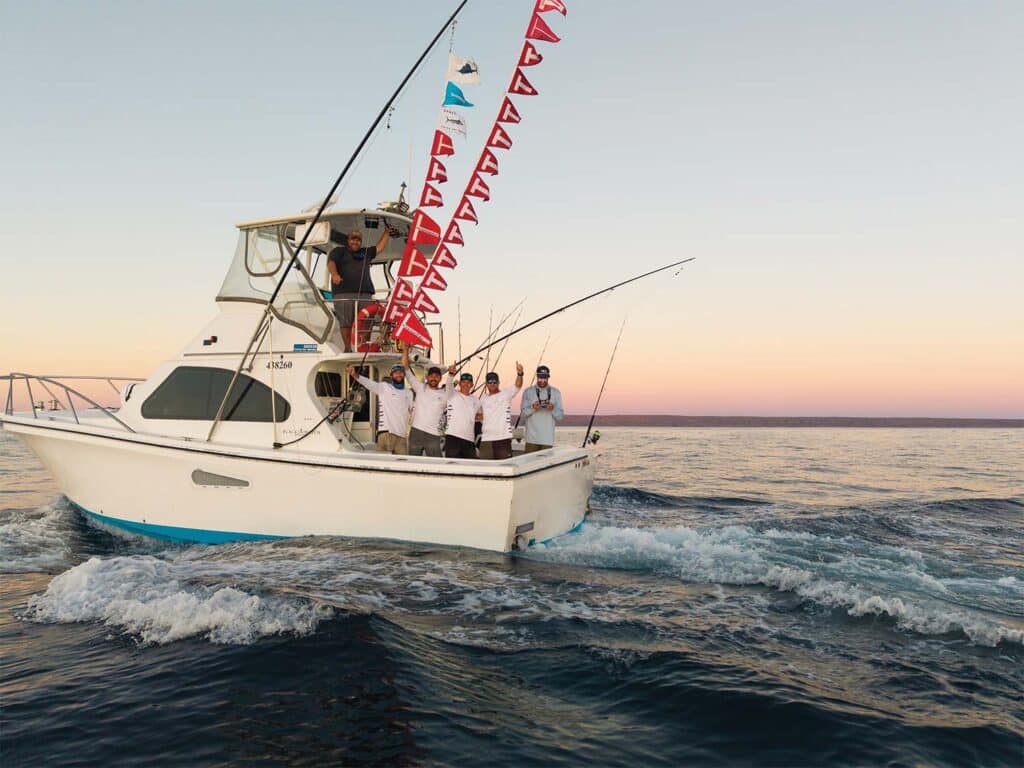
The app is called Salt Diary, and the team had chartered Lawler in hopes of getting content and video footage. The group fished July 21-24, 2026. They hit it right, and it was good that they did.
“On Day 1, we went 3 of 4,” Lawler says. The fish he describes are all black marlin. “On the second day, some clean water pushed in from the west. We caught 22 blacks and a sail. We raised 38 fish and had 29 bites.
“We were lucky [that] the boys were logging every fish. It might have been more than I could have kept track of,” the captain says with a laugh.
And as wild as the day was, the numbers might have been even better. But perhaps the way it worked out makes for a better story. “I had just been given a new set of carbon-fiber riggers to try out. One of them blew up in the early afternoon. At about 3, a 45-kilogram black got tangled up in the bridge teaser and the other rigger blew up,” Lawler says with a laugh. “For the last two hours, it was fishing straight out of the rods, with the boys holding lines in their fingers.”
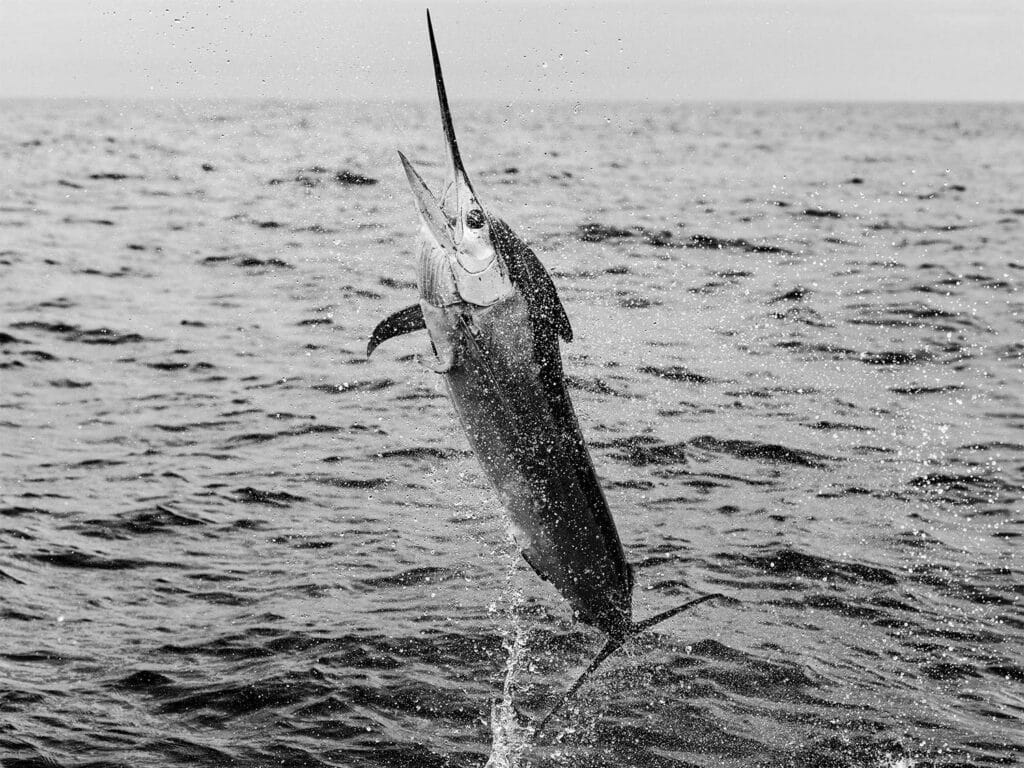
Lawler replaced the riggers overnight and finalized preparations at the dock in the morning before Day 3. They got a bit of a late start, putting their first bait in the water around 11:30. They caught 19 blacks that afternoon.
Day 4 was more of the same. Lawler released nine blacks out of 11 bites. They raised 13 on the day.
That makes an incredible 53 black marlin released over four days. Over the best two, the number was 41—for black marlin. You could fish many years in many parts of the world and never see that many blacks in your life. Many people do.
The average size of the fish was 80 to 90 pounds. The biggest they encountered was in the vicinity of 200.
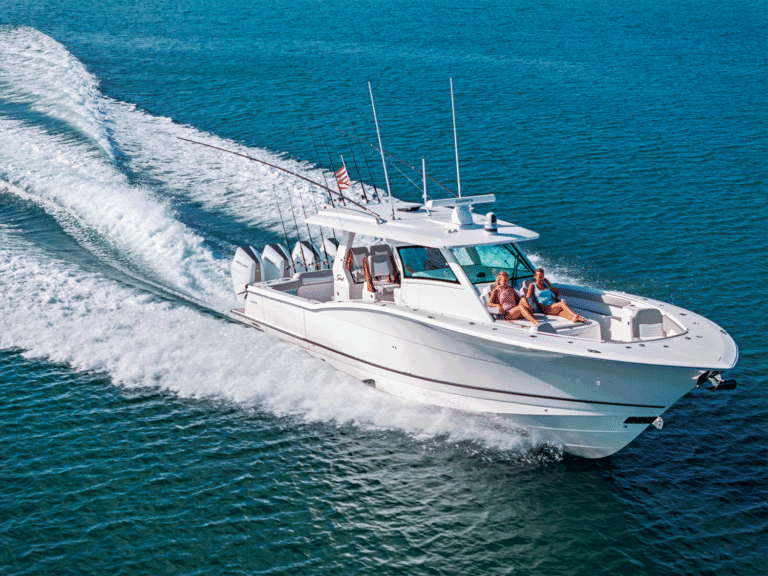
Lawler and company target black marlin here just past the reef, in 50 to 100 meters of water. Peak Sportfishing is a two-boat operation—a 36-foot Blackwatch and a 25-foot Contender. This trip took place aboard the Blackwatch.
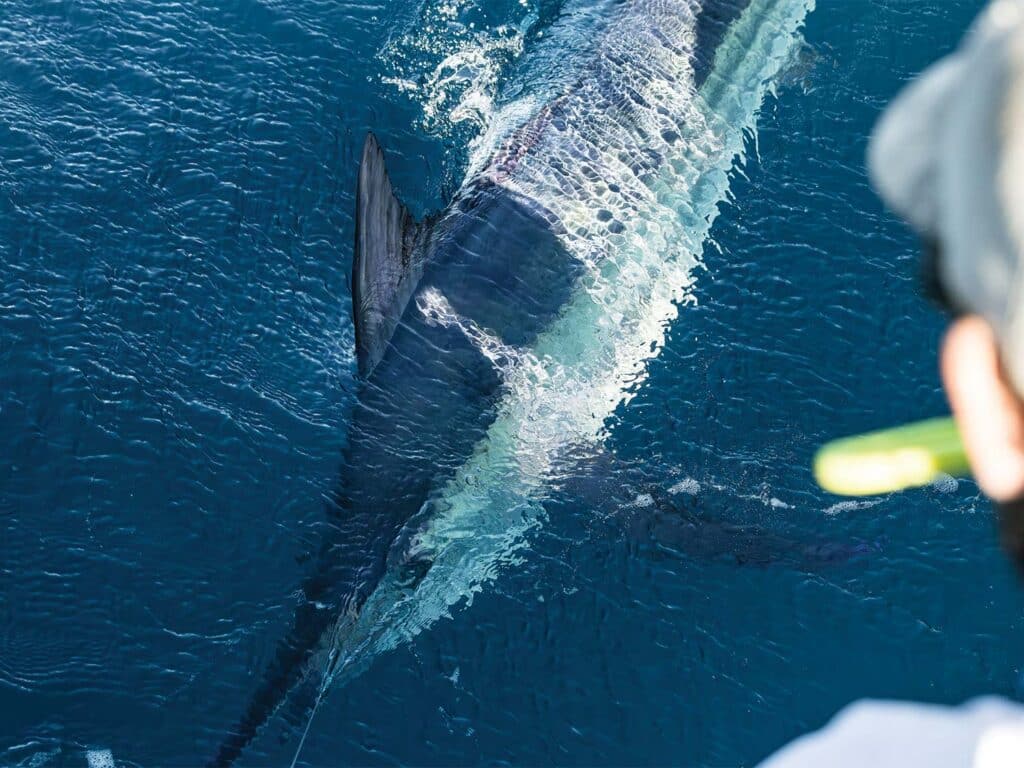
Lawler’s setup is a standard billfish trolling approach. He runs two dredges and two bridge teasers, with pitch baits ready. In the riggers, he runs either swimming or skipping garfish (ballyhoo) rigged on circle hooks. This is the setup for bait-and-switch fishing; the spread is modified a bit when targeting blacks on the fly.
While the black marlin fishing is not always this wide open, Exmouth has plenty of them. “We see good black marlin fishing all year. Winter (July and August) is the peak; February and March is a really good time too. Up until this bite, my best day we released 15 black marlin,” Lawler says.