Subscribe to Marlin magazine and get a year of highly collectible, keepsake editions – plus access to the digital edition and archives. Sign up for the free Marlin email newsletter.
There is something all-consuming about staring at a rod tip as it bounces with the swell. Over 1,400 feet below, a rigged squid drifts through the darkness along a canyon’s edge. Swordfishing is a game of patience: You wait, you watch, and you try not to blink.
Three hours in, the bounce changed. The tip went light, the load of the weight below suddenly gone. The movement of the rod tip set everyone into motion at once. A swordfish had taken the bait and was charging the surface. I wound the Talica 50 as fast as I could, scrambling into the stand-up harness while trying to catch up to the fish. Long after I expected to feel something, I came tight. The fish was 300 feet below and still coming up.
Matt Watson, who I would be spending the next week fishing with, said: “When a swordfish heads to the surface after the bite, it could be a 100-pound fish, or it could be over 700. We’ll just have to see.”
I soon found out.

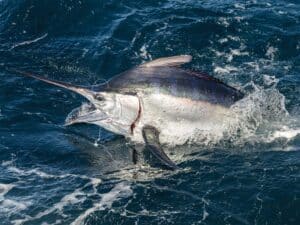
The fish cleared the water 30 yards from the boat—all 500 pounds of it completely airborne against the blue February sky. Shortly after, Watson grabbed the leader. The fish felt the extra pressure, turned and dived. The Talica groaned, and the line pinged under 40 pounds of drag as it was ripped from the reel.
The fish settled 200 feet below, barely moving, and I worked it up inch by inch with my thighs burning against the harness. After what felt like an eternity, Watson grabbed the leader for a second time and wrestled the fish next to the boat. However, the fight wasn’t over. The fish once again lunged for the depths, and the 500-pound leader snapped clean.
We stood on the deck and looked at each other in awe. This was exactly what I was searching for: to connect to one of the toughest fish in the ocean, in the place where they grow the largest, in the far north of New Zealand.
The Edge of the Earth
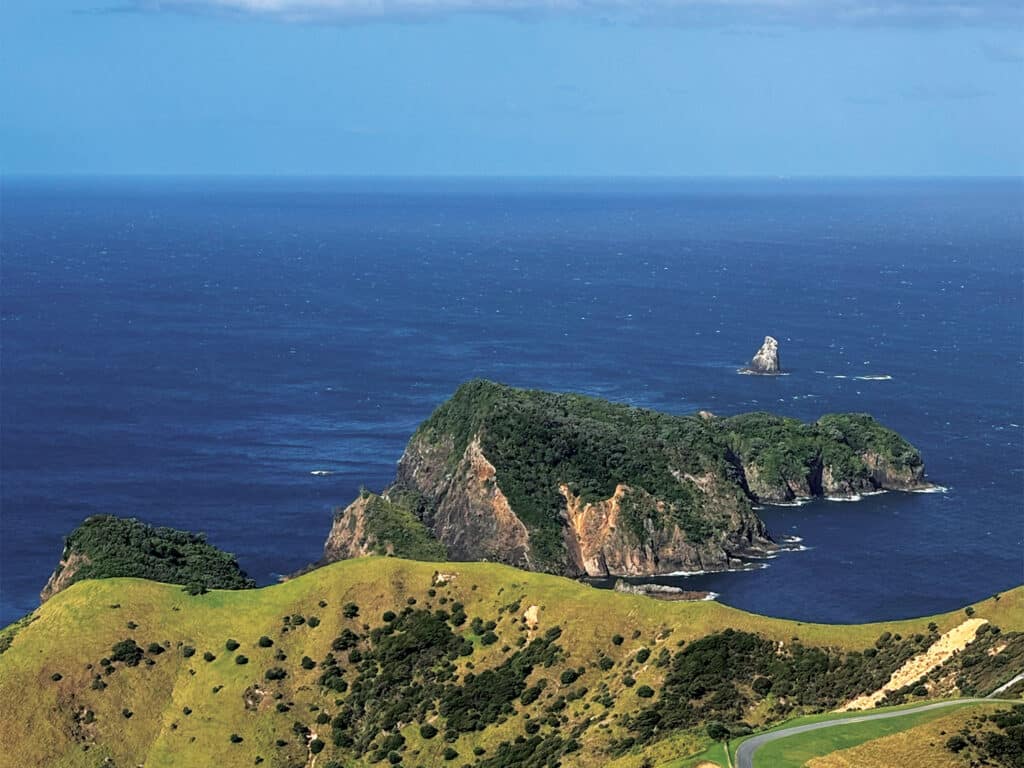
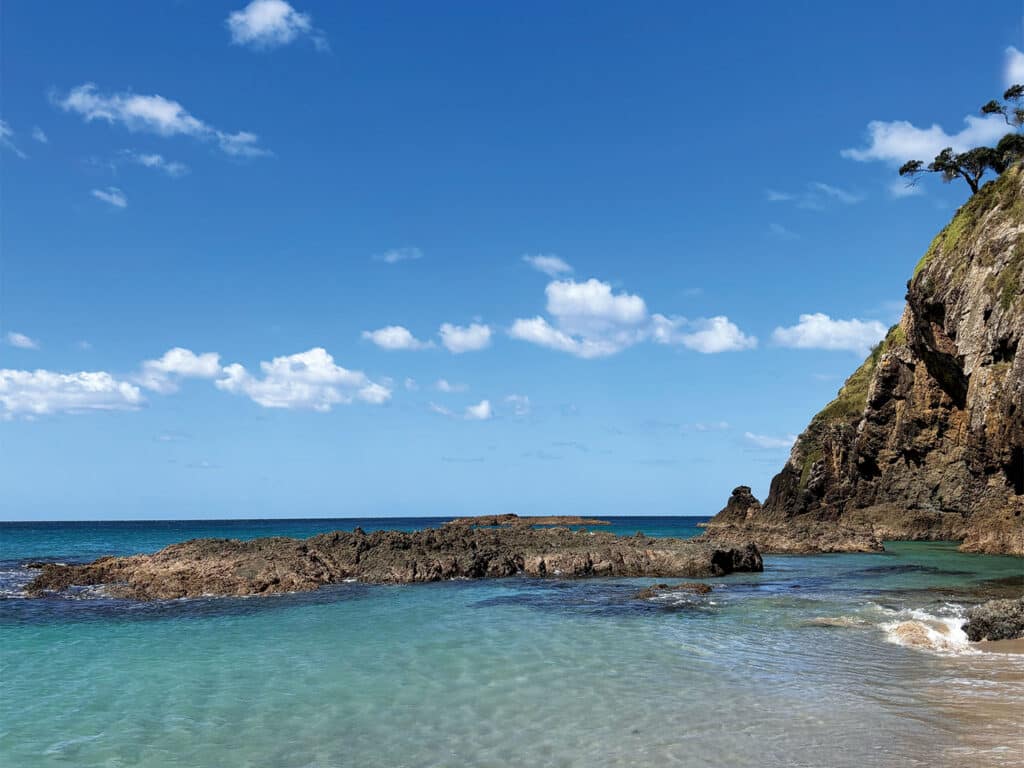
New Zealand does not seem of this world. Rolling green hills fall away to white-sand beaches and turquoise bays, the coastline shifting between dense native brush and dramatic cliffs above the Pacific. It is the kind of scenery that makes it feel like the rest of the world hasn’t fully found it yet. There is nowhere else quite like i
None of that, though, is what brought me here. Just offshore of New Zealand’s north island, the continental shelf drops away into deepwater canyons that are home to some of the largest swordfish on the planet.
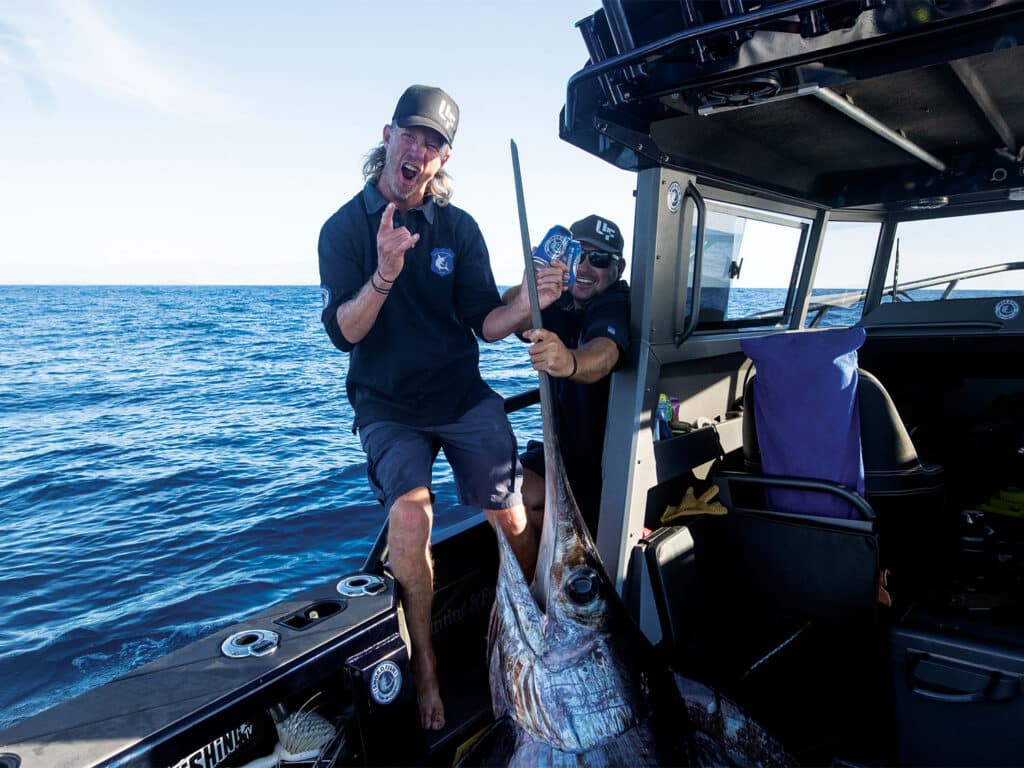
To fish them, I joined Watson for a week on the water. Depending on who you ask, Watson is a television fishing personality, a conservationist, a beer brewer, or simply someone completely obsessed with fishing.
Once a year, though, all that gets put on hold for Mojo Week, Watson’s annual trip north with two close friends: Biggie, a former professional rugby player, and Shaun, an oil and gas mechanic who works on rigs in Australia. The premise is simple: one week dedicated to fishing hard for giant swordfish. This year, I was fortunate to be invited along.
The Man Behind the Mojo
Long before this trip, I had followed Watson’s fishing adventures online, whether it was the estimated 1,300-pound black marlin at the Great Barrier Reef taken by sharks at the leader, or Swordzilla, a 900-plus-pound broadbill that he and Biggie fought for over 17 hours before tagging and releasing in the middle of the night. But before any of these stories, he was just a kid who loved to fish.
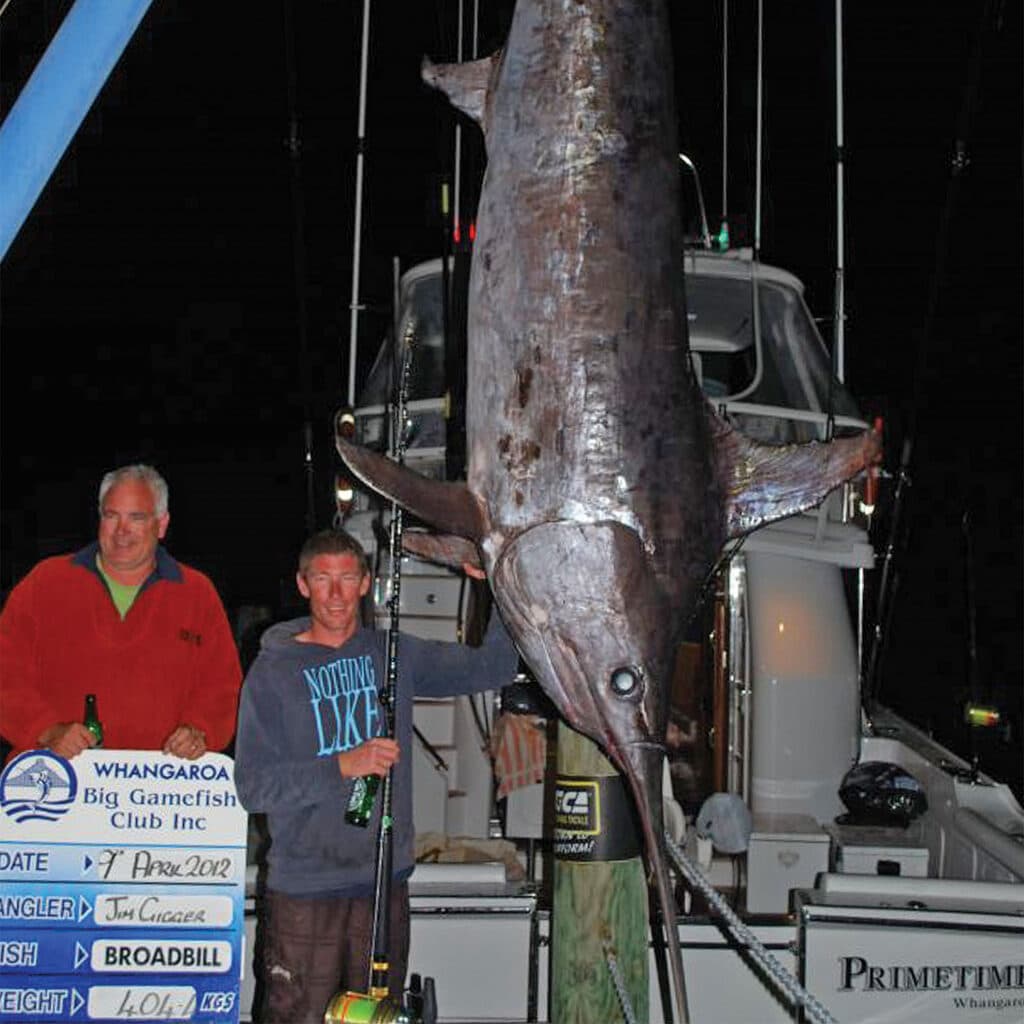
Watson grew up in South Auckland, steering his own dinghy around the Manukau Harbor at 7 years old. In the early 2000s, he joined Primetime, a 58-foot sport-fisher captained by John Gregory. An absolute legend in the world of swordfishing, Gregory was a seasoned commercial fisherman who understood what the northern New Zealand grounds could produce for serious rod-and-reel anglers. Together, they ran liveaboard trips to the Three Kings Islands, targeting striped marlin, and began experimenting with swordfishing at a time when few recreational boats were doing it seriously.
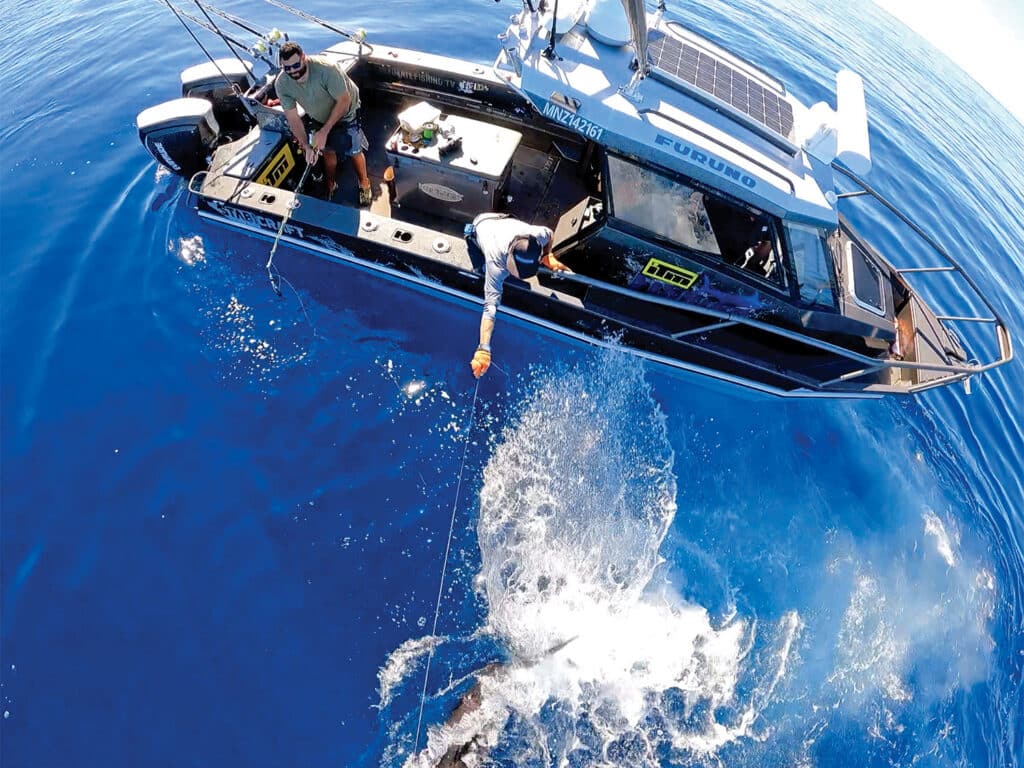
It was on Primetime that Watson started filming his days on the water. What began as a casual hobby became something he couldn’t stop thinking about. Eventually, he made a decision that most people in his position wouldn’t. He built a fishing television show from scratch with no media experience and no safety net.
The breakthrough came when David Letterman discovered one of Watson’s early videos and invited him to appear on The Late Show. He flew to New York, saw his name on the star of the dressing room door, and nearly became sick from nerves. The appearance, however, went off without a hitch. Discovery Channel and Animal Planet came next, and Watson eventually launched The ITM Fishing Show, his own production that has now spanned more than 20 seasons and 400-plus episodes.
Today, Watson has branched well beyond the water. He continues to produce fishing content for social media, is an ambassador for Legasea, New Zealand’s leading marine conservation organization, spent years building his dream home at Mataka Station in the Bay of Islands—documented in the New Zealand TV series Building the Kiwi Dream—and launched his own beer company, aptly named Swordfish Mojo.
The Ghost of the Abyss
Across enterprise and decades, the broadbill swordfish has been the through line. It was there at the beginning of everything Matt Watson has built, and it will be there long into the future.
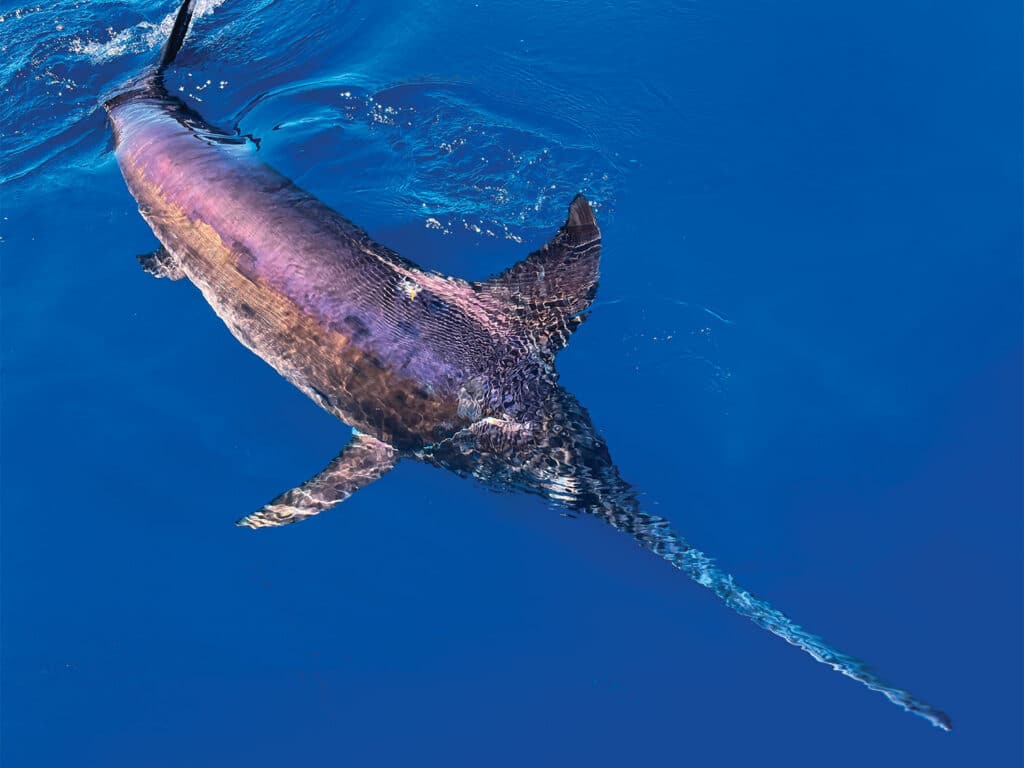
New Zealand has produced more IGFA world-record swordfish than any other location on the planet. Nearly every large fish is female—males rarely exceed 300 pounds—which means the fish New Zealand is known for are almost exclusively large, mature females drawn here to feed in some of the most productive deep water in the Southern Hemisphere.
Their range, though, extends far beyond New Zealand’s waters. A 2023 study published in Scientific Reports tracked swordfish tagged in Tasmanian waters that migrated over 2,000 miles northward toward tropical spawning grounds in the Coral Sea. The fish off New Zealand and those off Tasmania are part of the same wide-ranging population, share the same spawning grounds, and call home one of the most remote oceans on Earth.
All that movement happens largely unseen. Swordfish spend their daylight hours 1,300 to 2,000 feet down, hunting in near-freezing darkness before rising toward the surface after dark to follow prey on their nightly vertical migration. A swordfish bill is a precision weapon, used to slash through bait schools and squid. In fact, swordfish swing their bills at some of the highest lateral acceleration rates recorded by any animal.
What allows them to hunt in these unforgiving conditions comes down to one of the ocean’s most extraordinary adaptations. A modified muscle in their head warms the swordfish’s eyes and brain up to 27 degrees F above the surrounding water temperature, a biological heater built specifically for seeing in cold, lightless water.
Understanding what these fish are, where they come from, and what they are built for sheds light on why Watson’s three-decade obsession makes complete sense. So does the fact that we were back on the water the next day before sunrise.
The Art of the Drop
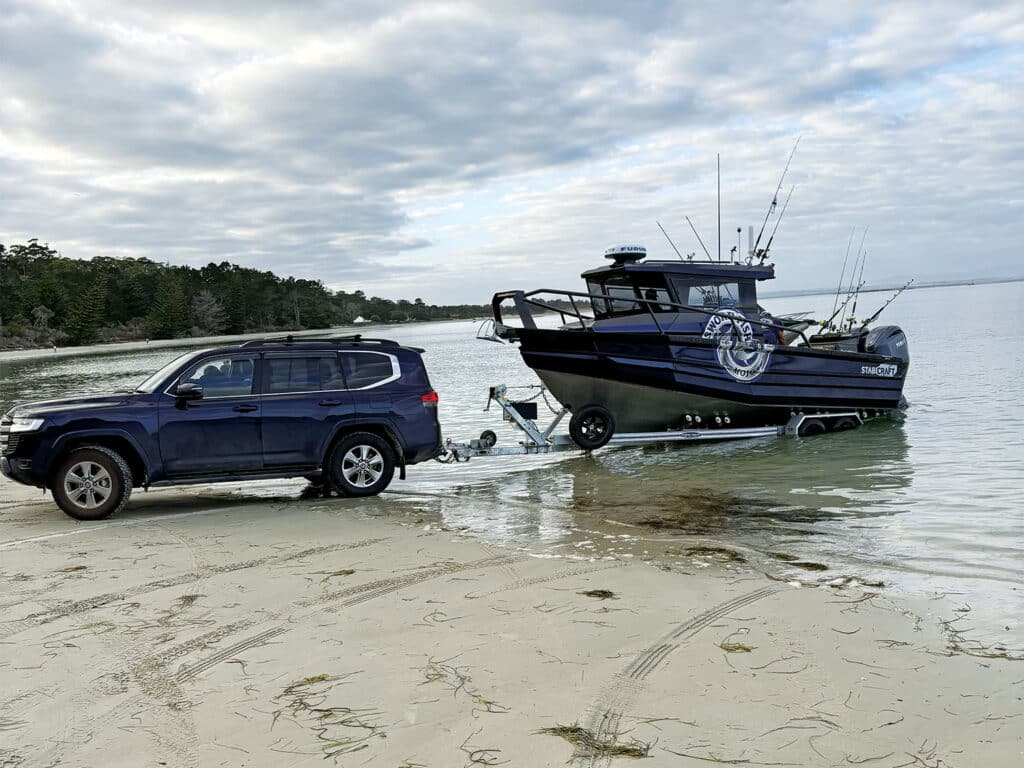
Before first light, we were loading gear into Swordfish Mojo, Watson’s custom-built Stabicraft, a boat designed specifically for swordfishing in remote parts of New Zealand. There was no marina, no fuel dock, no waiting in line. Watson launches straight from the beach, backing down the trailer to the water’s edge in the dark.
After an hour’s run and setting up in our spot, it was clear that swordfishing is nothing like most offshore fishing. What happens at the surface does not matter. There are no birds to follow, no temperature breaks to chase, no weed lines to scout. The fish are deep, living in conditions invisible from the deck. What matters is what happens over 1,000 feet below: the direction the current is moving, how fast, and whether conditions are right for fish to feed. That comes down to experience and informed guesswork. The only way to confirm any of it is to set the line and see.
Watson’s swordfish setup is built around fighting these fish by hand standing up, without the aid of electric reels. You must earn every foot of line that comes back on the reel. Even getting the bait to the right depth requires its own specialized process. A breakaway weight is attached to the bait, the boat is put into gear to keep the line clear of the motor, and the bait is sent down. When it arrives at depth, you wind hard until the breakaway weight snaps free, and the bait is left drifting naturally in the current. From there, it is about keeping the line vertical, maneuvering the boat to follow the bait in the current below.
Then the rod goes in the holder, and the waiting begins.
The Long Way Up
The waiting, on this day, did not last long.
The second fish bit differently. The rod loaded up and stayed that way, a heavy weight from somewhere far below the boat. The swordfish that took the bait had no intention of coming up.
I was in the harness before I had time to think, and the fish didn’t budge. For the first 20 minutes, it sat deep in the current and took short, powerful runs that transferred straight up the line and into my lower back.
There is nothing elegant about it. Fighting a swordfish stand-up is a physical endeavor that requires leverage and stubbornness. Thirty minutes in, I was drenched in sweat. An hour in, I was operating on something closer to instinct than strength.
The fish came up slowly. Watson watched the line and called depth as the fish rose—300 feet, 250, 200. At 150 feet, it ran hard, taking back as much line in 30 seconds as it had taken me an hour to gain. It stopped. We started again.
When Watson reached for the leader after another hour, the fish surged. Even at the surface, it had power left, tail driving hard, bill slashing through the chop. He muscled it to the boat, got the hook free, and then it was gone—straight down, full of fight, like the last two hours had meant nothing to it at all.
The Whole of It
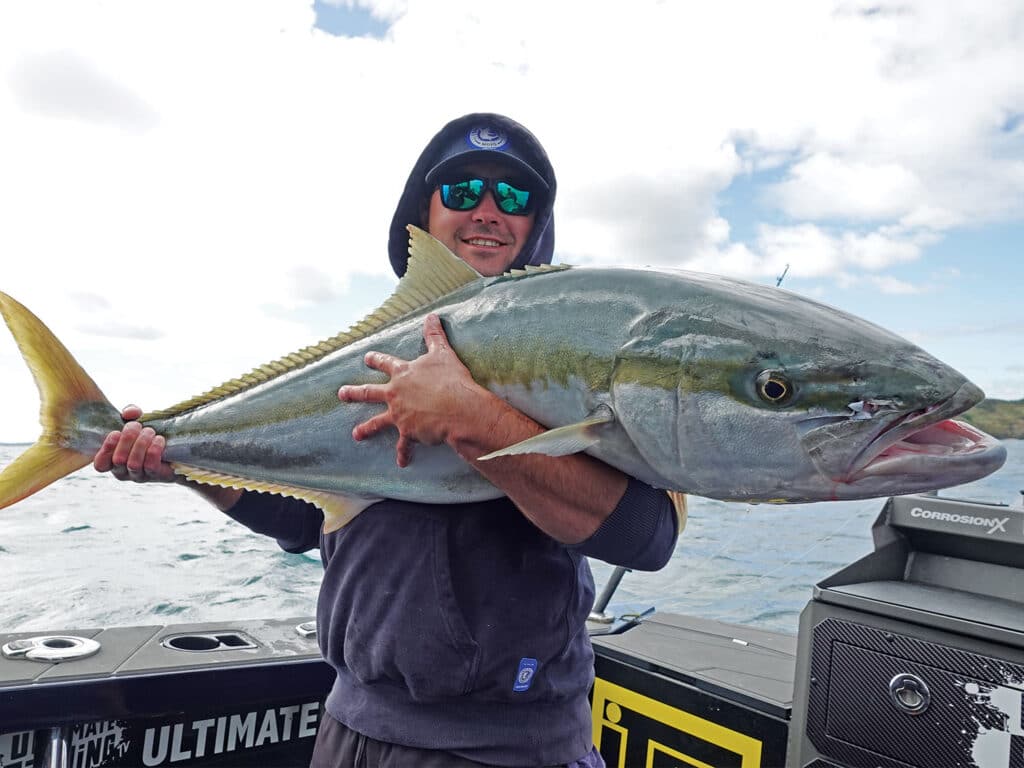
Over the course of the week, despite stretches of inclement weather that cost us time on the swordfish grounds, we managed to release multiple broadbills pushing 500 pounds. On the days the weather forced us inshore, we chased kingfish, snapper and other fish New Zealand’s coastal waters had to offer. The fishing, though, was only half of it.
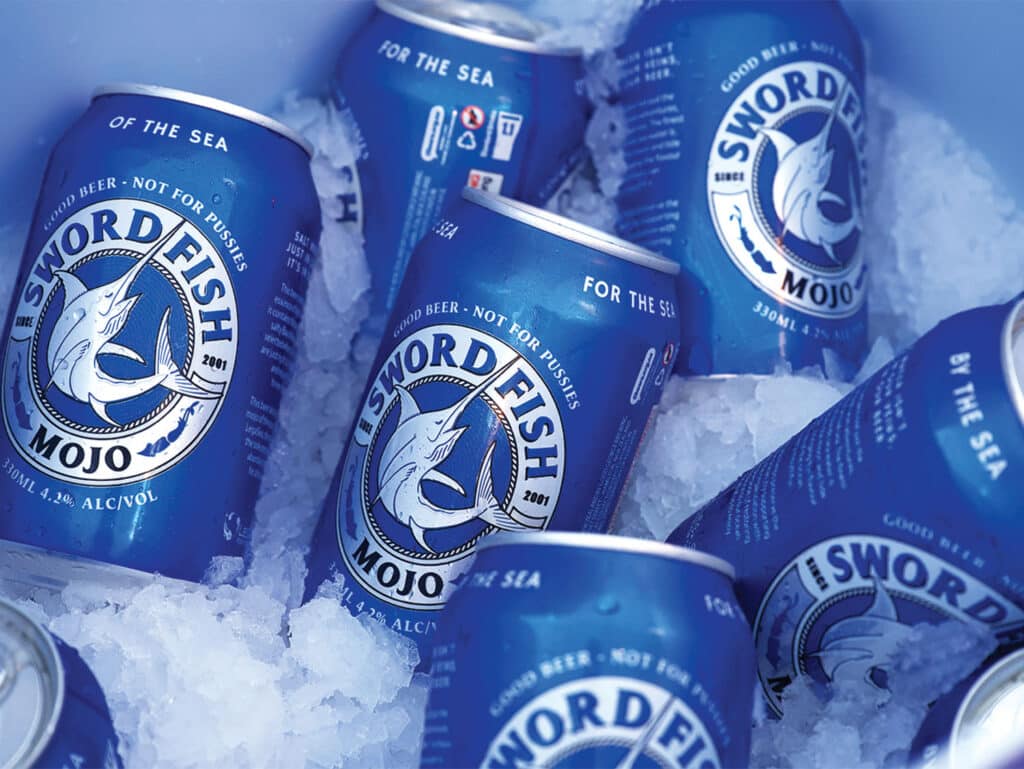
Some of those inshore days turned out to be among the most memorable of the trip. On the days we came in early, the evenings had their own rhythm. Swordfish Mojo beers appeared, a fire was built from driftwood gathered off the beach, and whatever we had caught that day went on the smoker. Around that fire, with the smell of smoked fish and cold beers in hand, we laughed and told stories long past when we should have stopped.
That, in the end, is what Mojo Week is about. The fish brought me there, but a week at the far end of the Earth has a way of giving you something you didn’t come for: the people I would otherwise never have met, parts of the world I would otherwise never have seen, and the memories I will always remember. That is what you never expect to find and never forget once you do.