Subscribe to Marlin magazine and get a year of highly collectible, keepsake editions – plus access to the digital edition and archives. Sign up for the free Marlin email newsletter.
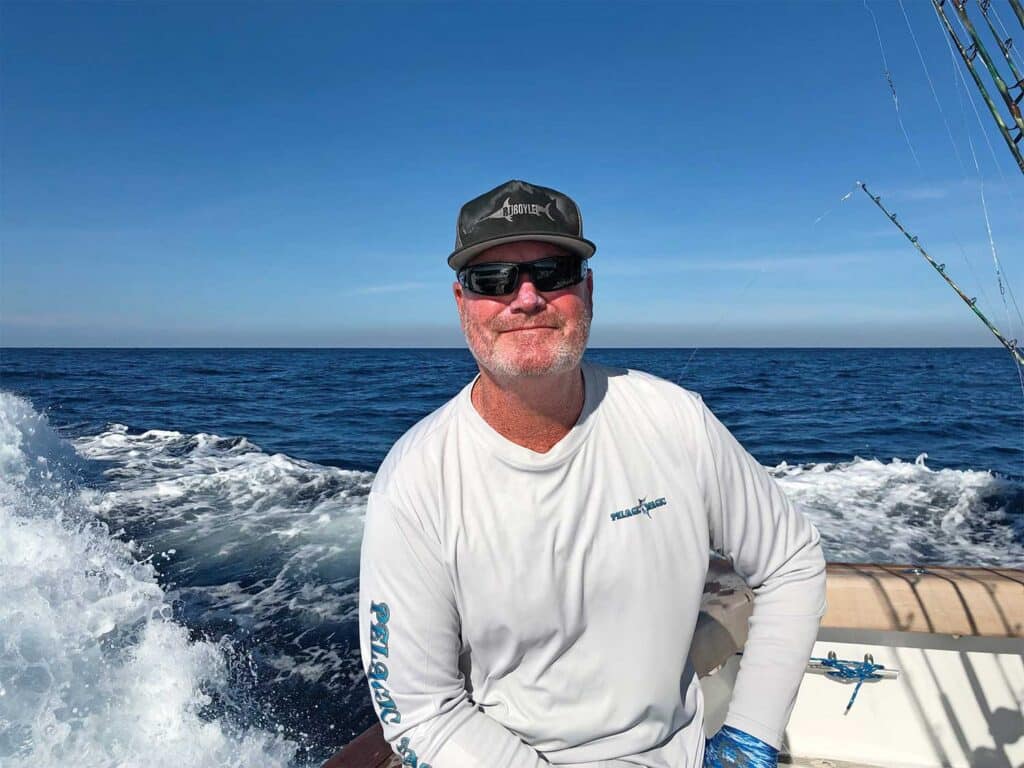
I heard of Capt. RJ Boyle long before ever meeting—and eventually fishing with—him. For anyone who grew up in Florida and lived through their swordfish-obsessed years, he’s something of a cult leader. But once you get to know him, you quickly realize RJ is far more than a fisherman. A celebrated artist, educator, entrepreneur, rapper, and one of the most influential swordfishing minds of the era, he’s a wildly talented and endlessly creative force. I had the pleasure of sharing a cockpit with RJ recently where I finally heard his incredible story, and rapping, firsthand.
Q: Your career started in a pretty unconventional way. How did you go from baseball to running a music club?
I was playing baseball in the Florida League trying to go pro, but life had other plans. I was 21 when my mom and I bought a liquor license and took over this little bar in South Florida. Next thing you know, we’re knocking down walls and booking bands five nights a week—punk, metal, industrial, new wave, you name it. I learned how to run sound, bought my own mixers, and turned the place into a proper venue. It was chaotic, loud, and a hell of an education in running a business.
Q: After the bar days, you dived into a mix of jobs—moving furniture, concrete work. What pulled you back to fishing full-time?
Fishing was always home base for me. My brother and I grew up around Hillsboro Inlet, and he was a mate on the local drift boat Helen S for Capt. Dan Garnsey. I was always tagging along. At times we would fish three trips a day. So, after selling the bar, I worked with my brother in the moving business, then bought a pool business with a buddy. Eventually, I ended up working full-time on The Concrete Machine. That boat changed everything. We fished Monday through Friday, every week, and that’s where I really learned high-speed wahoo fishing. It was constant repetition, fine-tuning leads, speeds and wires. We also did a lot of marlin fishing on the boat. That grind brought me fully back to the water.
Q: When did art enter the picture, and how did it transition into tackle and retail?
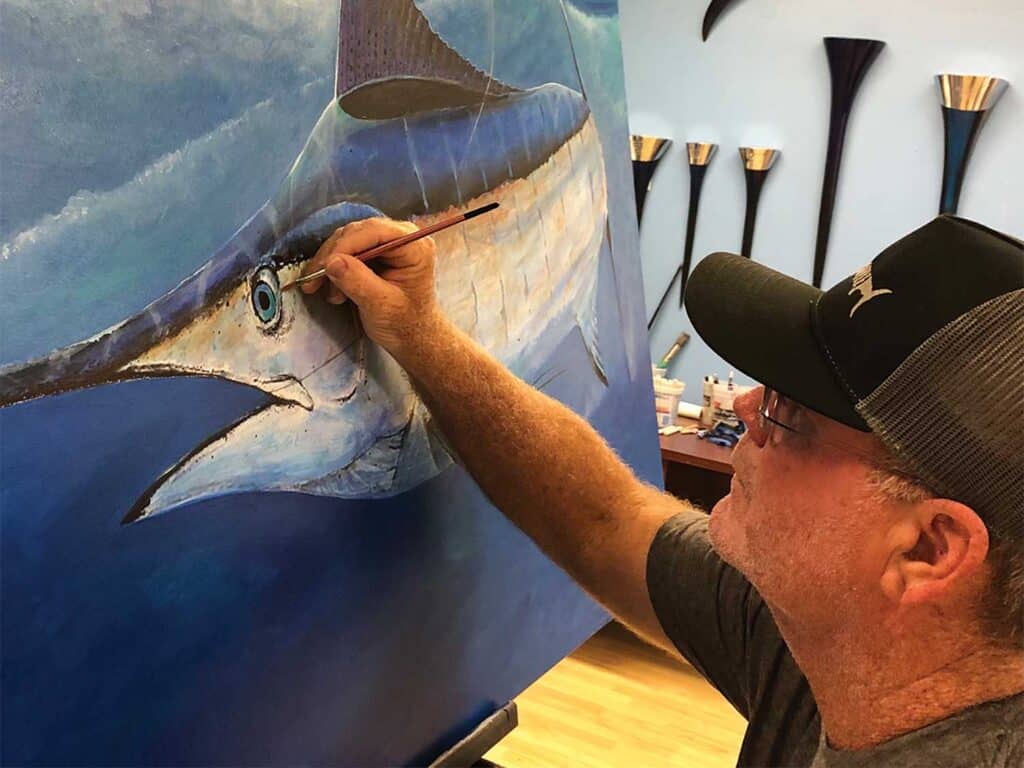
Art was always there because of my mom. She was the one who got me into art. In the beginning, I’d draw, sell a few shirts, print a few more, do some shows on the weekends. Eventually, I rented a little warehouse bay—just a place to store paintings and teach lessons. And then the fishing guys started dropping by. One day someone goes, “Why don’t you sell tackle?” So, I put a couple of products in the corner. That corner turned into a full tackle shop. That shop became RJ Boyle Studio. It was never some giant plan—it all grew because people kept showing up and asking for things.
Q: You played a big role in advancing daytime swordfishing. How did that come about?
Timing. The 2008 recession hammered the area, and longline pressure had dropped, so our fishery changed. A bunch of us were figuring things out together—baits, leads, depth, bite windows. That’s why I started the Southeast Swordfish Club with the help of Capt. Skip Smith. NOAA let us act as the reporting hub because nobody trusted the system back then to report. Members logged everything—depth, moon, bite time, stomach contents—by 9 a.m. the next day. It created a data set we’d never had before. It helped everyone learn faster. That period was the foundation of the modern swordfish era.
Q: You’ve fished swords all over the world. Any drop that stands out above the rest?
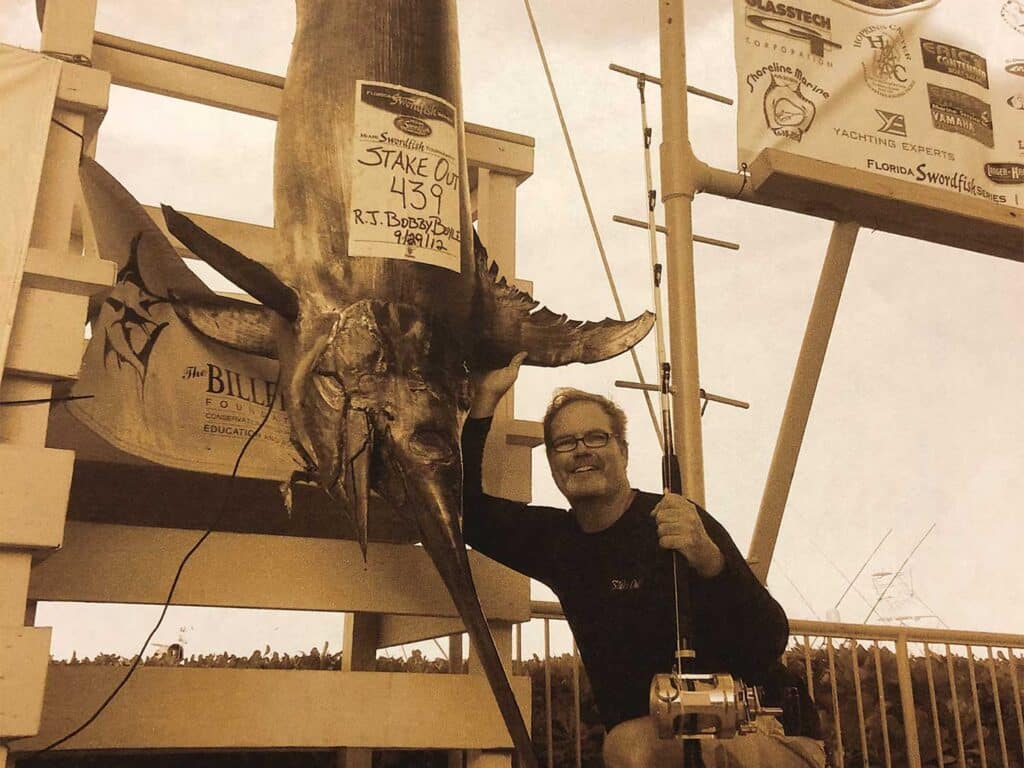
A first drop in Puerto Rico—no question. I was there for a seminar with Paco Vela and brought captains Jeff Wilson and Richie Clawges. We saw this 2,000-foot crater right off the hotel, and we dropped a mahi belly bait. The fish ate, took off 400 yards across the surface, then turned and swam right back to the boat. We had no gaff, but luckily the fish went belly up. I gaffed it with a little box hook, and we had it on the dock by lunchtime. After weighing, we went inside for burgers, came back out, and the fish was gone. Never did find out who took it. Classic. We did get a weight at 654 pounds, which I believe still stands as the Puerto Rico record on electric reel.
Q: You’ve built a successful shop, charter business, and now a wholesale operation. What pushed you into scaling?
Demand. We were making so much product ourselves—leaders, wind-ons, rigs—that it just made sense to build a wholesale side. My daughter graduated college and joined the business. We went to ICAST, signed 75 stores, and kept going. For us, wholesale made more sense than opening more brick-and-mortar locations. And then there’s the digital side—classes, seminars, teaching different fisheries. That’s become one of our biggest drivers.
Q: What is it about South Florida that keeps you fishing here?
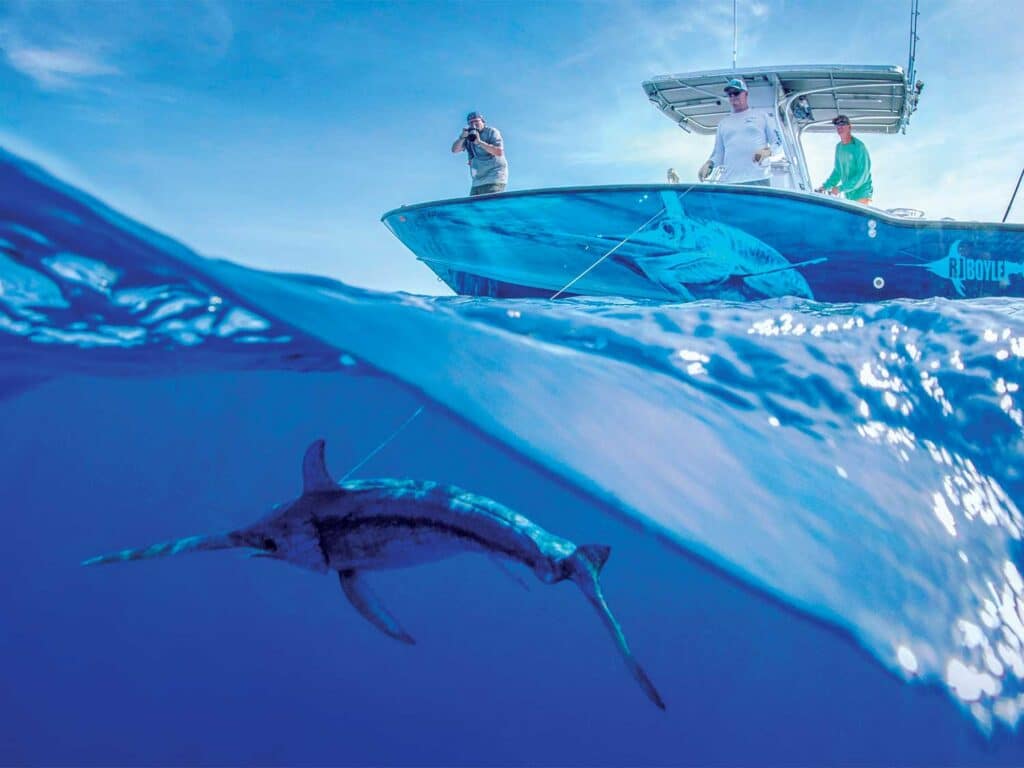
It’s the flow, the structure, the conditions. This place forces you to be technical. The current, the depth changes—it teaches you. I’ve fished everywhere: DR, PR, California, up and down the East Coast. But this area made me who I am. And even though the currents and pressure can make it tough, there are some real fish here in the Atlantic off Florida. It’s home base for a reason.
Q: With so much accomplished, what still excites you?
Learning. Evolving. Fishing with new people in new places. Creating products that make someone else’s day on the water a little easier. I’ve worn a lot of hats—clubs, shops, seminars, wholesale—but I don’t feel remotely finished. There’s still so much I want to chase and even more I want to contribute.
But what fires me up now is watching other people find joy in fishing. We started a 501(c)(3) called Mission Fishin’ about 15 years ago, and giving back to this community has become a huge part of my life. I don’t feel the need to catch anything myself anymore—I just love seeing others light up on the water.