Subscribe to Marlin magazine and get a year of highly collectible, keepsake editions – plus access to the digital edition and archives. Sign up for the free Marlin email newsletter.
Flying into the Azores is an experience that sets the tone for the upcoming adventure. On approach to Ponta Delgada, the capital of São Miguel Island, the first glimpse of lights glittering against the volcanic landscape feels like entering another world. At dawn, the hillsides glow emerald green, stitched with cobblestone streets and centuries-old buildings. My advice: Book a window seat. From above, you’ll see quilted pastures dotted with dairy cows, volcanic craters and steaming calderas, and the deepest sapphire waters of the North Atlantic stretching to the horizon. It is also home to some of the best blue marlin fishing on the planet. For me, it was love at first sight.
Set some 900 miles west of Portugal, the Azores are nine volcanic islands rising from the Mid-Atlantic Ridge, a geological fault line that fuels their raw beauty and world-class fishery. These islands, officially charted in 1439, have long been a steppingstone for explorers, whalers and seafarers bound between Europe and the Americas. Today, their rugged coastlines, fertile volcanic soil and dramatic undersea terrain create the perfect nexus for marine life.
Ocean currents converge here with force. The Gulf Stream pushes northeast, colliding with the Azores Current and others that carry nutrient-rich waters across the basin. In summer, a strong thermocline forms between 125 and 325 feet, drawing pelagic species like a magnet. Blue marlin, white marlin, tuna, wahoo and other giants arrive in predictable waves, turning the Azores into one of the most prolific big-game fisheries on Earth, especially August through November.
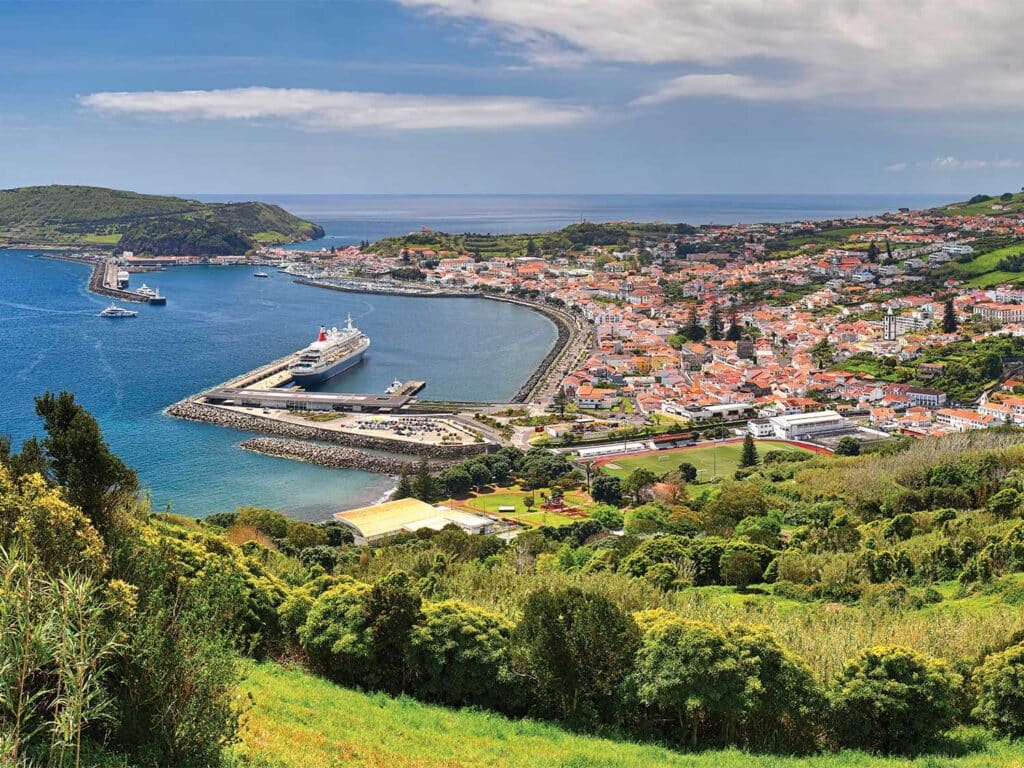
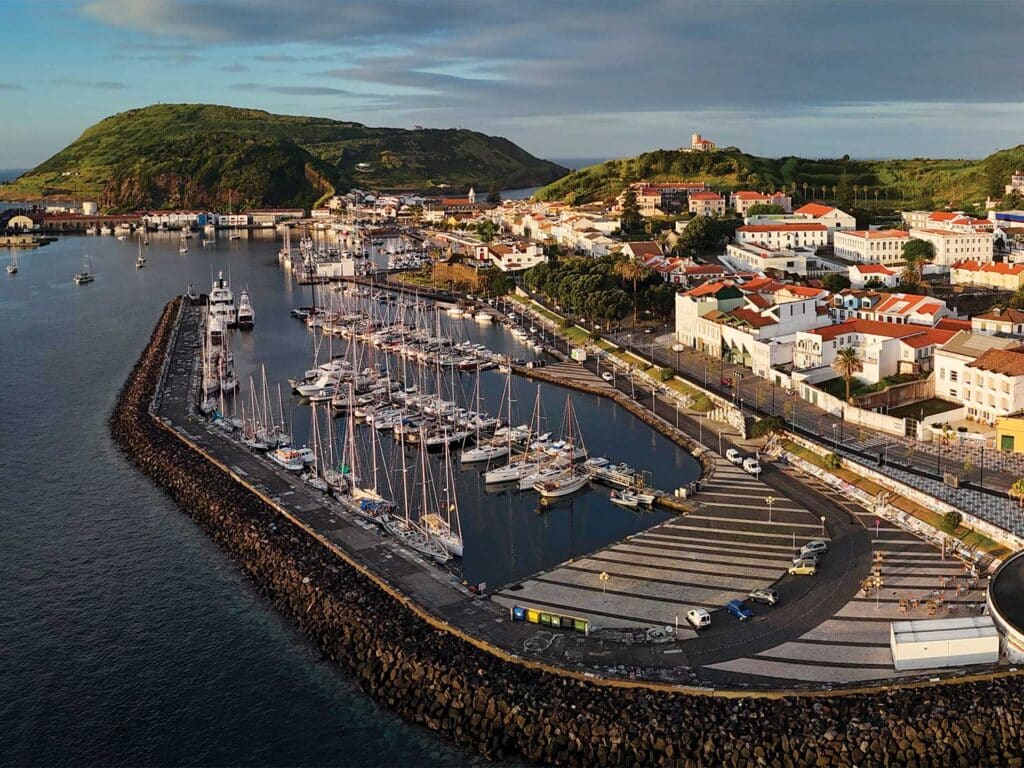
For anglers, Faial Island is the lifeblood of it all. Horta’s 300-slip marina, built in 1986, ranks among the most visited ocean marinas in the world—a historic way station for yachts and fishing vessels crossing between continents. In the 1800s, whalers found safe harbor here while hunting sperm whales. Today, the legacy lives on in whale-watching tours and iconic institutions like Peter Café Sport, where sailors still gather for gin and tonics and a visit to the scrimshaw museum upstairs.
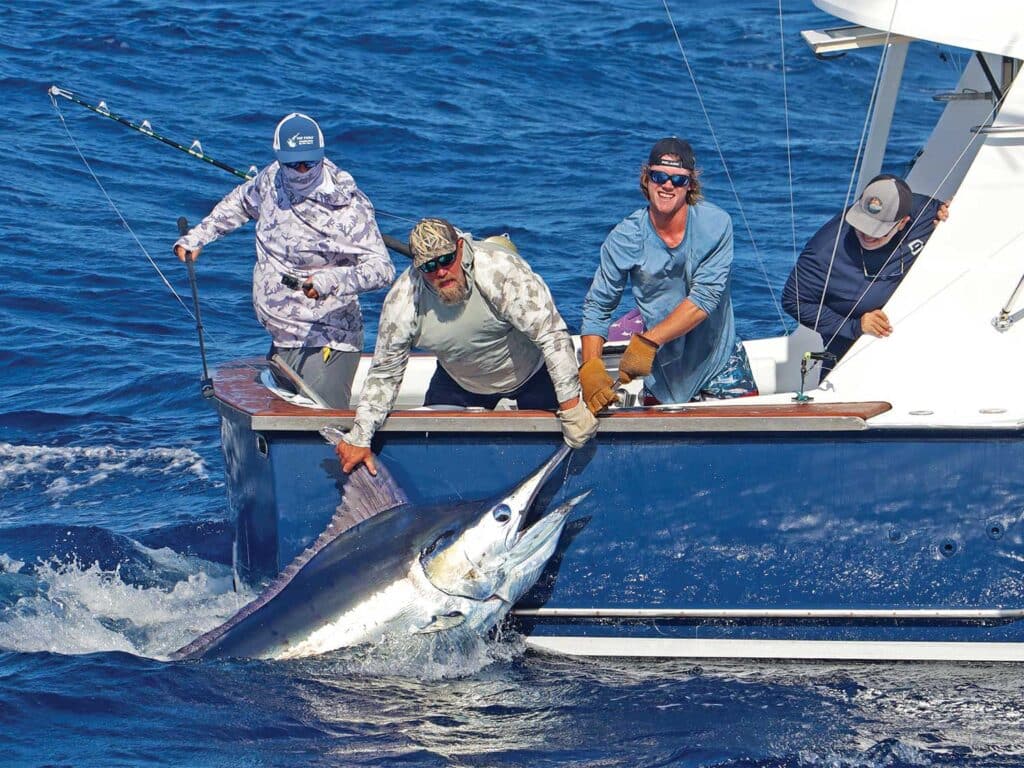
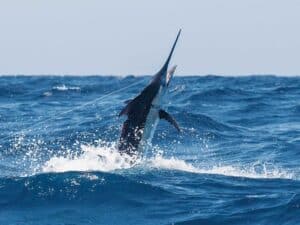
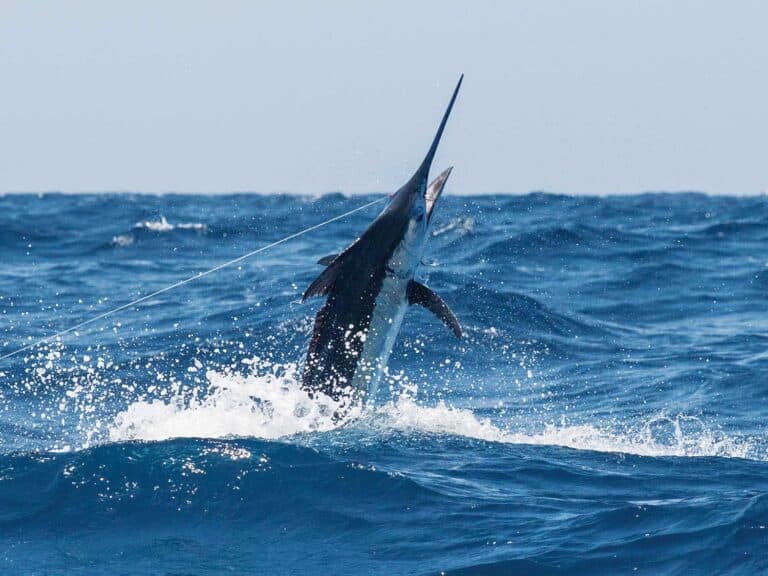
Yet it is the offshore grounds that steal the spotlight. Flip open the IGFA world-record book, and you’ll find the Azores scattered across its pages, including six blue marlin line-class world records. The most recent is an 850-pounder landed on 50-pound tackle by Maria Magalhaes Smith in 2024 aboard Uno Mas. In 2023, Andrea Beuter set the women’s 50-pound record for bigeye tuna at 292 pounds, fishing aboard Sensei out of Horta. Only Madeira holds more world records in this corner of the Atlantic, proof that the Azores is consistently exceptional.
Talk to the captains, and they’ll tell you the marlin have only gotten bigger in recent years. Renowned marine artist and longtime Horta charter captain Les Gallagher, who has been fishing these waters since the 1980s, sums it up: “The average marlin here now is around 600 pounds. In 2023, boats averaged 1.5 marlin per day, and even in 2024, when the numbers dipped a little, the fish remained huge. Our season runs July through mid-October, and every day offers a legitimate shot at a fish of a lifetime.”
I witnessed that firsthand on my first trip to the Azores to join the Bad Company operation during the early stages of their incredible world tour. Documenting their time there gave me an inside look at just how prolific this fishery can be. Blue marlin over 900 pounds are not just possible, they are a reality.
In recent years, the Azores has increasingly become a favorite destination for the world’s top traveling programs. Operations like Bad Company, Uno Mas and Wave Paver have all set their sights here, drawn by the consistency of the bite and the size of the fish. The islands have also become a proving ground for some of the sport’s most respected captains—names like Zac Conde, John Batterton and others who bring deep experience and a reputation for raising giants.
Complementing these international traveling programs is a respected local charter fleet, a reflection of the Azores’ long-standing seafaring and fishing heritage. Based primarily out of Horta, these captains and crews combine local knowledge with modern techniques, giving visiting anglers a true sense of place along with a legitimate shot at trophy-class blue marlin and tuna.
Reaching the Azores is easier than many anglers realize. Direct flights connect from the U.S., Canada and Europe into Ponta Delgada on São Miguel, the largest island. From there, Azores Airlines offers short hops to the other islands, while Atlantico Lines ferries connect Faial, Pico and São Jorge—ideal for day trips or extended exploration. You can even drive your rental car onto the ferry, making island-hopping seamless.
The Azores aren’t just another fishing destination; they’re an immersion into history, culture and one of the planet’s most consistent big-game theaters. Record-setting blue marlin, hard-charging tuna and dramatic volcanic backdrops combine with warm hospitality, modern marinas and European charm.
For anglers seeking bragging rights—and perhaps their name in the IGFA record book—there are few places on Earth that offer the same mix of authenticity and opportunity. Add the Azores to your list, and you’ll quickly see why so many who come here find themselves returning season after season to chase the giants of the Atlantic.
Marina
Horta Marina, the island’s only marina, accommodates 300 vessels and is well protected. Steps from shops, bars and restaurants, it’s famous for its seawall murals left by visiting sailors.
Lodging
Hotel Du Canal Horta: Four-star boutique hotel across from Horta Marina
Pousada Forte da Horta: Historic 16th-century fortress with views of Mount Pico
Azores Faial Garden: Four-star hotel with a spa, pools and panoramic harbor views
Dining
Peter Café Sport: Legendary sailors bar, museum and café known for its gin and tonics
Restaurant Atletico: Mediterranean seafood and grilled meats steps from the harbor
Oceanic Café: Historic building serving tapas, seafood and local wines
Charters
Horta attracts top private boats and a strong charter fleet with skilled captains and modern, well-equipped sport-fishing vessels.
- Azores Fishing: Capt. Diogo Paiva | Sensei 42’ Rodman, Galaxia 32’ Shannon Breden
- Oceanic Fishing: Capt. Les Gallagher | Double Header 43’ Daytona | Capt. Olaf Grimkowski, Blue Sky 36’ Hatteras
- BDM Azores: Capt. Pedro Januario, Tekila 32’ Luhrs, Blue 29’ Levant
- Capt. Zak Conde | Deceiver 41′ G&S | Shanghai 42’ Hatteras
- Capt. Joe and Miguel Furtado | Alabote, 32’ Bayliner