Subscribe to Marlin magazine and get a year of highly collectible, keepsake editions – plus access to the digital edition and archives. Sign up for the free Marlin email newsletter.
The centerpiece of Scout’s 435 LXF Li-Ion involves a bank of lithium batteries that eliminate the need for a generator. The Fathom M-6000X+ 48V lithium (LiFePo4) system gives 24 kWh of usable energy storage, and when run through an inverter, creates ample AC power to operate everything on the boat: air conditioning, the standard Seakeeper gyrostabilizer, the battery charger, everything.
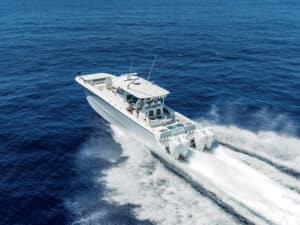
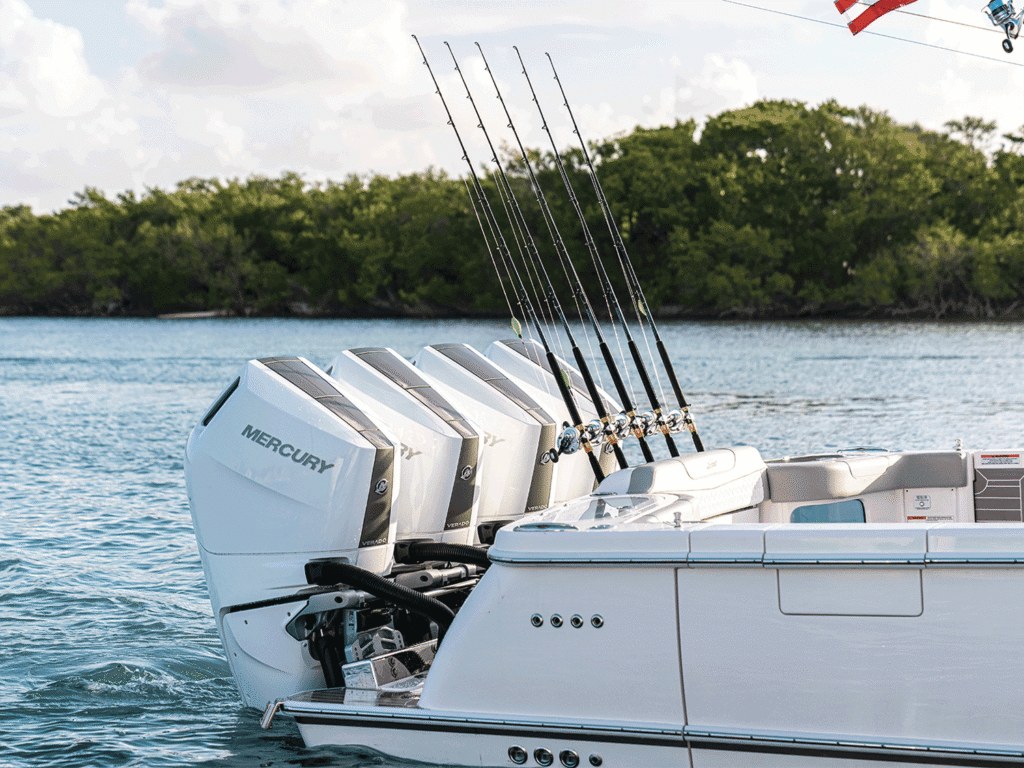
Our test boat came powered by quad 425 hp Mercury Verado outboards. Two of those Mercurys contain 48-volt alternators and are assigned specifically to charge the lithium battery bank. The other two Verados have conventional 12-volt alternators and charge the usual house and starting batteries. The lithium bank can be charged by the Mercury outboards while underway or by shore power.
This system brings many benefits, some obvious and some not quite so apparent. Lacking a generator, you have zero noise at anchor, plus no generator exhaust or vibration. There’s no generator to maintain, and you receive stable voltage without the inevitable generator fluctuations. The system weighs less than a generator too, benefiting performance.
An integrated battery management system monitors voltage, current and temperature, and protects against over-charge, over-discharge, over-current, short-circuit and thermal events. It has a 3,500-cycle design life versus 300 to 500 cycles for lead-acid batteries, and there’s a five-year warranty on the Fathom system. And when the charge level falls to around 35 percent, the two Mercury engines with the 48-volt alternators automatically start to recharge the system. Amazing.
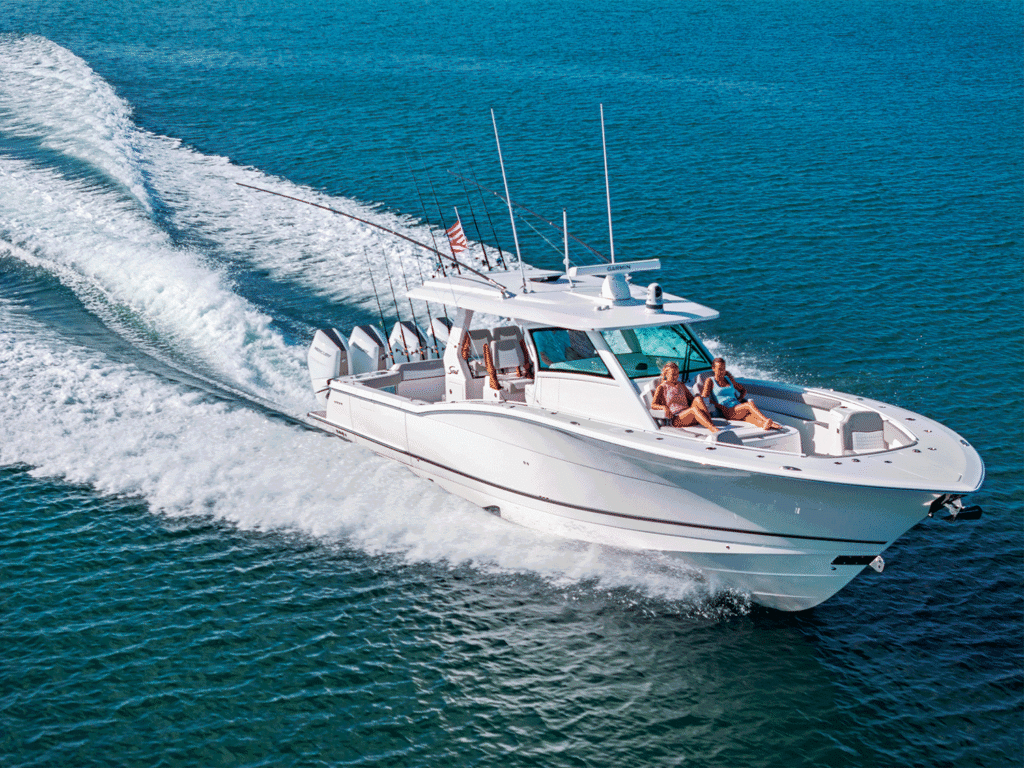
So, does this admittedly impressive battery system represent the only interesting attribute of the new Scout? Not hardly. The 435 LXF comes built using epoxy-infused carbon-fiber construction, with carbon fiber and E-glass laminate used throughout the hull, stringer grid and deck. Using epoxy instead of vinylester resin reduces weight while increasing strength, and the closed-cavity infusion process yields a precise epoxy-to-fiber ratio with no voids. Lighter weight means great performance. Our test boat topped out at 68.4 mph at 6,400 rpm.
Scout’s dual-stepped hull has a 22-degree transom deadrise and comes standard with Zipwake interceptors. Another innovative design feature involves the boat’s twin standard hydraulic beach platforms, located on both the port and starboard sides of the boat. They also have integrated fold-down boarding steps for boat-to-boat and dock-to-boat transfers.
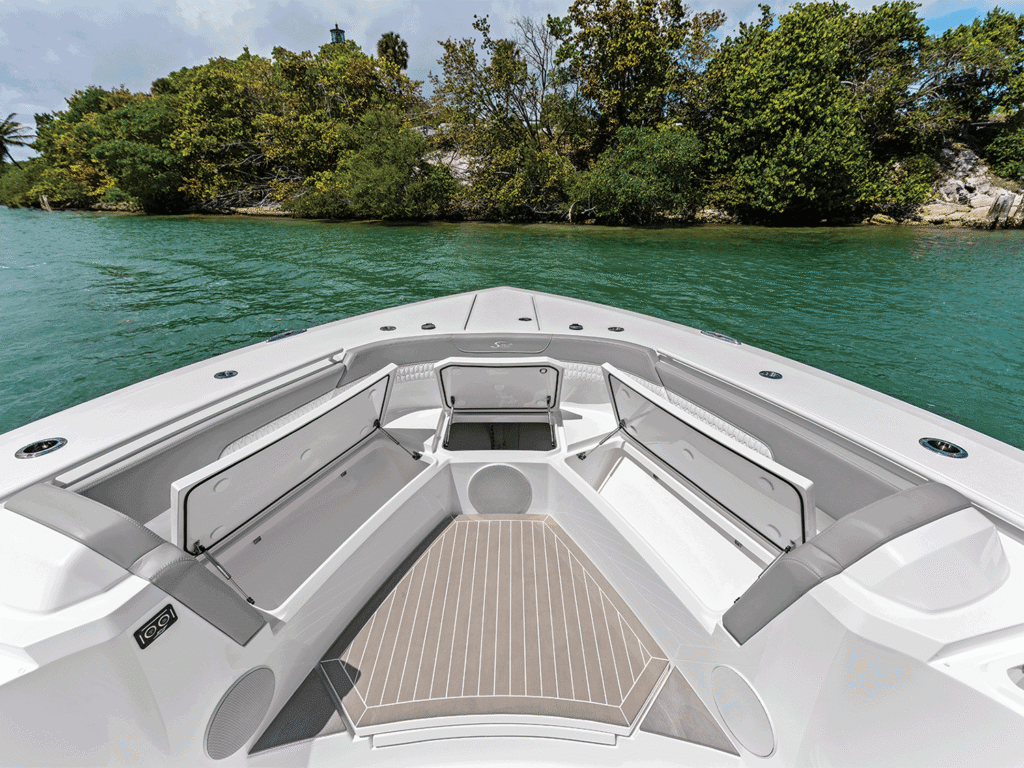
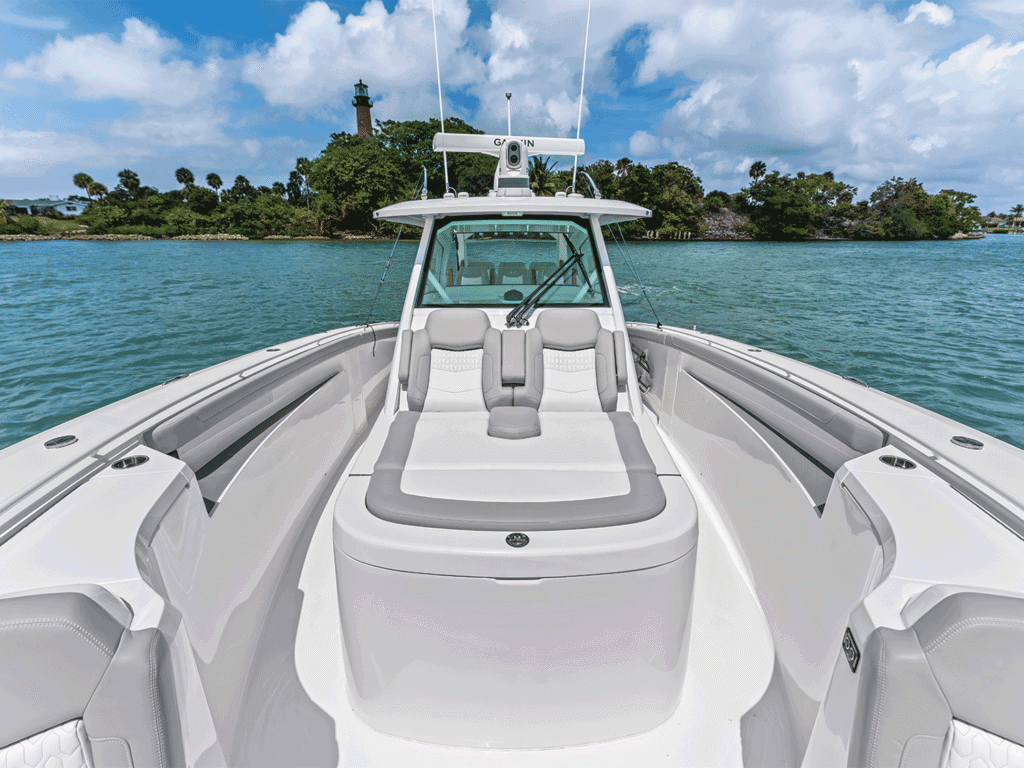
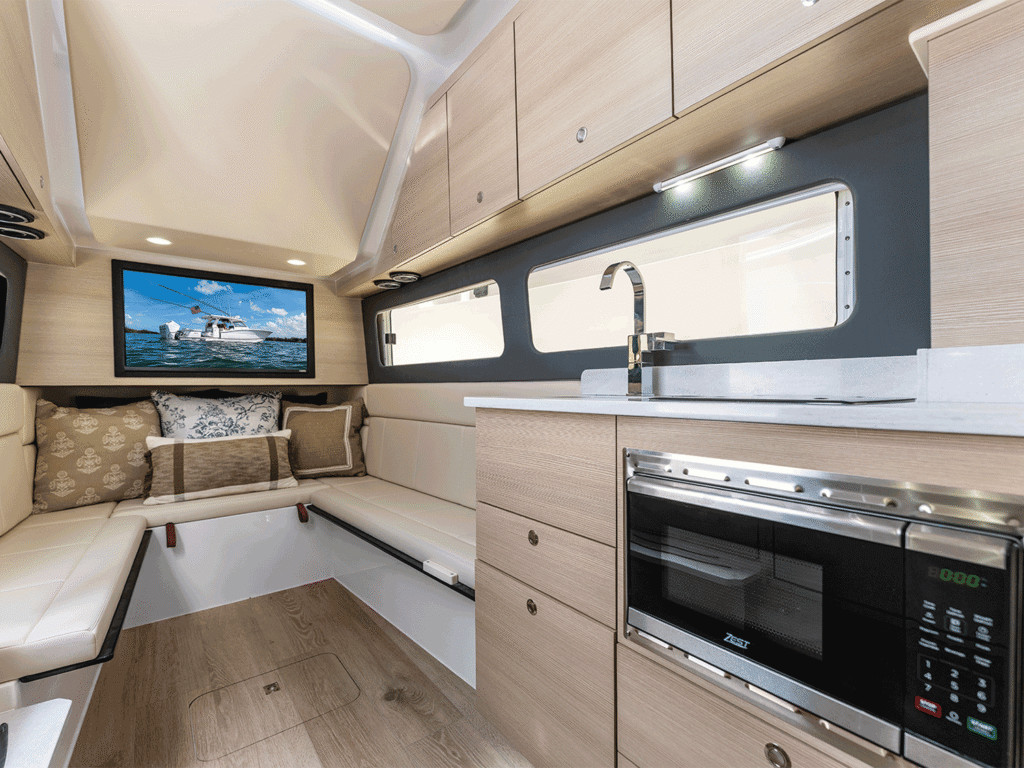
Dual-row, heated seating comes standard. The large helm area accommodates up to three 9219 Garmin MFD screens. Beneath the console and the forward lounge seating, a surprisingly large air-conditioned cabin had a double 7-foot-2-inch berth forward that can be converted to a table. An enclosed head contained a separate shower and privacy-shaded windows. The galley has a drawer refrigerator, a sink, a single-burner glass cooktop and a microwave, and a 32-inch LED Smart TV.
But even with all this yacht-quality treatment, the boat can easily be set up as a highly capable fishing platform too. It has two large fish boxes in-deck in the large cockpit and two transom livewells fed by a standard pump box system. Luxury, high-tech systems and solid fishing features can be part of the same package, as is evident with the amazing new 435 LXF Li-Ion from Scout.
Scout 435 LXF Li-Ion Specs
- LOA: 43’4″
- Beam: 13’1″
- Draft: 28″
- Fuel: 605-615 gal. (optional port/starboard saddle tanks)
- Max hp: 1,800
- Dry weight: 19,406 lb.