
Subscribe to Marlin magazine and get a year of highly collectible, keepsake editions – plus access to the digital edition and archives. Sign up for the free Marlin email newsletter.
An ounce of prevention is worth a pound of cure, the saying goes. In my experience, that sure holds true when it comes to keeping the boat in top shape and trouble-free during the fishing season. With so many complex and varied systems on board, it takes a concerted effort to keep them running smoothly, with the goal of reaching or eliminating failures altogether. To stay ahead of the curve, I liken it to giving the boat a survey, checking every system top to bottom from bow to stern.
I’ve seen plenty of owners focus on the pretty stuff—the interior soft goods and outward appearance—while scrimping or flat out ignoring the critical mechanical components that will shut down the operation at the least opportune time—typically, when family or guests are aboard. Thankfully, the folks I’ve worked for had limited free time, so I needed to be trouble-free to maximize their days aboard. Taking lessons from the best captains I know, we focused on the things that really matter and dealt with the pretty stuff as it came.
I learned early in my career that when everything isn’t running smoothly, you fight a continual uphill battle. On a charter boat, if you are unable to fish, you don’t get paid. So diligent and proactive maintenance is the key to success. I worked for Capt. Frank Pitale of Palm Beach, Florida, when I was 15 to 16 years old, and I learned a great deal about paying attention to the little things. He always had a pen in his shirt pocket to make notes of what needed to be done, and doing so allowed him to manage a well-run boat and operation. His example has been a great guide of how to operate.
He had me check the lazarette and keep it clean, salt-free and organized after each trip. He taught me how to maintain rudder posts, shaft logs, and stuffing boxes when they had flax packing and would constantly drip. Now we have dripless seals, but we still need to check them regularly to be sure there is no leaking and salt buildup.
Frank was diligent in keeping the bilges, float switches and bilge pumps clean and free of debris, and he ran frequent checks on them throughout the boat to be sure our gear would work in the event of a bad situation, keeping spare float switches and pumps ready for quick change-outs. Having an eye on bonding wires to make sure they are connected and free of corrosion is another thing that helps prevent problems down the road. He kept a tight rein on the engine room, checking hose clamps, and looking for and addressing leaks, which were common on the powerplants of that era.
Today, before an extended fishing season, we address the main engines and generators. Obviously, we start with fresh oil and filters throughout. We have the raw-water pumps serviced, changing impellers at a minimum. If needed, we’ll remove and service with new seal kits or even new pumps, especially in the case of generator water pumps, which are notorious for their poor quality and lack of service. The last thing anyone wants to do is get in a hot engine room at the end of the day and discover they have to change out a leaking water pump. With the complexity of poorly accessible hush boxes today, it’s even more of a nuisance.
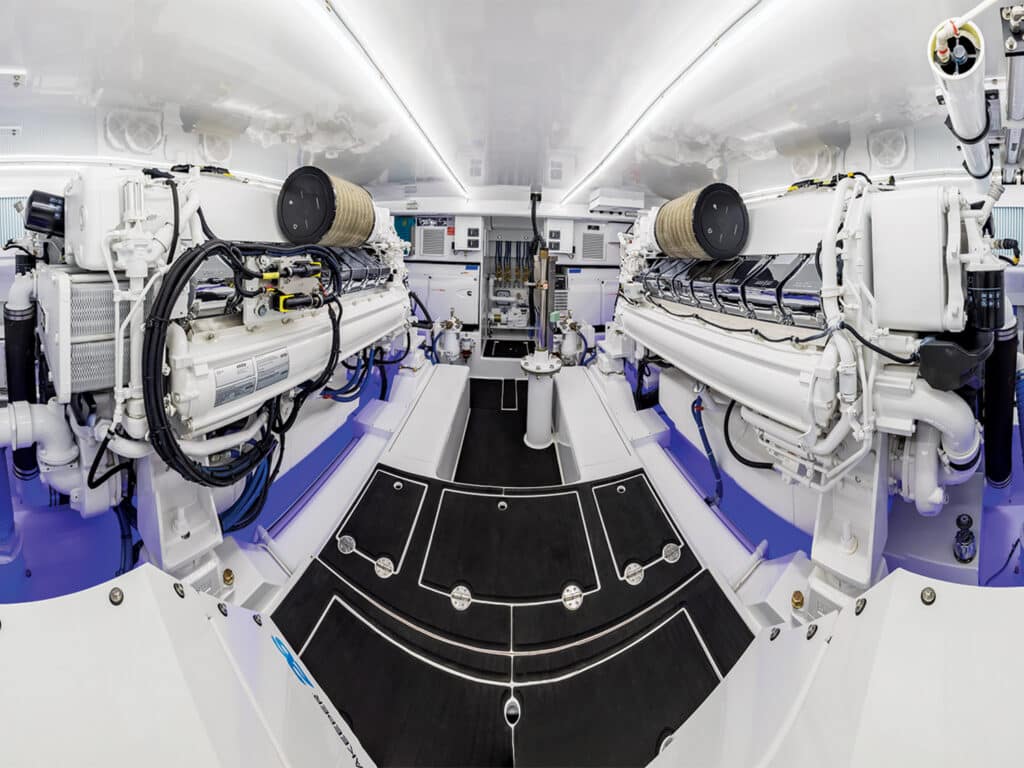
We constantly move through the engine room and check for loose components and leaks of any kind, taking note of things that may be starting to become a problem and monitoring them for addressing as soon as possible, if not at that moment. Keeping components workable and free of rust requires a bit of effort and, at times, a wire brush and spray lubricant or a repaint to keep it clean. The engine room is cleaned and wiped down regularly so we can see tell tales as they happen. Keeping a bright and well-lit engine room is a huge help in being aware of what’s going on in the heart of the boat.
Watermakers and Spot Zero machinery get new filters so that we start fresh and don’t have to address them until the hours meter or production fall-off tells us it’s necessary. We check membranes for good construction to ensure any issues don’t interrupt the fishing. Air-conditioning pumps are checked to be sure the impellers are good and the raw-water lines are clear. If you are fortunate enough to have ElectroSea ClearCells on your boat, it’s a good time to check the flow rate and service them as well to keep raw-water flow at its cooling peak. Servicing the coils on compressors and chillers also helps to keep cooling efficient and to avoid major service calls.
A clean boat is a happy boat, so staying on top of the interior and exterior is a huge part of the job. We clean the metal regularly with Collonite’s Metal Wax and then put on a coat of Collonite’s Fleet or Insulator wax to prevent pitting. We wax the curtains with a carnauba product, anything without abrasives, to keep them protected, clear and easy to see out. Recently, we have been using ceramic coating on the painted surfaces, which has replaced the frequent waxing required. However, the ceramic needs attention as well, as it is not an “apply it and forget it” system. Not all ceramics are created equal either. Some have refresher washes to help keep the ceramic surface active. We do not chamois the painted surfaces daily. Instead, we use leaf blowers to clear the good spot-free water.
Check all navigation, spreader, underwater and lights of any kind, keeping spare bulbs and fixtures on hand, which often fail from lack of use. Make sure all updates on electronics are current. Check all safety gear. Make sure your raft and ditch bag are up to date, PFDs are clean and accessible, flares are current, and you have a plan on how to use them that your guests also know. Keep your anchor locker clean and organized, and be aware of your rode, chain and connections, lubricating the shackles. Chain will make its way to the bottom of the locker and needs to be addressed regularly. Trying to clear it and get line out in a hurry when it’s blowing and rough is no fun and can prevent you from saving the boat if disaster strikes.
We usually do our haulout in the late winter/early spring so we get maximum fuel efficiency from a clean bottom, knowing that we have checked our strut bearings, the intake screens are clean, painted and fastened properly, and through-hulls are secure and free of any restrictions. We coat our running gear to prevent growth, and there are several good products that can fit your situation. We use Prop Speed and have had good results.
It’s always easier to wax or deal with ceramic coating when you’re on the hard, so we take the time to get the hull its annual cleaning and detailing to keep it looking good and to protect the paint. Back when I had teak transoms, I’d varnish and then clear-coat them. Today, we have faux-painted transoms that get a clear coat or two. The same is true if you have a teak toe rail. If you’ve kept it up, you should be good with two coats of varnish and two coats of clear. If you have a glass boat, you’re good with wax or ceramic. Every boat is different; find the systems that work for you to best maintain the asset.
Things tend to happen at the most inopportune time, so being ready and knowing your boat and gear have been maintained and are ready to go to sea will help you if a problem arises. Good due diligence will reduce the chances of a problem significantly. I’ll take a few ounces of prevention any day.