top tips taped hooks
When lure fishing for marlin, taping up your hooks serves a variety of purposes. First, it protects the hook’s finish from scratches and nicks from everyday use and storage, helping to stop rust in its tracks, particularly on steel hooks.
Second, it can help hide, or blend, the hook into the lure’s skirt, or add a different color, depending on what type of tape you use. One of tape’s most useful purposes, however, is to help identify the species from a missed mystery bite.
By inspecting your taped hook after a missing bite, you can usually tell if it was a billfish or a toothy fish that took a shot at your lure. Billfish marks tend to be bigger and often occur along the inside of the hook, especially in the bend. A wahoo bite is usually pretty obvious, with slashes in the tape. Dolphin and tuna bites show up as lots of tiny holes and sometimes have the scratches like a bill, only smaller.
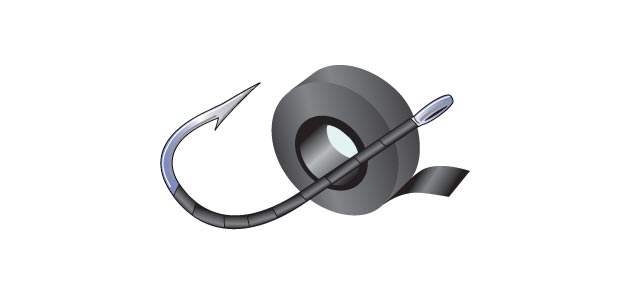
Before you start taping right away, there are a couple of little tricks you need to know to make the job easier, neater and longer lasting. First, use a high-quality vinyl electrical tape. (Don’t scrimp and buy the cheap stuff — it won’t stick properly and will come unraveled.) Next, split the roll of tape in half with a sharp knife or razor blade. This lets the tape wrap tighter around a smaller radius without kinking or wrinkling. I like to start at the center of the bend and wrap toward the eye, slightly overlapping each wrap. This lays the tape down like shingles on a roof, allowing the water to flow over the tape and not against it. Pull the tape fairly tight, stretching it out a little as you wrap. When you reach the hook eye, don’t pull the tape as tight. Make a couple of wraps — leaving enough for about three more wraps — and then cut the tape with a knife. Make the last three wraps without pulling the tape at all, pushing down hard on the tape to help lock it down.
If you are going to tape over the hook eye/leader loop to stiffen it up, do it with a separate piece of tape — that way you can redo just the eye section if necessary without doing anything to the tape already on the hook.
When your tape wears out, remove it all and rewrap the entire hook — this will prevent too much tape getting built up in one spot.
_**
Capt. Randy Baker
Destin, Florida**_