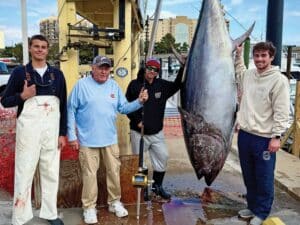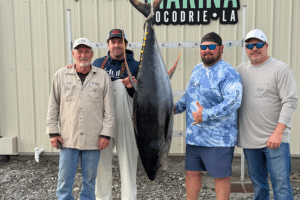
While most of us feel that blue and black marlin are among the toughest game fish in the sea, there is another notable species that deserves recognition: tuna. Yellowfin, bigeye, bluefin, blackfin—all put up an incredible battle. These fish don’t know the meaning of the word “quit,” and will swim hard until the very end.
Yellowfin tuna are perhaps the most commonly encountered species, filling fishboxes and fillet tables from the mid-Atlantic states to the Bahamas, the Caribbean and throughout the Pacific and Indian oceans. Bluefin tuna are the heavyweights of the tuna world, occasionally approaching or even topping 1,000 pounds. If you want to go hand to hand with a giant, bring the heavy tackle because they will make you pay for every inch.
Bigeye tuna almost seem to be a cross of the two species and are most frequently encountered in the waters of the Northeast, where they frequent the deep canyons. Trolling in the predawn hours as well as those minutes after sunset often proves the most productive, and multiple knockdowns are not uncommon when a bigeye wolfpack shows up. Blackfin tuna are the smallest members of the family, but also among the tastiest. They are a mainstay of the East Coast and Florida waters, and are also thick in the Gulf of Mexico and elsewhere.
Below are five of the best tuna fishing locales to tangle with tuna that reach truly gigantic size.
Tuna Fishing in San Diego, California
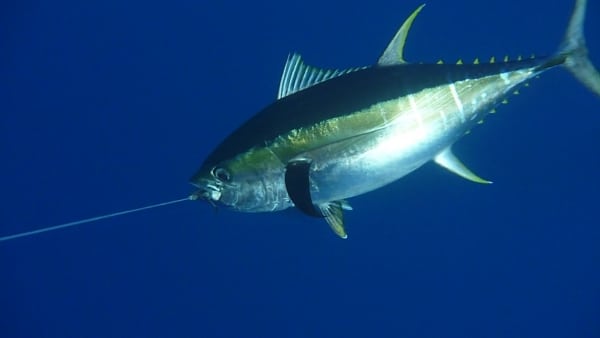
If the catch of the all-tackle world-record yellowfin tuna, a 405-pounder, can’t make you jump on a long-range party boat out of San Diego, California, what about this little tidbit of information fresh from Capt. Frank LoPreste, skipper of the world-famous Royal Polaris since 1977: “We usually catch between five and 15 fish over 300 pounds each trip.” And that’s every boat in the fleet! Long-range tuna boats experience some of the best yellowfin tuna fishing in the world.
You’ll be in for a bit of a different experience — bunking with up to 32 other passengers for a 10-day-plus trip into Mexican waters on a 100-foot-plus vessel. “We normally run trips that last anywhere from five to 22 days — but most of our big tunas are caught on 10-day trips, or longer,” LoPreste says.
While the boats leave from San Diego, they target a series of far-off banks and islands lying off the coast of Mexico to the south. “We fish off the Luisitania Bank off Magdalena Bay, which is about 600 miles from San Diego; or in another area with even bigger success, Hurricane Bank, which is 980 miles south of San Diego. We also hit Clarion Island, which is about 850 miles away,” LoPreste says.
The trip south takes anywhere from 2½ to 3½ days to get to the fishing grounds, but LoPreste says anglers keep themselves busy prepping tackle and watching DVDs. As a bonus, they also catch 150 to 400 wahoo on a trip. Each passenger is allowed 15 tuna and 15 wahoo — which is more than plenty for anybody.
About 95 percent of the fishing uses live sardines fished from the ships’ huge livewells. They also catch a decent amount of fish on the kite. “We use a rig called the double trouble, which consists of two sardines on two hooks. Live flying fish, live mackerel and live skipjack also work good on the kite for the big yellowfin,” LoPreste says.
Charters
Royal Polaris — royalpolaris.com , 619-226-8030 Royal Star — royalstarsportfishing.com , 619-224-4764
Bluefin Tuna Fishing in Nova Scotia, Canada
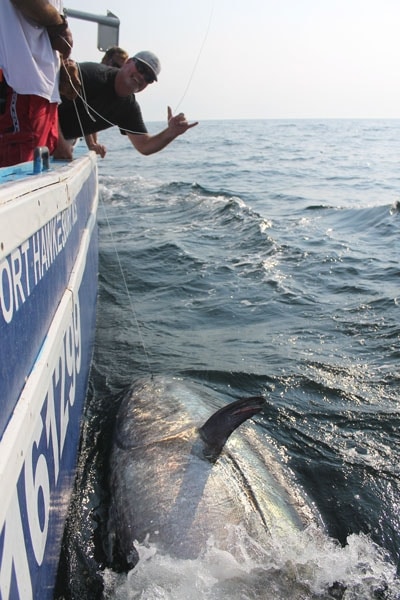
Few fish live up to their name as aptly as a full-grown giant bluefin tuna. One of the elite species that routinely breaks the 1,000-pound mark, hooking a giant bluefin tuna in deep water is almost a certain break-off — just ask those unlucky boys who run across 800-plus-pounders a couple of times each year in the mile-deep water of the Gulf of Mexico. If you want to see a lot more fish, and in water that isn’t more than 200 feet deep, then you need to head for the land of the giants: Nova Scotia, Canada. This part of Canada offers the best bluefin tuna fishing in the world.
You won’t find any sleek sport-fishers up in Nova Scotia, so don’t expect the absolute best boat for tuna fishing. If you make the trip, you’ll be fishing on a working commercial boat. But some things will be familiar. They use all the traditional methods we use to target tuna: live baits, drifting kites and chumming.
You also have to abide by different fishing regulations when recreational fishing. You have to fight the fish from a fighting chair, you can’t use more than 130-pound line, and you have to use a nonoffset, barbless circle hook. But these rules are in place to protect the tuna, which are true jumbos.
Charters
Zappa Charters, Dale Tremholm, 902-386-2669
Tony’s Tuna Fishing — Tony McDonald tonystunafishing.com , 902-357-2207
Giant Bluefin Tuna Charters, John Gavin, 902-863-1128
Blackfin Tuna Fishing in the Florida Keys
The Florida Keys are home to some excellent blackfin tuna fishing, most notably centered around a series of offshore seamounts. The first and perhaps most famous is the Marathon Hump, located approximately 27 miles off Marathon. With depths ranging from 1,150 feet up to 480 feet, it’s an underwater pinnacle in the middle of the Gulf Stream. It’s a feeding station for a variety of pelagics but almost always holds good numbers of blackfin tuna. Productive methods include trolling small, dark-colored lures and feathers, but one of the deadliest is to chum heavily with live bait. This tactic often results in tuna boiling around the boat.
The Islamorada Hump is 15 miles offshore of Islamorada, and is another well-known blackfin hot spot. It rises to within 200 feet of the surface and drops to over 700 feet on the deep side. The same tactics work here as well.
Charters
Main Attraction — mainattraction.org
Tuna Fishing the Canary Islands
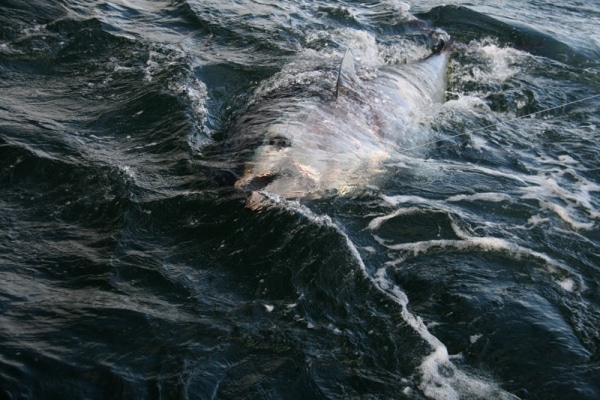
While I’m no tuna aficionado by any means, I’ve been lucky enough to see a few nice ones caught during my marlin travels. One of those, a 200-pound bluefin caught on a headboat off Gran Canaria in the Canary Islands, surprised the hell out of me. I’d known about the good blue marlin fishing in the Canaries — that’s why I was there — but I didn’t have a clue about the large numbers of big bluefin and giant bigeye tunas that also frequent this European vacation paradise. The Canaries, a group of volcanic islands just off Morocco in the Atlantic Ocean, still hold the all-tackle bigeye record — a 392-pounder caught in Gran Canaria in July of 1996.
Capt. Jason Pipe started tuna fishing in the Canary Islands when he was 16 years old, and now, almost 30 years later, he’s pretty dialed in to the tuna around his home waters. “April and May probably represent our best months for tuna fishing. That’s right at the start of the season as the tuna pass through en masse, along with whales and bait balls. However, our tuna season can start as early as March. If the Cory’s Shearwaters start to turn up about mid-February, the tuna aren’t normally too far behind.”
Pipe says that bluefin and albacore are normally the first to show. “Bluefin from 300 up to 900 pounds have been caught in good numbers the last couple years,” Pipe says. “Bigeye start turning up at roughly the same time, although sometimes a little later. The bigeye keep on turning up around the islands most of the summer, while the bluefin move off fairly fast, staying maybe only a few weeks. Yellowfin can start showing up from July onward, but in this ever-changing world, the arrival times seem to be changing as well!”
Pipe says that yellowfin are the hardest to catch here, with chunking taking the most fish. Bigeye, on the other hand, are easy, and you don’t have to be shy when trying to get a bite.
Charters
Bocinegro Fishing Charters — Capt. Jason Pipe bluemarlingomera.com
Tuna Fishing in the Outer Banks, North Carolina
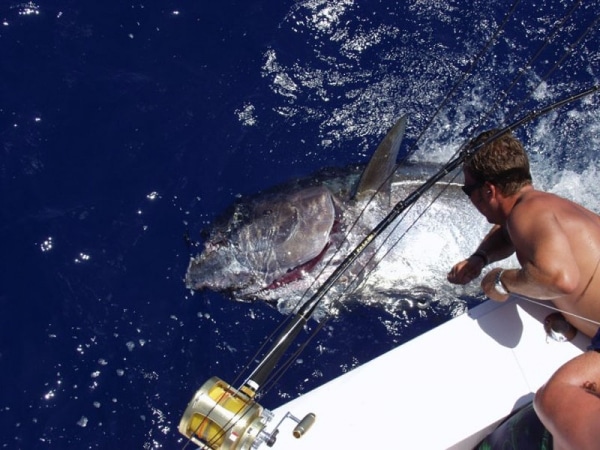
Everyone knows that the Outer Banks of North Carolina make a great place to fish for school- to medium-size yellowfin tuna. Forty- to 80-pound yellowfin make up the bread and butter of the charter fleets during the long, hot summers, but it’s the influx of giant bluefin each winter that gets the blood boiling even in the cold. The area is one of the top destinations for tuna fishing on the east coast of the United States.
One of the most appealing aspects of the North Carolina bite when it first started was that the fish were feeding in relatively shallow water — usually less than 120 feet deep, which kept them from sounding into the abyss. That allowed anglers to catch them in a hurry.
The best months to target these fish are December through April. During the last couple of years, there seems to be a better bite in December and January in the Morehead area, and then it usually gets good in February, March and April off Oregon Inlet.
Charters
Tuna Duck — Capt. Dan Rooks tunaduck.com , 252-216-6160
Obsession Charters — Capt. Jeff Ross obsession-charters.com , 252-480-0094